Cold that catches you
Thinning enamel can let a cold drink reach the more sensitive layer underneath, producing a quick jolt. It helps to note which teeth feel it, whether warm food does too and how long it lasts.


Front teeth that look shorter in photos, or molars that react to cold, can point to enamel erosion. Mississauga patients can have the cause pinned down and get a plan that protects first and repairs where needed.
Sometimes a holiday picture is what prompts the question: were my front teeth always this length? Gradual shortening and see-through tips can be signs of erosion, where acid softens enamel and slowly strips it away. Bacteria are not involved, so it is not decay, though decay can exist alongside it.
What feeds erosion varies from person to person. A morning juice, kombucha or energy drinks at work, recurring reflux, vomiting, medications that dry the mouth and a bite that loads certain teeth can all play a role. Identifying yours lets treatment go after the cause instead of just covering the damage.
From Mississauga, most people book a single assessment first. Bring an honest picture of your drinking habits, when sensitivity strikes and any change in how you bite, and we will look at every surface with that in mind.
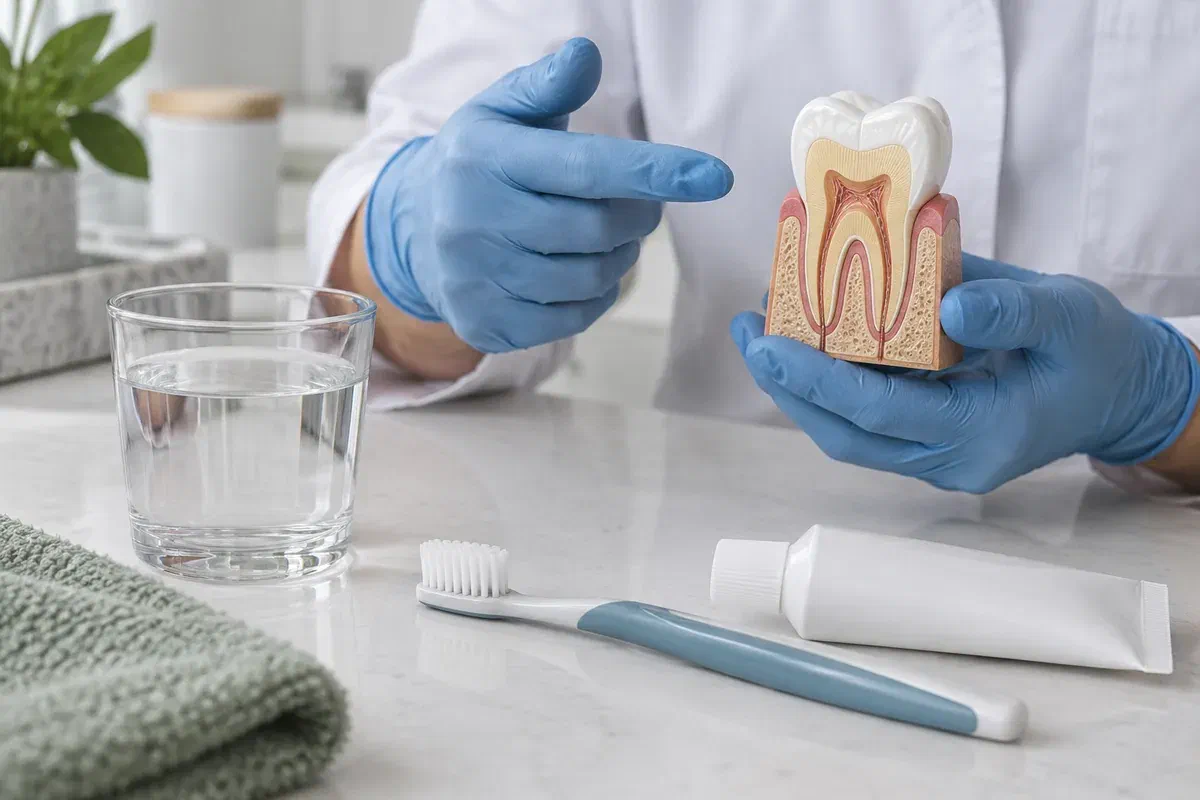
The earliest hints are often a reaction to cold or a change you spot in the mirror. A dental exam tells erosion apart from decay, aggressive brushing, grinding and other sensitivity triggers.
Thinning enamel can let a cold drink reach the more sensitive layer underneath, producing a quick jolt. It helps to note which teeth feel it, whether warm food does too and how long it lasts.
The edges of front teeth may look transparent, uneven or worn shorter. An exam with photographs can show whether this reflects active erosion, an older change that has stopped, or a separate issue.
Shallow scoops in chewing surfaces, or fillings that seem to rise above the enamel, can indicate loss. Your bite is checked as well, because acid and grinding often wear teeth together.
A change in tooth colour is not, by itself, a sign of erosion. Please avoid starting whitening or a new toothpaste as a fix until the cause has been identified.
Lost enamel stays lost; the body cannot rebuild it. That is why early care puts so much weight on slowing further damage and easing sensitivity, through drinking habits, fluoride, or a medical referral when reflux or vomiting may be behind it.
When erosion has affected comfort, chewing or appearance, restorations can be planned together with prevention. The amount of sound enamel left and the way the wear is distributed help decide whether a small bonded repair will do or a broader plan is needed.
Patient information: ADA — dietary acids and teeth
Linking your routine, symptoms and wear pattern gives specific guidance instead of a general order to cut out acidic foods.
When exposure is reduced first, restorations start on firmer footing. You also leave with clear steps to take between appointments.
Some teeth need monitoring and comfort care, others need rebuilding. The plan identifies which changes to address now and which can be watched.
The first visit links your symptoms with what can be seen. Treatment may be staged, especially if several teeth are worn or a medical source of acid needs to be looked into.
Describe sensitivity, appearance changes, typical meals and drinks and any health concerns. Mention reflux, dry mouth and your medications, as these often matter more than people expect.
The dentist examines enamel, fillings and how the teeth meet. Photos or scans can record today's state, and X-rays are only taken if they would answer a specific clinical question.
Review what is likely causing the wear, ways to ease sensitivity and whether restoration is needed yet. Ask which steps target the cause and which replace missing structure.
Later visits measure symptoms and surfaces against the first records. If wear keeps going or a repair needs refining, the plan is updated.
Stick with the measures chosen for you rather than trying several strong products at once. A comfortable routine you can maintain is the goal.
Sipping an acidic drink for an hour keeps teeth bathed in it. Go over your usual drinks with us, including sugar-free ones, and try making water your go-to between meals.
Use a soft-bristled brush and the fluoride toothpaste recommended for you. Ask how long to wait after acidic food or drink before brushing, rather than scrubbing right away to clear the taste.
Keep track of sensitivity, heartburn or dry mouth and bring those notes to your review visits. Exposure caused by a health condition may also need your doctor's attention.
These questions often arise once someone notices sensitivity or shorter-looking teeth. Your exam is what decides which advice fits.
Coming from Mississauga with questions about sensitivity, shorter-looking teeth or worn fillings? Our Bronte Street practice is happy to help. We will explain the wear pattern and outline prevention, monitoring and repair in a practical order.
For severe pain or swelling, please phone us. Online booking cannot replace urgent assessment.
