Cold that bites back
As enamel thins, a cold drink can trigger a short, sharp response. It helps to know which teeth react, whether warmth does too, and whether the feeling fades in seconds or hangs around.


Is that sharp twinge simple sensitivity, or is enamel being lost to acid? If you live in Oakville, we start by identifying the cause, then talk through protection and, where needed, careful repair.
A quick ache from cold water is often the moment people start asking questions. One possible answer is erosion: acids soften the outer enamel and, with repeated contact, wear it away. It is a chemical process rather than a bacterial one, so it is not a cavity, though both can be present in the same mouth.
Knowing which acids are involved changes the advice. Citrus, soft drinks, sports drinks during training, reflux, vomiting and dry mouth are common contributors, and the bite can concentrate wear in certain spots. Once the likely sources are clear, care can target them instead of only patching the result.
When someone books from Oakville, we ask them to describe their usual day in sips and snacks. Add when the sensitivity happens and whether chewing feels different, and the exam has real context.
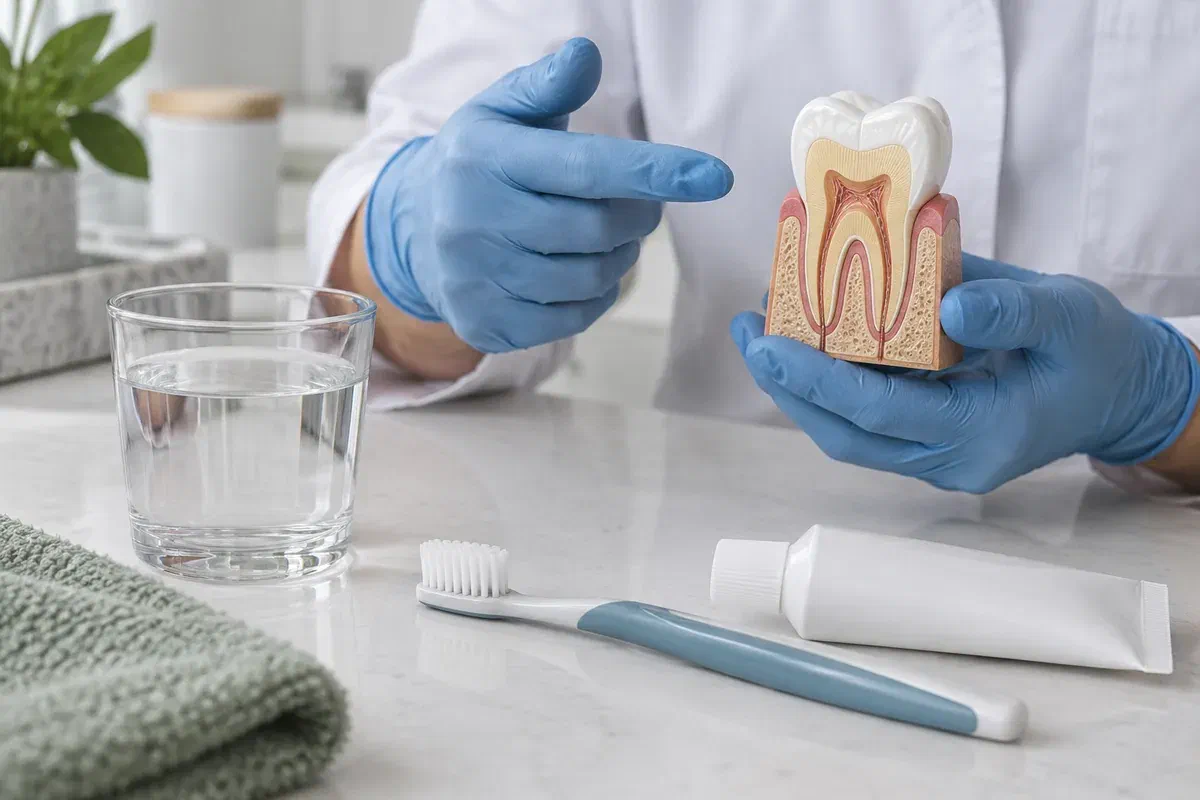
Erosion can begin with a reaction to temperature or a subtle change in how a tooth looks. A proper exam separates it from decay, brushing too hard, clenching and other sources of sensitivity.
As enamel thins, a cold drink can trigger a short, sharp response. It helps to know which teeth react, whether warmth does too, and whether the feeling fades in seconds or hangs around.
Upper front teeth may look shorter, slightly chipped or almost glass-like at the tips. Photographs and examination together show whether this is ongoing wear, an older change, or something unrelated.
Smooth, shallow cups on back teeth, or fillings that stand above the enamel around them, can suggest surface loss. The way your teeth meet is checked as well, because acid and grinding frequently combine.
A colour shift is not enough to diagnose erosion. Whitening products and new toothpastes are best left until someone has confirmed what is going on.
Prevention usually comes first: reducing repeated acid contact and easing sensitivity. You might be asked to change when you have certain drinks, start a fluoride product, or check in with your doctor if reflux or vomiting could be part of the picture.
Once enamel dissolves, the body cannot replace it. If the loss affects comfort, chewing or appearance, a restoration may join the preventive plan. The amount of healthy enamel left and the shape of the wear help determine whether a small bonded repair is enough or a broader approach is needed.
Patient information: ADA — dietary acids and teeth
Combining your diet, symptoms and the location of wear gives targeted advice rather than a general warning to avoid sour things.
Cutting back acid exposure before restoring makes for a sounder starting point, and you have practical changes to try in the meantime.
Some areas need only watching and comfort measures; others need rebuilding. Your plan spells out which come first.
The visit ties your symptoms to what the dentist sees. Treatment can be split into stages, which is common when several teeth show wear or a medical cause of acid exposure needs looking into.
Explain when teeth feel sensitive, what you have seen change, and your typical food and drink. Mention reflux, dry mouth or any medications, even if they seem unrelated to dental care.
The dentist looks at enamel, fillings and the bite. Photos or scans can capture today's condition, and X-rays are used only when they would help answer a specific question about a tooth.
Discuss the probable causes, ways to settle sensitivity and whether any tooth needs restoring yet. Ask which steps address the source and which replace structure already gone.
Later visits compare symptoms and surfaces with the first records. The plan shifts if wear advances, sensitivity changes, or a restoration needs shaping.
Use the measures chosen for your mouth instead of trying several strong products at once. A comfortable routine you keep is worth more than an intense one you drop.
Every slow sip of something acidic adds another round of exposure. Review your most common drinks with us, sugar-free ones too, and make water the usual choice between meals.
A soft-bristled toothbrush and the fluoride toothpaste recommended for you are the basics. Ask how soon to brush after an acidic food or drink rather than scrubbing at once.
Keep a simple note of sensitivity, heartburn or dryness and share it at review appointments. Exposure tied to a health condition may need your doctor's input as well.
People tend to ask these when they first notice sensitivity or thinning. Your examination decides which advice and treatment truly apply.
Bring your questions about sensitivity, thinning edges or worn molars to our Bronte Street practice, whether you are coming up from Oakville or nearby. We will explain the pattern we find and suggest a practical order of prevention, monitoring and repair.
Please phone if pain becomes severe or swelling appears. Online booking is not meant for urgent concerns.
