A twinge on contact
Thinning enamel can make cold drinks or air feel sharp for a moment. Let us know which teeth are affected, whether warmth sets them off, and how long the discomfort hangs on afterward.


With erosion, the number of acid moments in a day often matters more than any single drink. Rockwood patients can have enamel wear assessed, learn which habits count most, and plan protection or repair.
How often matters more than how much. Each time acid touches the teeth, enamel softens for a while before saliva helps it settle. When those moments stack up through the day, the surface slowly dissolves. That is erosion, a chemical loss that differs from the bacterial process behind cavities, even though the two can be found together.
Common sources include juice, pop, flavoured water, sour sweets, pickles and vinegar dressings, as well as reflux, vomiting and a dry mouth. The way your teeth meet can concentrate the damage on certain edges. Counting the exposures, rather than judging single foods, often reveals the most practical change.
Most people coming from Rockwood find it easiest to walk us through an ordinary day, snack by snack. Add when sensitivity flares and whether biting feels any different, and the exam that follows has a clear frame.
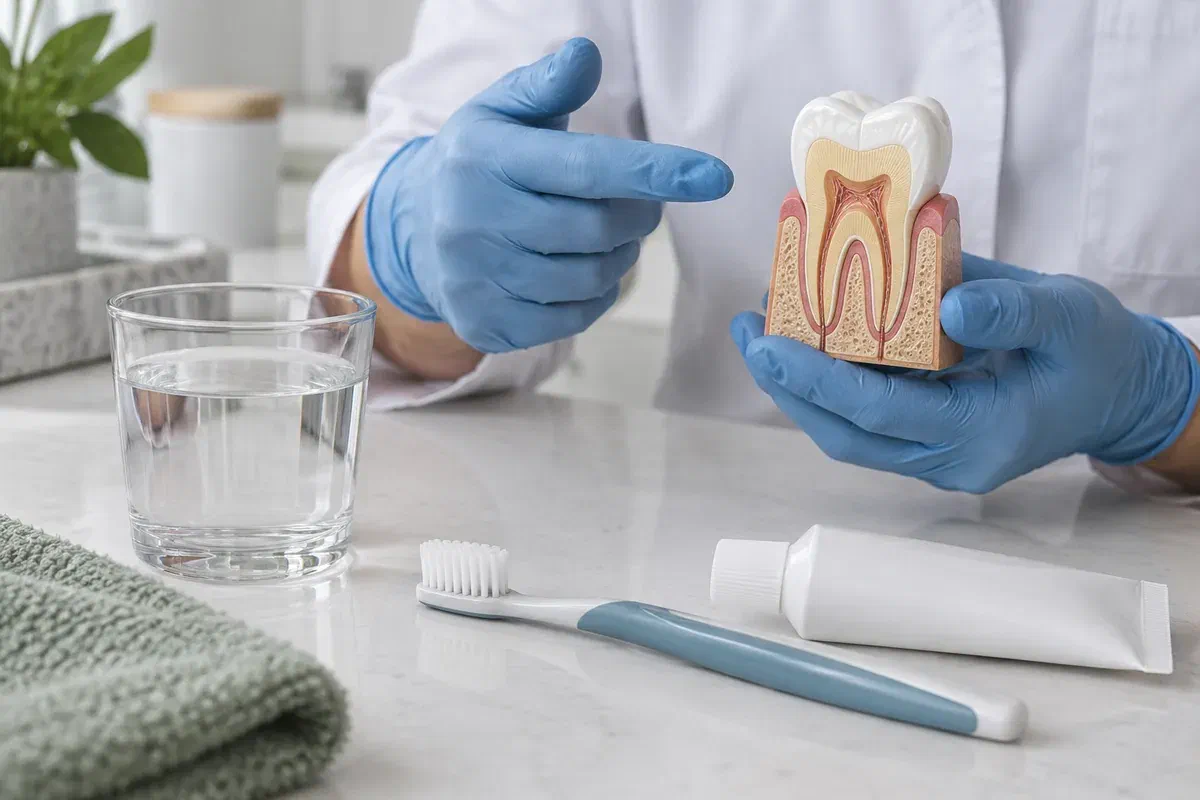
Erosion is often noticed in small ways: a texture, a reflection, a twinge. An exam helps separate it from decay, over-brushing, grinding and other sources of sensitivity.
Thinning enamel can make cold drinks or air feel sharp for a moment. Let us know which teeth are affected, whether warmth sets them off, and how long the discomfort hangs on afterward.
Front teeth may look glassy, slightly shorter or nicked along the edge. Photographs and a careful exam can tell whether that reflects wear underway now, an old change, or a separate problem.
Your tongue may find shallow cups on back teeth or fillings that seem to rise above the enamel. The dentist also looks at how your teeth meet, since mechanical wear frequently joins acid wear.
Darker or yellower teeth are not enough to diagnose erosion. Avoid reaching for whitening or a new toothpaste until the cause has been looked at.
Most plans begin by reducing the number of acid exposures and calming sensitivity. That might mean keeping acidic foods to mealtimes, adding a fluoride product, or a word with your doctor if reflux or recurring vomiting is part of the picture.
Once enamel is gone, it stays gone. When wear makes teeth sore, harder to chew with or noticeably different in appearance, restorative care can be planned alongside these habit changes. The tooth structure left and the pattern of wear determine whether a conservative composite repair is enough or a broader plan is needed.
Patient information: ADA — dietary acids and teeth
Tallying exposures through the day makes advice concrete, rather than a vague instruction to avoid sour food.
With fewer acid moments, restorations are better protected, and you have clear habits to work on in the meantime.
Some teeth need watching; others need rebuilding. The plan sets out which to deal with first and which can wait.
The visit connects your habits and symptoms with what the dentist observes. Treatment can be spread out, particularly when several teeth are involved or a medical cause of acid needs follow-up.
Describe meals, snacks and drinks with rough timings, along with any sensitivity and health concerns. A list of medications and mention of reflux or dry mouth add useful detail.
The dentist checks enamel, existing restorations and how the teeth meet. Photographs or scans may record the starting point, while X-rays are reserved for questions the eye cannot answer.
Review what is likely driving the wear, how to settle sensitivity and whether repair makes sense yet. Ask which suggestions reduce exposure and which rebuild structure that has worn away.
Later appointments compare surfaces and symptoms with what was recorded at the start. If wear continues or a restoration needs reshaping, the plan is updated.
Choose the specific steps recommended for you instead of trying several strong products at once. Simple and sustainable beats intensive and short-lived.
Grazing on acidic drinks and snacks spreads exposure across the day. Talk with us about your usual choices, sugar-free ones included, and fill the gaps between meals with water.
Use a soft brush and a fluoride toothpaste suited to you. Rinsing with water after something acidic and waiting a little before brushing is often advised; we can suggest how long.
Track sensitivity, heartburn and dryness and bring those notes to reviews. If reflux or illness keeps bringing acid into your mouth, your physician is an important part of the solution too.
These questions tend to come up once people start counting their acid exposures. Your examination determines which advice fits.
Questions about sensitivity, thinning edges or worn chewing surfaces are worth the trip down from Rockwood to our Bronte Street practice. We will explain the pattern we see and suggest prevention, monitoring and repair in a practical order.
Call us if pain becomes severe or you notice swelling. Online booking is not for urgent concerns.
