An implant is part of your thinking
Implants rely on healthy bone and gum, and on good general healing. Preserving the socket may help that later assessment, but it cannot guarantee an implant will be suitable or rule out more grafting.


How well a grafted socket heals depends partly on you: your health, medications and habits. From Acton, learn how these shape a ridge preservation recommendation.
Healing is the whole point of ridge preservation. After an extraction, the jaw ridge that held the tooth usually loses some width and height as the socket closes. Placing graft material in the socket is meant to reduce that loss, but the graft only works if your body heals well around it.
That is why the recommendation depends on more than the tooth. Smoking or vaping, diabetes, certain medications and past healing problems can all influence whether grafting is a good idea and how it should be done. The socket's condition and the replacement you are considering matter as well.
If you are coming from Acton for an extraction, bring an up-to-date list of your medications and any notes from your doctor. Tell us what you hope for, whether an implant, another replacement or simply a smooth recovery, and we can discuss how your health fits the plan.
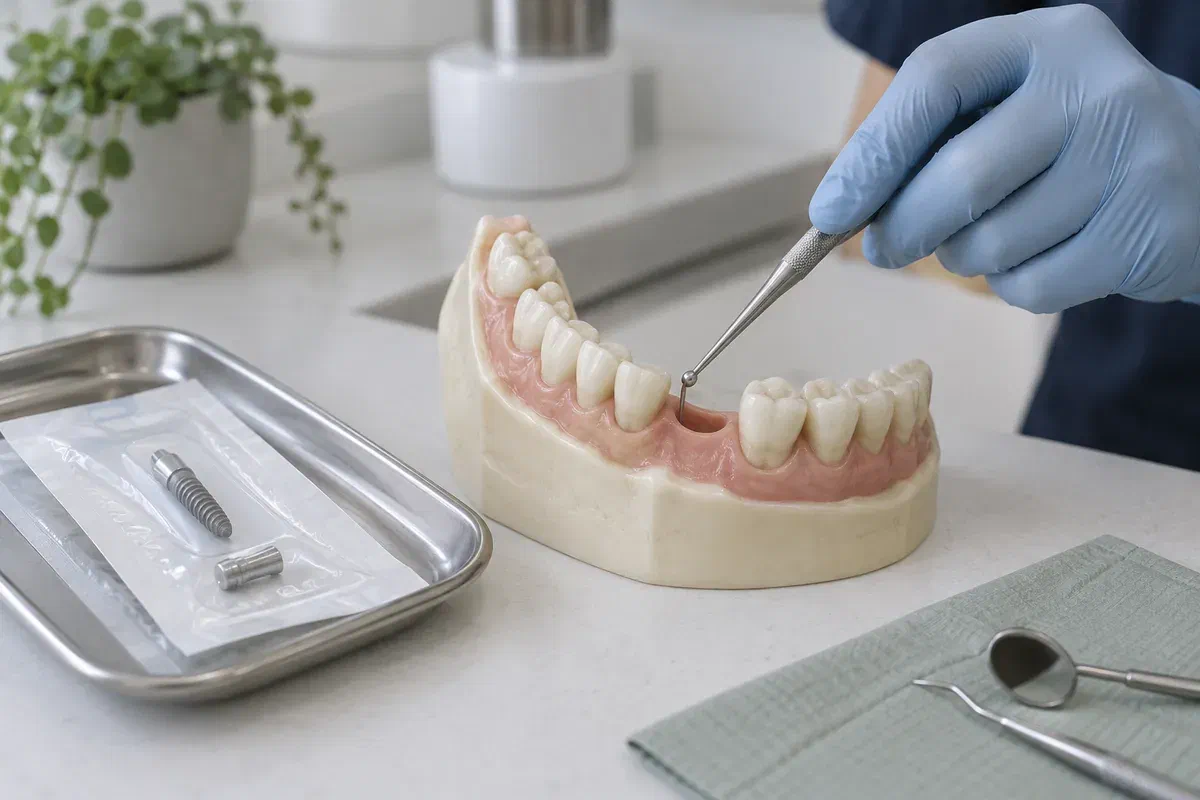
Preservation happens in the fresh socket, so health questions are worked through ahead of time. Your dentist can judge suitability and may suggest a specialist or a conversation with your physician.
Implants rely on healthy bone and gum, and on good general healing. Preserving the socket may help that later assessment, but it cannot guarantee an implant will be suitable or rule out more grafting.
Ridge collapse can lower the gum and shrink the space for a replacement. How much this happens varies between people, and the tooth's location and planned restoration affect how much it matters.
Sometimes it is wise to deal with a tooth now and wait on a replacement while a health issue is managed. Talking it through explains what grafting may offer, its limits and how it fits a staged approach.
If the tooth is already gone, the ridge can still be checked. A healed site usually calls for a different procedure, with its own health considerations.
The graft acts as scaffolding while new bone forms in the socket, aiming to keep more ridge than an untreated site might. It is not a tooth, and it relies on your own healing to work. Some natural bone change still takes place.
Like any surgery, it has trade-offs: a fee, recovery time and possible complications such as graft exposure, infection or poor bone fill. These risks can be higher with some health conditions or habits, so a recommendation should explain why the benefit still makes sense for you.
Patient information: AAP — ridge modification
Considering your health and replacement goals together means the socket decision reflects how you are likely to heal, not just the tooth.
Holding useful bone and gum form may help any future restoration fit and look better. Results depend on anatomy and healing.
After healing, the site is re-evaluated so you know whether more imaging, treatment or input from a specialist is needed first.
Methods differ with the tooth and tissues. Ask who will do the procedure, which material is proposed and whether your physician should be consulted before the extraction date.
We go through why the tooth needs removal, examine the gums and review imaging, along with your medical conditions, medications, smoking and past healing. Some medications need special attention before oral surgery.
Before consenting, you hear what material is suggested, what it may achieve, the alternatives, the fee and recovery. Infection, tissue loss, anatomy or medical factors may bring in a specialist or change the sequence.
Where suitable, the tooth is removed under local anaesthetic and the socket is grafted. It may be protected with a membrane, a cover or sutures, depending on the method and tissue condition.
Review visits monitor the gum and overall healing, and they are a good time to mention any change in your health. Only after a further look at the bone are implant or restoration choices confirmed, since the gum's surface does not show whether the bone has matured.
Follow the written instructions for your procedure, which may include guidance on pain relief or other medication. Before the drive back to Acton, ask about anything unclear, from toothbrushing and rinses to meals or wearing a partial.
Avoid touching the site with your tongue, fingers or tools. Eat the foods recommended, keep pressure off the area and check whether a removable appliance should be adjusted.
Smoking and vaping can interfere with healing. Ask how long to avoid them, and look after your other teeth as usual, using any rinse exactly as prescribed.
Reviews let the clinician check the wound and your progress. Mention any change in comfort, unusual discharge, or a change in your health or medications since surgery.
These questions focus on how your health affects grafting. Bring your medication list to the appointment so the answers can be specific to you.
Schedule a visit at our Bronte Street practice ahead of a planned extraction, or bring a treatment recommendation for review. We will assess the site, consider your health history and let you know if a specialist or your physician should be involved.
After surgery, direct any concern to the clinician who treated you. For urgent issues, please call rather than relying on an online request.
