An implant is on your shortlist
Implants need adequate bone and healthy gum. Preserving the socket may support that later assessment, though it cannot confirm an implant will suit you and some sites still need more bone work.


Not sure yet whether you want an implant, a bridge or nothing at all? For households across Halton Hills, ridge preservation is one way to keep more choices available after an extraction.
You do not need every answer on the day an extraction is recommended. Still, one decision is tied to that appointment: what to do with the socket. Left empty, the bony ridge that supported the tooth tends to shrink as it heals. Preservation fills the socket with graft material in an effort to keep more of that ridge.
Why does that matter if you have not chosen a replacement? Because the amount of bone and gum left behind can affect which options are practical later. It is not always needed, though. The socket itself, the surrounding tissue, your health and how likely you are to replace the tooth all count.
Across Halton Hills, from Georgetown and Acton to Glen Williams, people often tell us they want time to think. That is fine. We can explain how grafting, or not grafting, may influence an implant, a bridge or a partial denture, so the choice you make now does not quietly close a door.
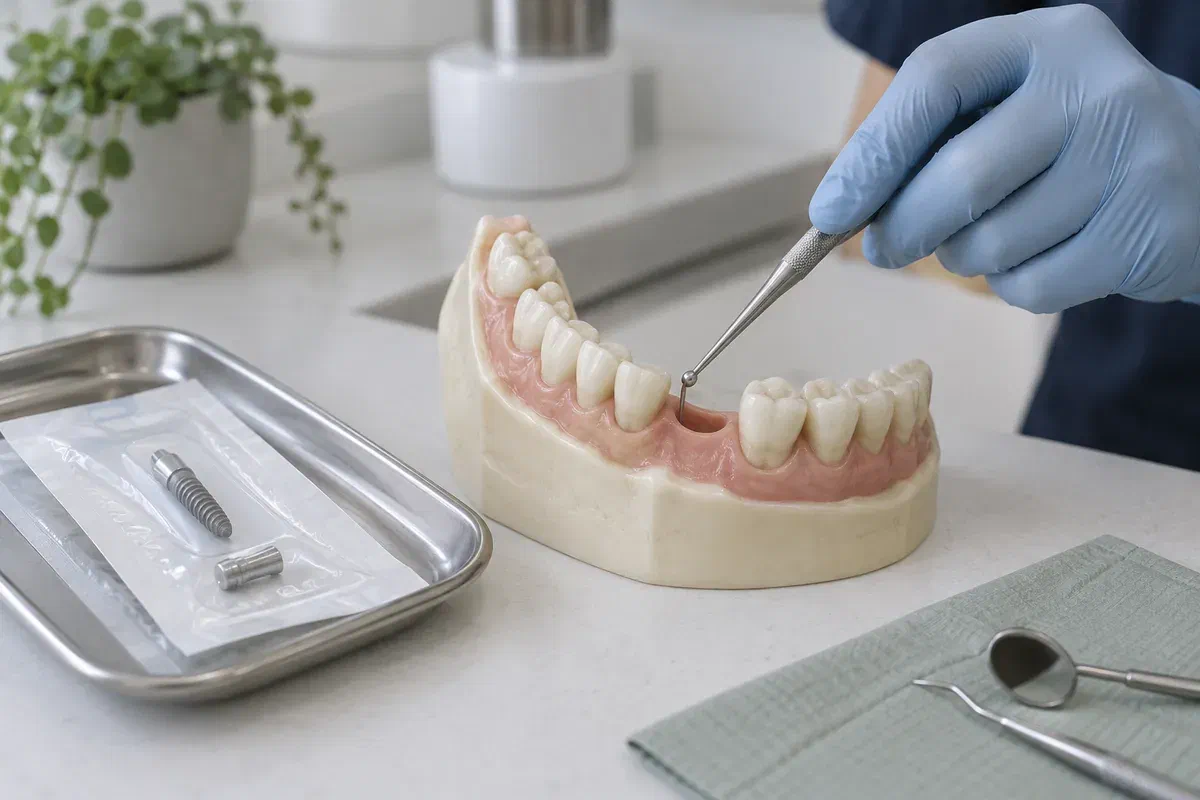
The socket can only be preserved while it is fresh, so this part of the plan is decided before extraction. Your dentist can judge whether the site is suitable and whether a periodontist or surgeon should also weigh in.
Implants need adequate bone and healthy gum. Preserving the socket may support that later assessment, though it cannot confirm an implant will suit you and some sites still need more bone work.
As the ridge flattens, the gum beneath a bridge tooth can recede and the fit may look less natural. The tooth's position and the design of the replacement affect how noticeable this would be.
Some people choose not to replace a tooth at all. Saying so early lets your dentist explain whether preservation still has value at your site, what it cannot do and how it fits a staged plan.
If the tooth was removed a while ago, the ridge can still be assessed. A healed site that needs support usually calls for a different procedure from preserving a fresh socket.
By giving the socket a framework to heal into, a graft aims to keep more ridge width and height than might remain otherwise. It is a foundation step. No tooth is placed, and the bone around the site still changes to some extent.
It is also an added procedure, with a fee, surgical care and healing time, and possible problems such as graft exposure, infection or underwhelming bone formation. A reasoned recommendation should explain why the likely benefit at your site justifies those.
Patient information: AAP — ridge modification
Treating the socket with possible replacements in mind gives you time to choose without the ridge narrowing your options quite as much.
Maintaining useful contour may help any later restoration fit and look better. How much it helps depends on anatomy and healing.
When the site has healed, it is reassessed so you can discuss options with current information, including any imaging or referral that would help.
Approaches vary with the tooth and tissues. It is reasonable to ask who will do the procedure, which graft material is suggested and how the extraction connects with any replacement you might choose.
We look at why the tooth needs to go, examine the gums and review imaging. Medical history, medications, smoking and any earlier healing problems help decide whether a graft is sensible.
Nothing goes ahead until you understand which graft is proposed, what it may achieve, the other routes available, the fee and the recovery. Infection, missing bone or unusual anatomy can bring in a specialist or change the order of care.
If the site is appropriate, the tooth is extracted with local anaesthetic and the socket is filled with graft. A membrane, covering or a few stitches may protect it, depending on the method.
Follow-up visits check the gum and the site. Replacement choices are revisited after a further assessment, because a gum that looks healed does not tell you whether the bone is ready.
Follow your written instructions, which match your specific procedure. Before leaving, ask about anything unclear, such as brushing, rinsing, meals or a temporary denture.
Keep fingers, tongue and cleaning tools away from the site. Eat as advised, avoid pressing on the area, and check whether a removable appliance needs to be adjusted first.
Brush other teeth as usual and use any prescribed rinse as instructed. Ask when you may clean next to the graft rather than assuming your regular routine can resume there.
These short visits let the clinician check healing and answer questions. Mention new soreness, discharge or trouble keeping up with the aftercare routine at the earliest opportunity.
We hear these often from people in Halton Hills who are still weighing their options. They connect today's extraction with the replacement you may pick later, so you can make an informed choice about the socket.
Arrange a visit to our Bronte Street practice while the extraction is still ahead of you, or bring a recommendation you have already received. We will examine the site, explain your replacement options and let you know whether a specialist should be involved.
For post-surgery concerns, contact the clinician who treated you directly. Please call about anything urgent instead of sending an online message.
