Implant planning is on the table
An implant depends on enough healthy bone and gum at the site. Preservation may make that later evaluation more favourable, but it cannot confirm that an implant will be possible or rule out more grafting.


Been told a socket graft would help after your extraction? If you are coming from Oakville, we can walk through why it was suggested and what it may mean for replacing the tooth.
A treatment plan that lists an extraction followed by a graft can raise more questions than it answers. In plain terms, the graft is meant for the bony ridge that held the tooth. Without a root inside it, that ridge usually narrows and flattens as it heals. Ridge preservation fills the socket with graft material to reduce some of that change.
A suggestion to graft is a judgement about your particular site, not a routine extra. The health of the socket walls and gum, your medical background, and the kind of replacement being discussed all affect whether it is worth doing and which method fits.
From Oakville, you are welcome to bring the plan you received and ask us to explain it. We can talk about what you want for the space, whether that is an implant, another kind of replacement, or more time to decide, and whether preservation supports that goal.
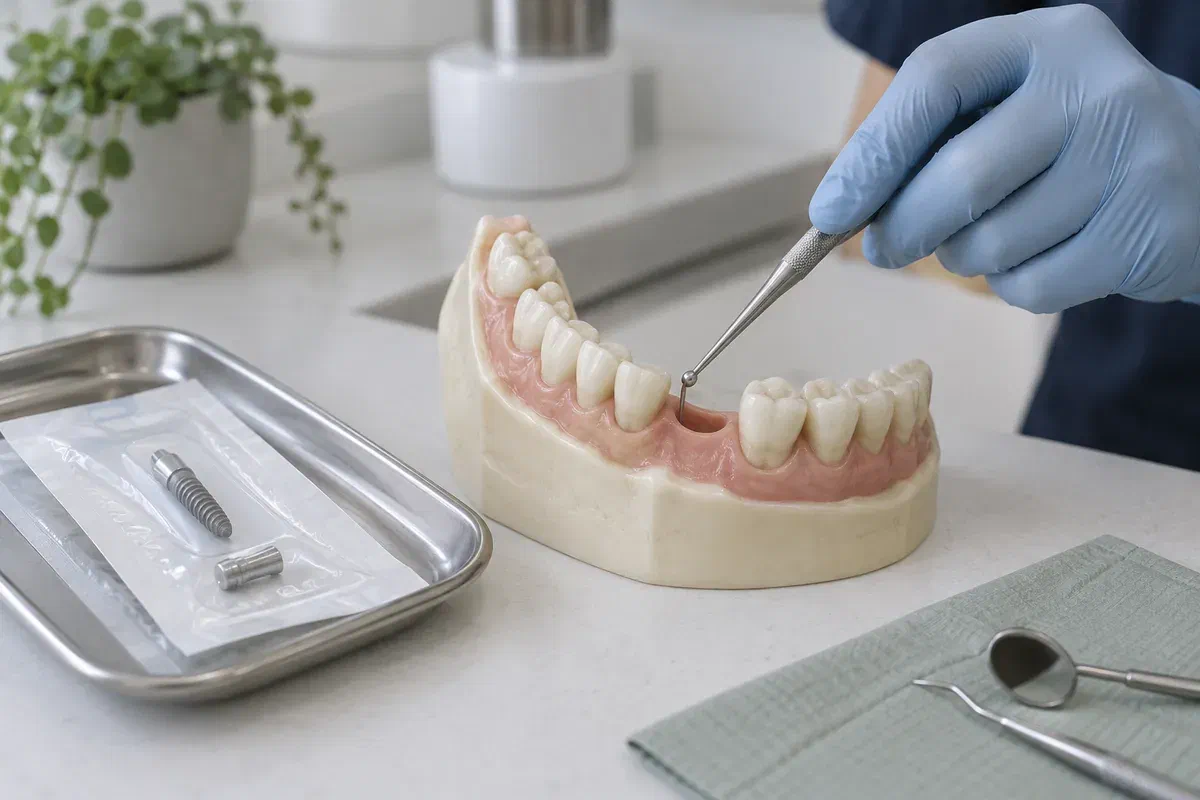
Preservation is usually done the same day the tooth comes out, so it tends to be discussed in advance. A dentist can explain whether your site is suitable and whether a surgeon or periodontist should also see you.
An implant depends on enough healthy bone and gum at the site. Preservation may make that later evaluation more favourable, but it cannot confirm that an implant will be possible or rule out more grafting.
When the bone under a gap shrinks, the gum can sink and the space for a new tooth may narrow. The tooth's location and the restoration being planned decide how significant that would be.
A painful or broken tooth may need to come out before you have chosen what replaces it. Talking it through first explains what grafting could offer, where its limits are, and where it would sit among the later stages of treatment.
Had the extraction already? The ridge can still be assessed, though treatment at a healed site usually differs from preservation done in a fresh socket.
The purpose is to limit the shrinkage that commonly follows extraction by giving the socket a framework to heal into. A preserved site is still not a tooth, and the bone around it continues to remodel to some extent.
It also brings a cost, an extra surgical step and a recovery period. An exposed graft, infection or less bone than expected can happen. A sound recommendation should explain why the benefit at your site is likely to be worth it.
Patient information: AAP — ridge modification
Talking about the extraction and the eventual replacement together means the socket is handled with your long-term goal in mind.
Holding on to useful bone and gum shape may help a future tooth look and function well. Results vary with your anatomy and healing.
When healing is complete, the site is checked again to see whether further imaging, treatment or a referral is needed before replacement.
Methods differ depending on the tooth and the tissues around it. You can ask who will perform the graft, which material is recommended, and how this visit links to future replacement appointments you would plan from Oakville.
We look at why the tooth needs removal, examine the gum and study the imaging, including any X-rays you bring from elsewhere. Medical history, medications, smoking and previous healing all inform the advice.
Material, expected benefit, alternatives, fees and recovery are explained before you agree. Infection, missing bone or complex anatomy may point toward a specialist referral or a different order of care.
If the site is suitable, the tooth is removed and graft material is placed in the cleaned socket under anaesthesia. Some techniques add a membrane, a protective cover or stitches.
Follow-up visits track the gum and overall healing. The site is assessed again before implant or restoration decisions are made, because a gum that looks settled does not confirm the bone is ready.
The written instructions you receive are the ones to follow, since procedures vary. If you are unsure about brushing, rinsing, eating or wearing a temporary tooth, ask before you go.
Avoid poking the area with your tongue, a finger or floss picks. Eat the foods suggested, keep pressure off the graft and check whether any removable appliance needs to be adjusted.
Brush the rest of your mouth normally and use a prescribed rinse as directed. Ask when you may clean next to the healing site instead of assuming your usual routine can restart immediately.
Review appointments let the clinician see how the wound is closing and answer your questions. Mention any change in comfort, odd discharge or trouble with the instructions before the next stage.
If a graft has already been recommended, these questions can help you understand the reasoning and decide with confidence. Bring any written plan or X-rays you have.
Book a visit at our Bronte Street practice before your extraction, or bring the recommendation you already have so we can review it with you. We will examine the site, explain the choices and say whether a specialist should be involved.
If you have a concern after surgery, contact the clinician who treated you. For anything urgent, please call rather than sending an online request.
