An old or recent injury
A knock to a front tooth can affect the pulp even without a large visible fracture. Mention sports injuries, falls, and previous dental trauma, including events you had assumed were too old to matter.


A front tooth can need care beneath the surface even when the damage is hard to see. Discuss anterior root canal treatment in Milton, with attention to the tooth’s health, comfort, and final restoration.
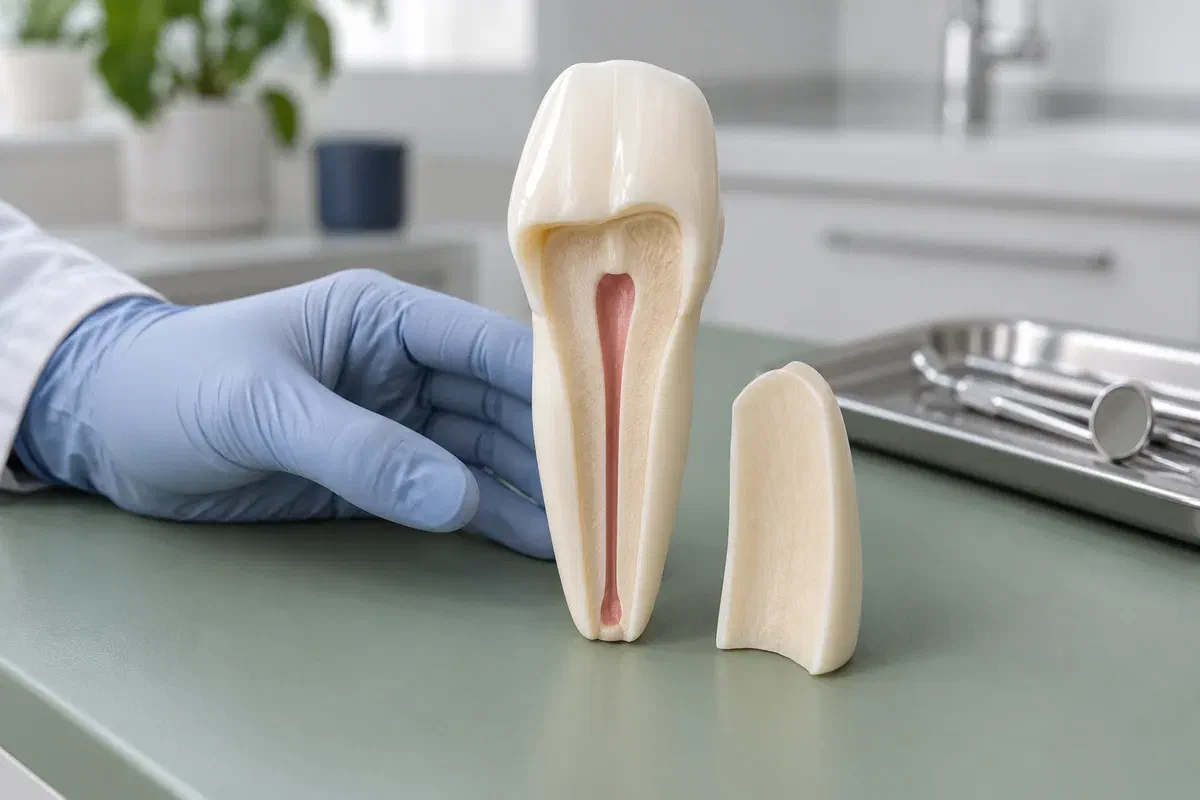
Anterior teeth are the teeth at the front of your mouth, including incisors and canines. Inside each is pulp containing nerves and blood vessels. When that tissue becomes irreversibly inflamed or infected, root canal treatment may offer a way to retain a tooth that can still be restored.
A front tooth may need this care after deep decay, a crack, or an injury that happened recently or years earlier. The outside can look relatively intact while the tissue inside has changed. That is why symptoms, testing, and appropriate imaging matter more than appearance alone.
At Milton Dental Clinic, the conversation includes both the treatment inside the tooth and what happens afterward. For a tooth visible in your smile, it is reasonable to ask about colour, the access filling, the amount of remaining structure, and whether further restoration is likely.
Pain is one reason to seek care, but a quiet tooth can also have a problem. An examination helps determine whether the pulp is affected and whether a root canal is actually the appropriate treatment.
A knock to a front tooth can affect the pulp even without a large visible fracture. Mention sports injuries, falls, and previous dental trauma, including events you had assumed were too old to matter.
Pain that continues after hot or cold exposure, spontaneous aching, or tenderness when biting can warrant investigation. Describe the timing and triggers, since different problems can produce overlapping symptoms.
A tooth becoming darker or a recurring bump near its root deserves assessment. Neither finding alone confirms the diagnosis, and an absence of pain does not necessarily mean the underlying tissues are healthy.
An adult tooth knocked completely out of the mouth needs immediate advice. Call promptly rather than booking a routine root canal consultation for a dental injury.
Root canal treatment removes diseased pulp tissue, cleans the canal space, and seals it with a filling material. The aim is to manage the problem inside a restorable tooth so that it can continue to function after an appropriate final restoration.
Success depends on the diagnosis, root anatomy, cracks, remaining structure, and the quality of the final seal. Some front teeth are complex because of old trauma, calcification, or previous treatment. An endodontic referral may be recommended when specialist assessment would improve planning.
Patient information: AAE — root canal treatment
Keeping a suitable natural tooth avoids creating a new gap and allows treatment to focus on restoring the tooth already present in your smile.
The access opening and any existing damage are considered alongside colour and shape. Discussing restoration early helps connect endodontic treatment with the final appearance.
Testing helps distinguish a pulp problem from a crack, a gum issue, or another source of pain. Treatment should follow the findings rather than assumptions based on sensitivity alone.
Ask how many appointments are expected, whether a temporary filling will be used, and who will complete the final restoration. Understanding the whole sequence helps avoid leaving a treated tooth unprotected.
The dentist reviews symptoms and injury history, examines the tooth and gums, and performs appropriate tests. Imaging helps assess the root and surrounding tissues, while restorability is considered before treatment begins.
Local anaesthetic is used as appropriate and a dental dam isolates the tooth. Tell the clinician if you feel discomfort or need a pause; isolation also helps keep the treatment field clean.
An opening allows access to the pulp space, commonly from the back of a front tooth. The canal is cleaned, shaped, and filled; a temporary seal may be needed between stages.
The access opening and any structural damage need a suitable restoration. Follow-up checks symptoms and healing, and the dentist explains whether a filling, crown, or other treatment is appropriate for the remaining tooth.
Follow the instructions from your treating dentist or endodontist. The tooth may feel different for a time, and a temporary restoration needs particular care until the definitive work is finished.
Do not use a temporarily restored front tooth to bite into very hard foods or tear packaging. Ask what you can chew safely and when normal use is appropriate for your specific restoration.
Continue the cleaning routine recommended for you and be gentle around tender tissues. Let the team know if a temporary filling breaks, comes out, or no longer feels securely in place.
Root canal treatment and the final tooth restoration are related but distinct steps. Arrange the recommended restoration and review appointments so the access opening is properly sealed and the tooth is monitored.
Bring questions about both comfort and appearance. The root treatment, the condition of the crown of the tooth, and any previous injury all influence the recommendation.
Bring your questions about a painful, injured, or discoloured front tooth to our Bronte Street practice. We can discuss the findings, whether root canal care is appropriate, and the restoration or referral needed to complete the plan.
Call promptly about a recent dental injury, severe pain, or swelling. Online appointment requests are intended for non-urgent enquiries.
