Any impact to the tooth
Tell us what happened and when, whether it was a puck, a handlebar or an old childhood fall. A pulp can be harmed by a blow that left no large chip, and older events still count.


A stray ball, a slip on the ice or a collision on the field can bruise a front tooth in ways that only show later. From Burlington, find out how an injured incisor is followed up, tested and treated if its pulp is affected.
Front teeth are the ones most exposed when sport, play or a fall goes wrong. An incisor or canine can survive the moment looking whole, yet the blood supply to its pulp, the living tissue in the middle, may have been disturbed. If the pulp later becomes infected or irreversibly inflamed, root canal treatment may preserve a tooth that remains restorable.
Injury is only one route. Deep decay or a crack can reach the pulp too. And with trauma, changes can appear within weeks or many years on. Because an injured tooth can look deceptively normal, the dentist relies on how it responds to tests, your symptoms and appropriate imaging.
Coming from Burlington, it helps to know that follow-up after an injury often means more than one visit, spaced out over time. Our Bronte Street practice can explain that schedule, along with what matters for a tooth people see: colour, where the access filling goes, how much tooth survived and what restoration it may need.
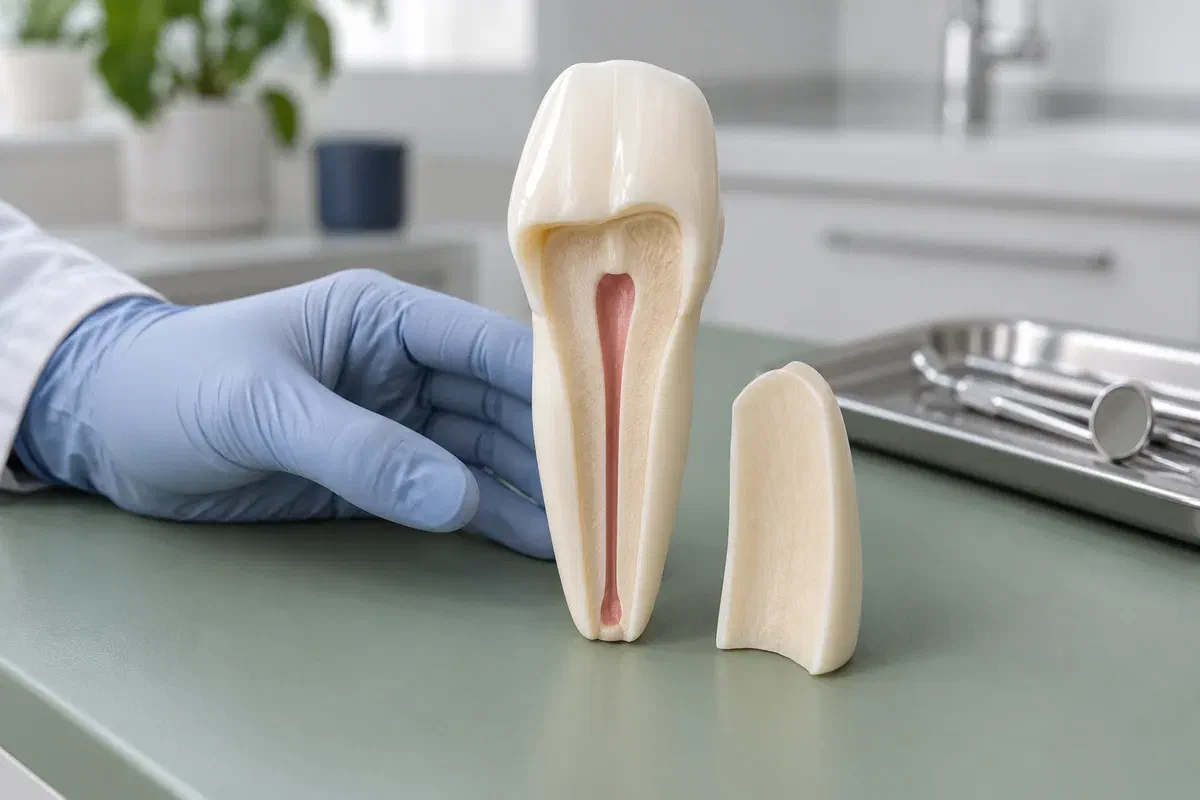
Pain is one clue, though an injured tooth can be eerily silent. An examination shows whether the pulp has been affected and whether a root canal or a different response is warranted.
Tell us what happened and when, whether it was a puck, a handlebar or an old childhood fall. A pulp can be harmed by a blow that left no large chip, and older events still count.
Aching that continues after cold or heat, discomfort that starts without warning, or tenderness when you bite should be investigated. Describe patterns carefully, as different problems can feel alike.
Darkening over weeks or months, or a small gum bump that recurs, warrants an assessment. One finding on its own does not confirm a diagnosis, and comfort does not prove the tissue is healthy.
If an adult tooth is knocked completely out, seek advice right away. A fresh dental injury calls for a prompt phone call, not a routine consultation booking.
Treatment removes the damaged pulp, cleans and shapes the canal, then fills and seals it. The intention is to manage the problem inside a tooth that can be restored, so it can continue serving you once a suitable final restoration is in place.
Success relies on a sound diagnosis, root anatomy, any fractures, how much tooth is left and the integrity of the final seal. Trauma can leave canals narrowed or calcified, which complicates treatment, and a referral to an endodontist may be suggested where specialist assessment helps.
Patient information: AAE — root canal treatment
Where the tooth is suitable, holding on to it avoids a new gap and lets the work concentrate on restoring the tooth already in your smile.
Chips from the injury, the access opening, shade and shape are considered together, tying the root work to the eventual look.
Tests distinguish a pulp problem from a fracture, a gum injury or pain from elsewhere, so the decision is based on evidence rather than sensitivity alone.
Ask how many visits are expected, whether you will have a temporary filling in between and who will do the final restoration. Knowing the order of events keeps a treated tooth from going unprotected.
The dentist reviews the injury and your symptoms, examines the tooth and gums and performs appropriate tests. Imaging assesses the root and surrounding bone, and restorability is weighed before treatment starts.
Local anaesthetic is used as appropriate, and a dental dam keeps the tooth isolated and dry. Signal if you feel discomfort or would like a pause.
A small opening, generally on the back of the tooth, reaches the pulp space. The canal is cleaned, shaped and sealed, sometimes with a temporary filling between stages.
The access opening and any injury damage are restored. Review visits monitor healing and symptoms, and you will learn which kind of restoration, from a filling to a crown, best suits the remaining tooth.
Follow your dentist’s or endodontist’s instructions. The tooth may feel unusual for a while, and a temporary restoration needs careful handling until the definitive one is finished.
Avoid biting hard foods or using the tooth to tear things open while it has a temporary filling. Check what you can chew and when it is fine to use normally.
Maintain your recommended cleaning routine and be gentle near tender gums. Let us know if the temporary cracks, drops out or feels loose.
Root canal care and the final restoration are connected but separate. Keep the restoration and review appointments so the opening is sealed properly and the tooth stays monitored.
Ask about comfort, appearance or the follow-up schedule. The root, the crown of the tooth and the details of the injury all shape the recommendation.
Bring a tooth that has been knocked, is aching or has changed colour to our Bronte Street practice. We will explain the findings, whether root canal care is appropriate, and the restoration, monitoring or referral that completes the plan.
Phone promptly about a new dental injury, severe pain or swelling. Online appointment requests are for non-urgent concerns.
