A bump or blow to the tooth
Front teeth can be affected by injury without breaking much. Tell the dentist about falls, sports knocks or past dental accidents, including ones you thought were too long ago to matter.


Nervous about what a root canal on a front tooth will actually feel like? Knowing each step tends to make the chair less daunting. From Caledon, see how comfort, numbing and breaks are handled from start to finish.
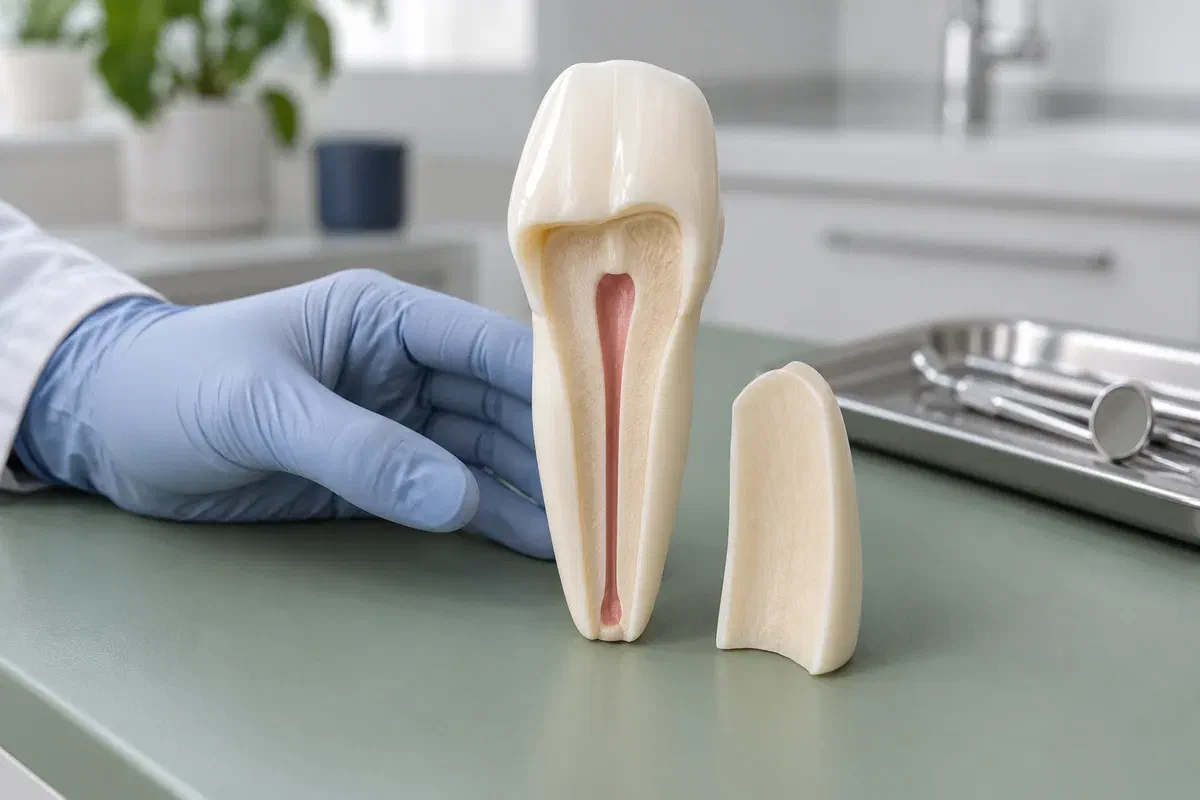
Root canals have a reputation that makes many people tense before they even sit down. It helps to know what the treatment is for. Inside every incisor and canine is the pulp, soft tissue carrying nerves and blood vessels. When it is infected or irreversibly inflamed, treating it may let you hold on to a front tooth that is still restorable.
Pulp problems usually start with deep decay, a crack, or an injury that may be recent or many years old. The outside of the tooth can look unremarkable. That is why the dentist relies on how you describe it, gentle testing and suitable imaging, and explains each finding as it comes.
From Bolton or one of the other villages across Caledon, northeast of Milton, you can ask for a consultation first, so you meet the team and understand the plan before any treatment. At our Bronte Street practice, bring questions about the look of the tooth as well: shade, the access filling, the tooth that remains and whatever restoration may follow.
Some people come in because of pain; others notice almost nothing. An examination determines whether the pulp is the source and if a root canal, or a gentler alternative, is the right choice.
Front teeth can be affected by injury without breaking much. Tell the dentist about falls, sports knocks or past dental accidents, including ones you thought were too long ago to matter.
Discomfort that persists after cold or heat, throbbing without a trigger or pain on biting are all worth describing. When and how it happens helps tell similar conditions apart.
A darkening tooth or a small swelling on the gum near its root should be checked. Neither proves the cause alone, and not feeling pain does not mean all is well underneath.
A permanent tooth that has come fully out of its socket needs urgent advice, so call right away. Please phone about any recent injury rather than waiting for a routine appointment.
Treatment removes the inflamed or infected pulp, cleans and shapes the canal, and fills and seals it. For a restorable tooth, the aim is to resolve the source of the problem so the tooth can keep working once it receives the right final restoration.
How well it works depends on the diagnosis, the root’s shape, cracks, how much tooth remains and a dependable final seal. Earlier trauma, calcified canals or previous treatment can make front teeth more complex, and an endodontist may be suggested when that would help planning or comfort.
Patient information: AAE — root canal treatment
Keeping a suitable natural tooth avoids a gap and lets the focus stay on restoring the tooth already in your smile.
Colour, shape, any existing damage and the access opening are discussed together, so you know how the tooth is expected to look.
Tests help separate a pulp problem from a crack, a gum issue or referred pain, and the dentist explains the reasons rather than relying on sensitivity alone.
Before anything begins, ask how many visits to expect, whether you will leave with a temporary filling and who places the final restoration. Knowing what is next tends to make each step easier and keeps the tooth protected.
Your symptoms and history come first, followed by an exam of the tooth and gums and some brief tests, such as cold or gentle tapping. Imaging checks the root, and restorability is weighed before treatment.
The dentist numbs the area with local anaesthetic and checks it has taken effect. A soft rubber sheet, the dental dam, then isolates the tooth. Agree on a hand signal to pause whenever you need to.
You may feel pressure or vibration but should not feel sharp pain; say so if you do. Access is usually through the back of the tooth, and the canal is cleaned, shaped and sealed, sometimes with a temporary filling in between.
The opening and any damage are restored. A follow-up confirms comfort and healing, and you will hear why a filling, crown or another restoration is the best fit for what remains.
Follow the instructions from your dentist or endodontist. Mild tenderness for a short time is common, and a temporary filling needs careful handling until the final restoration is placed.
Wait for the numbness to wear off, then avoid hard foods and never use the treated tooth to open packaging while it has a temporary filling. Ask what you can chew.
Continue your cleaning routine with a soft touch around tender tissue. Let us know if the temporary chips, loosens or comes out.
Treating the canal and restoring the tooth are separate steps. Book the restoration and review so the opening is sealed and the tooth can be checked over time.
No question about comfort or appearance is too small. What we recommend depends on the root, the visible tooth and any injury history.
Bring your worries along with that painful, injured or discoloured front tooth to our Bronte Street practice. The dentist explains the findings, whether root canal care is suitable, and the restoration or referral needed, at a pace that suits you.
Call promptly if you have a new injury, severe pain or swelling. Please save online requests for non-urgent appointments.
