A history of knocks
Tell the dentist about any fall, sports collision or face-first tumble, however long ago. A tooth can be affected by trauma without breaking, and childhood injuries can resurface later.


Your teenager chipped a front tooth years ago and now it aches, or it has quietly turned darker. Families coming from Georgetown can learn how a once-injured incisor is tested, treated if needed and restored to fit the smile.
Children and teenagers bump their front teeth often, on bikes, rinks and playgrounds, and most of those knocks heal without fuss. Occasionally the pulp inside an incisor or canine, its living core of nerves and blood vessels, is affected and later becomes infected or irreversibly inflamed. Root canal treatment may then help keep a tooth that can still be restored.
Injury is not the only cause in adults or teens; deep decay and cracks can reach the pulp as well. Signs may appear soon after an event or years later, and the tooth can look nearly normal throughout. The dentist relies on symptoms, testing and suitable imaging to understand what is happening.
For households in Georgetown fitting appointments around school, work and activities, it helps to know the likely number of visits early. At our Bronte Street practice we talk about the inside of the tooth and its appearance together: shade, access filling, remaining structure and any restoration that may be needed.
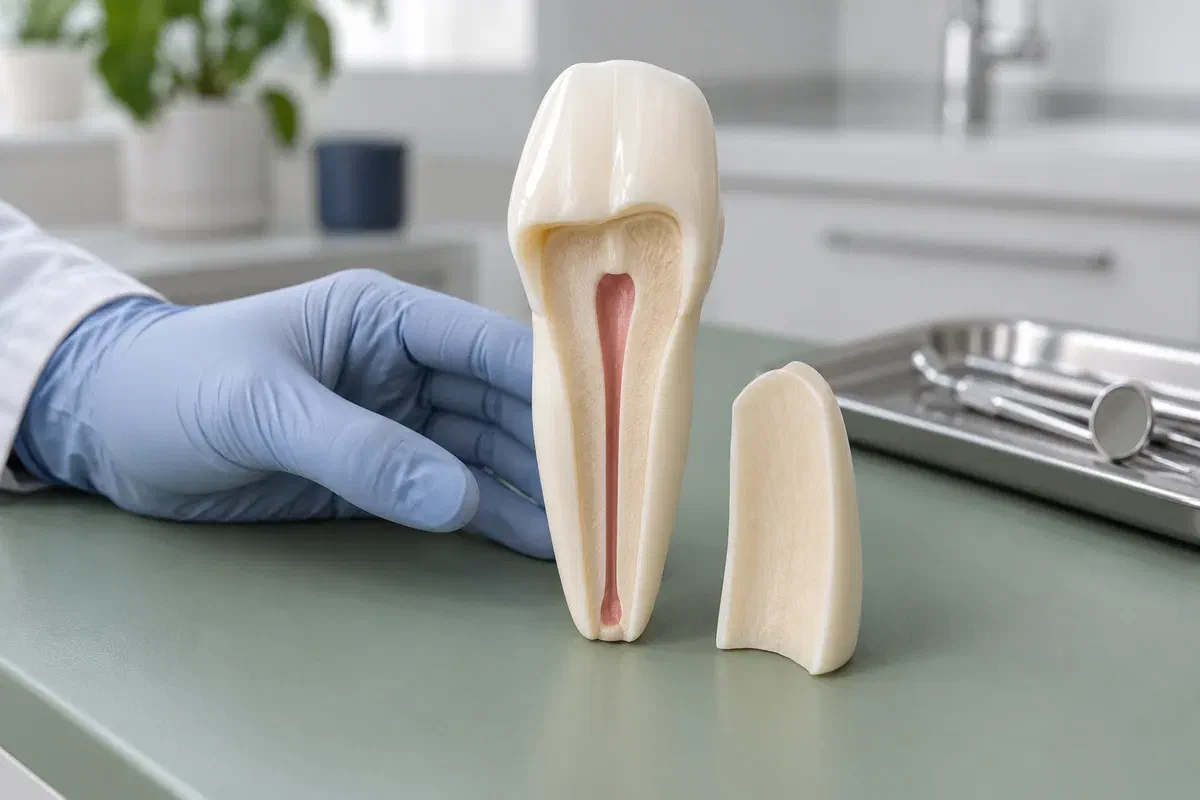
Pain is not always part of the picture. An examination shows whether the pulp is involved and whether root canal treatment or another approach suits the findings.
Tell the dentist about any fall, sports collision or face-first tumble, however long ago. A tooth can be affected by trauma without breaking, and childhood injuries can resurface later.
Pain after cold or hot food that does not fade quickly, aching that starts by itself, or soreness when biting should be checked. Describe the details, since problems can overlap.
Darkening, a yellowish or grey tint, or a small bump on the gum near the root deserves a look. A single sign does not settle the diagnosis, and no pain is not proof of health.
If a child’s or adult’s permanent tooth is knocked out, call for advice at once. A new injury needs prompt guidance by phone instead of a routine consultation.
Root canal treatment removes the affected pulp, cleans and shapes the canal and seals it. The goal is to manage the problem inside a restorable tooth so it can keep functioning after an appropriate final restoration, which matters for a young person with decades of use ahead.
Success depends on the diagnosis, root development and anatomy, cracks, remaining structure and the quality of the seal. Teeth injured in childhood may have narrowed or calcified canals, and a tooth whose root is still developing may need a different approach, so an endodontic referral is sometimes advised.
Patient information: AAE — root canal treatment
Retaining a suitable tooth avoids a gap and lets treatment focus on restoring the tooth already present.
Old chips, colour, shape and the access opening are considered together, so the treatment inside connects with the visible result.
Tests help distinguish pulp problems from cracks, gum issues or pain from elsewhere, so the plan responds to evidence, not sensitivity alone.
Ask how many visits are expected, whether there will be a temporary filling and who places the final restoration. A clear sequence helps families plan and keeps the tooth from going unprotected.
Symptoms and injury history are reviewed, the tooth and gums are examined and appropriate tests are done. Imaging shows the root and how far it has developed, and restorability is weighed first.
Local anaesthetic is used as appropriate, and a dental dam isolates the tooth. Nervous teens and adults alike can ask for breaks or a step-by-step explanation.
Access is usually through the back of the tooth. The dentist cleans and shapes the canal, then fills it, placing a temporary seal if treatment continues at another visit.
The opening and any old chips are restored. Follow-up checks healing over the coming months, and you will be told why a filling, a crown or some other restoration is the better match for what is left of the tooth.
Follow the instructions from your dentist or endodontist. The tooth can feel different for some time, and a temporary restoration needs care until the permanent one is placed.
Avoid biting hard foods, chewing pens or opening packaging with the treated tooth. Ask what is safe and when normal use can return.
Continue the recommended routine and be gentle near tender gum tissue. Call if the temporary filling chips, falls out or feels loose.
The root canal and the final restoration are separate steps. Book the restoration and review so the opening is sealed and the tooth can be monitored as the years go by.
Questions about comfort, appearance and timing are all welcome. The root, the visible tooth and the injury history shape what we suggest.
Bring a front tooth that was knocked, now aches or has changed colour to our Bronte Street practice. After testing, we will explain whether root canal care is appropriate, and what restoration, monitoring or referral would round out the plan.
Call promptly about any fresh injury, severe pain or swelling. Online booking requests are for routine concerns.
