A previous blow to the tooth
Trauma can affect the pulp even when the tooth did not break badly. Share every injury you remember, including falls or sports accidents you thought were long behind you.


Told a front tooth needs a root canal and unsure what to make of it? A clear explanation of the findings is a fair thing to expect. From Mississauga, review the diagnosis, the treatment and how the tooth will be restored.
Hearing that a front tooth needs root canal treatment can raise more questions than it answers. The anterior teeth are your incisors and canines, and inside each one lies pulp, a cluster of nerves and blood vessels. The treatment becomes an option when that pulp is infected or inflamed past the point of recovery, and the tooth is still sound enough to restore.
Ask what led to the problem. It might be decay that went deep, a crack, or trauma that happened lately or long ago. The tooth can appear almost untouched, so a good explanation should point to your symptoms, the test results and any imaging, not to how the tooth looks.
People from Mississauga, especially the western neighbourhoods such as Meadowvale and Churchill Meadows, sometimes come to our Bronte Street practice to talk a recommendation through. For a tooth in your smile, raise appearance early: possible colour, the access filling, how much tooth remains and the restoration likely needed afterward.
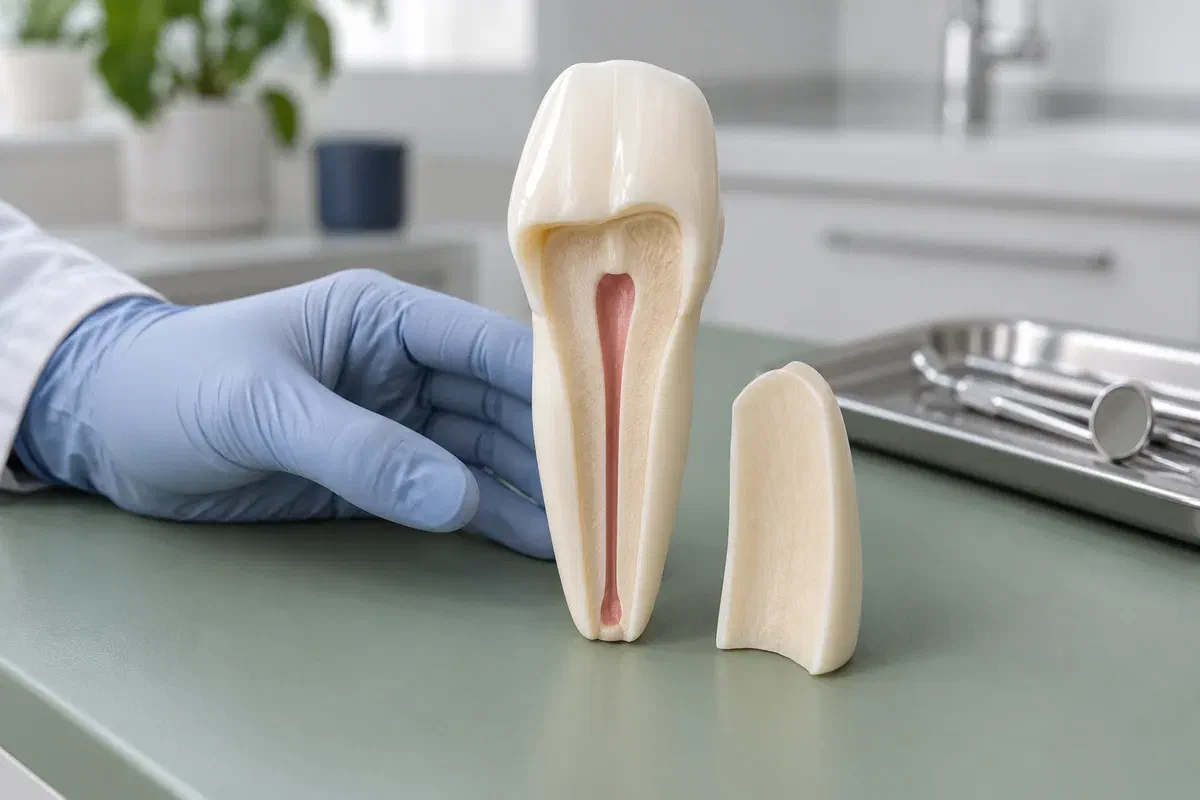
Some people arrive in pain; others had a problem picked up at a routine visit. An examination clarifies whether the pulp is involved and whether root canal care is really the right response.
Trauma can affect the pulp even when the tooth did not break badly. Share every injury you remember, including falls or sports accidents you thought were long behind you.
Lingering reactions to hot or cold, aching that starts by itself or soreness when you bite are useful clues. Describe how long it lasts and what sets it off, since different issues can mimic each other.
A tooth that darkens or a bump near the root that keeps reappearing should be examined. Neither confirms a diagnosis alone, and a lack of discomfort does not mean the tissue is healthy.
If an adult tooth has been knocked out completely, call for advice immediately. Recent injuries need prompt attention by phone rather than a routine root canal booking.
The dentist takes out the affected pulp, disinfects and shapes the canal, then fills and seals it. This is meant to control the problem within a restorable tooth so it can go on functioning after it receives a suitable final restoration.
Whether it succeeds depends on accurate diagnosis, root anatomy, cracks, remaining structure and a well-sealed final restoration. Earlier trauma, calcification or previous root treatment can make a front tooth more involved, and an endodontist may be brought in where specialist assessment would help.
Patient information: AAE — root canal treatment
When the tooth is a good candidate, keeping it means no new gap and lets the plan concentrate on restoring what is already there.
The access opening, existing damage, colour and shape are discussed together, connecting the root work with the final appearance.
Testing helps tell pulp disease from a crack, a gum problem or pain coming from another tooth, so the recommendation rests on evidence, not sensitivity alone.
Ask how many visits are planned, whether you will leave with a temporary filling and who will complete the permanent restoration. Understanding the full route helps keep the treated tooth protected.
Your history and symptoms are reviewed, the tooth and gums examined and suitable tests performed. Imaging lets the dentist assess the root and surrounding tissue, and whether the tooth can be restored is considered first.
Local anaesthetic is given as appropriate, and a dental dam separates the tooth from the rest of the mouth. Speak up if you feel anything or want a pause.
An opening, typically from behind the front tooth, leads into the pulp space. The dentist cleans, shapes and fills the canal, using a temporary seal between visits if needed.
The access and any weakened areas are restored. A follow-up checks symptoms and healing, and you will hear the reasons for a filling, a crown or another restoration on what remains.
Your dentist or endodontist will give specific instructions. Expect the tooth to feel a bit different for a time, and treat a temporary filling gently until the definitive restoration is placed.
Do not bite into very hard food or rip open packaging with a temporarily filled front tooth. Ask what is safe to chew and when you can return to normal.
Continue your recommended cleaning, staying gentle around tender gum tissue. Tell the team if the temporary breaks, comes loose or falls out.
The root canal and the final restoration are separate pieces of care. Arrange both the restoration and review visits so the access opening is sealed well and the tooth is watched.
It is reasonable to ask about comfort, appearance and the evidence behind the advice. The root, the visible tooth and any past injury all play a part.
Bring questions about a sore, injured or discoloured front tooth to our Bronte Street practice. We will go over the findings, whether root canal care is suitable, and the restoration or referral needed to finish treatment.
For a recent injury, severe pain or swelling, call us promptly. Use online requests only for appointments that are not urgent.
