A past blow to the mouth
Trauma can harm the pulp without breaking much of the tooth. Mention any fall, collision or earlier dental injury, including ones from many years ago that you assumed no longer mattered.


Is the ache in your front tooth coming from the nerve, the gum, or a hairline crack? Getting that answer comes first. Coming from Oakville, you can discuss testing, root canal care and a restoration that suits your smile.
Biting into a sandwich and feeling a sharp twinge in an incisor is unsettling, but the cause is not always obvious. Front teeth, meaning the incisors and canines, each hold pulp tissue with nerves and blood vessels. Root canal treatment may be suggested when that pulp is infected or irreversibly inflamed and the tooth itself can still be restored.
Several things can lead the pulp there: deep decay, a crack you cannot see, or a blow to the mouth, recent or long past. Gum problems and cracks can produce similar sensations, which is why diagnosis relies on symptoms, specific tests and suitable imaging rather than how the tooth looks.
Many people make the trip from Oakville, often from the northern neighbourhoods, to our Bronte Street practice for this kind of assessment. Use the visit to ask about everything that matters for a visible tooth: likely colour, where the access filling sits, how much structure is left and what restoration might follow.
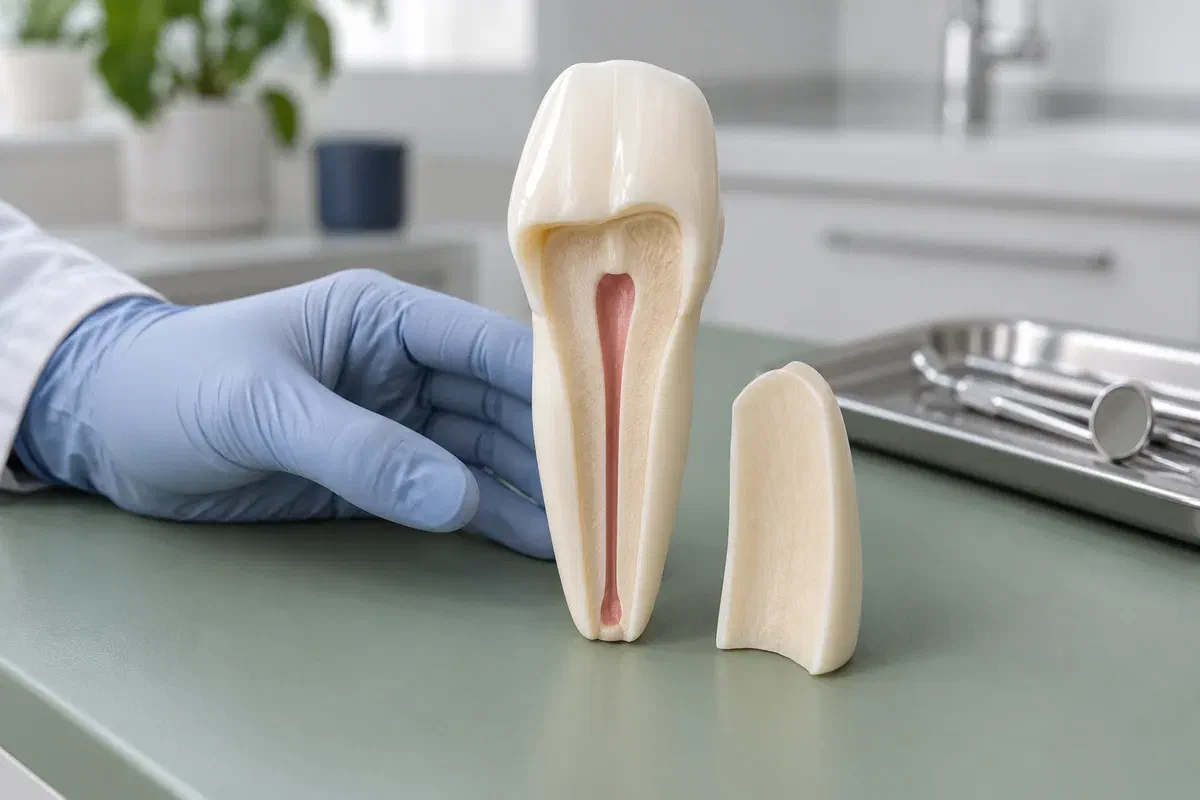
Pain is a common reason to come in, though a tooth with pulp trouble can feel almost normal. Examination clarifies whether the pulp is involved and whether a root canal is truly the treatment that fits.
Trauma can harm the pulp without breaking much of the tooth. Mention any fall, collision or earlier dental injury, including ones from many years ago that you assumed no longer mattered.
Cold or heat that leaves an ache behind, pain that arrives unprompted, or soreness on biting deserve a closer look. Note when it happens and what sets it off, because overlapping conditions can feel alike.
Gradual darkening or a small, recurring swelling beside the root should be assessed. Either finding alone is inconclusive, and a pain-free tooth is not always a healthy one.
When an adult tooth has been knocked out entirely, get advice immediately. Phone the clinic promptly about any recent dental injury instead of requesting a standard consultation.
The procedure removes the diseased pulp, cleans and shapes the canal and seals it with filling material. Its purpose is to resolve the issue inside a restorable tooth so that, with the right final restoration, it can keep functioning.
Outcomes hinge on the diagnosis, the anatomy of the root, any cracks, remaining structure and the quality of the final seal. Calcified canals, old trauma or earlier treatment make some front teeth more demanding, and an endodontist may be involved when specialist input would strengthen the plan.
Patient information: AAE — root canal treatment
Retaining a suitable natural tooth avoids a new space in your smile and keeps the focus on restoring the tooth you have.
Shape, shade, existing damage and the access opening are discussed up front, linking the internal treatment to how the tooth will look.
Tests help separate pulp disease from a crack, a gum problem or pain from elsewhere, so treatment follows the evidence rather than sensitivity alone.
Find out how many visits to plan for, whether a temporary filling is part of it, and who will place the final restoration. Having the full picture helps make sure the treated tooth never stays unprotected.
Symptoms and injury history are reviewed, the tooth and gums examined and relevant tests carried out. Imaging shows the root and nearby tissue, and the dentist judges whether the tooth can be restored before going further.
Local anaesthetic is applied as appropriate, and a dental dam keeps the tooth separated and the field clean. Let the clinician know if you feel discomfort or need a moment.
An opening, commonly on the tongue side of the tooth, leads to the pulp space. The canal is cleaned, shaped and filled, and a temporary seal may hold things between appointments.
The opening and any damaged areas are restored. A follow-up visit checks healing and symptoms, and the dentist explains whether a filling, a crown or something else is right for what remains.
Use the instructions your dentist or endodontist provides. The tooth can feel different for a time, and a temporary restoration should be handled gently until the permanent one is in place.
Keep very hard foods and packaging away from a front tooth with a temporary filling. Ask what you can safely chew and when normal use can resume.
Carry on with the cleaning routine recommended for you, taking care near sore gum tissue. Contact the team if the temporary breaks, comes out or feels insecure.
Root canal treatment and the final restoration are related yet distinct. Make the recommended restoration and review appointments so the opening is properly sealed and the tooth is followed over time.
Comfort and appearance questions are both fair game. The root, the visible part of the tooth and any history of injury all shape our advice.
Come to our Bronte Street practice with your questions about a tooth that is painful, injured or changing colour. We will review the findings, whether root canal care is appropriate, and which restoration or referral would complete the plan.
Call instead of booking online if you have a recent injury, severe pain or swelling. Online requests are meant for non-urgent visits.
