Previous injury
A knock to the mouth can affect the pulp even without a large fracture. Describe falls, sporting collisions or past dental accidents, including ones you considered long settled.


The root canal is only half the job. What seals and protects a front tooth afterward matters just as much for how it lasts and looks. From Rockwood, learn how treatment and the final restoration are planned as one.
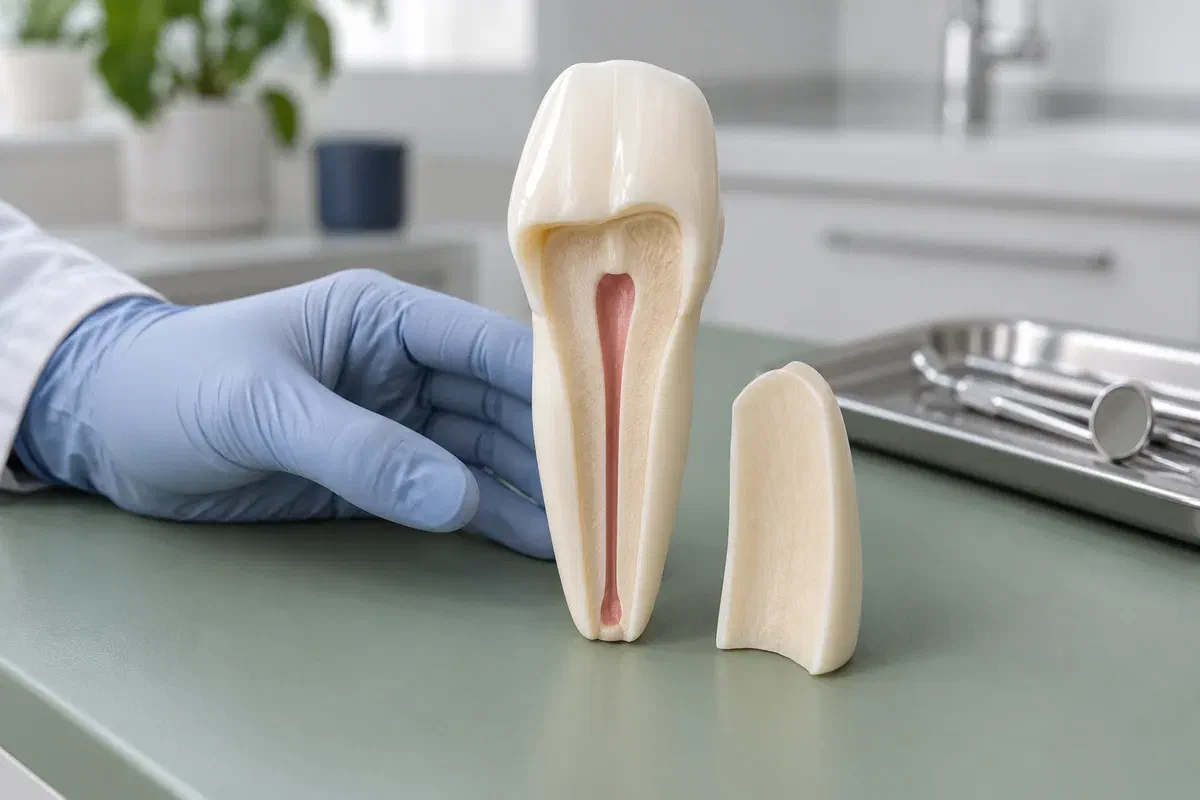
People often focus on the treatment itself and only later ask what comes next. A front tooth, whether an incisor or a canine, has pulp at its centre made up of nerves and blood vessels. Once that pulp is infected or too inflamed to recover, a root canal can save the tooth, but only if what remains can be rebuilt and sealed well afterward.
The cause shapes that rebuild. Deep decay may have removed tooth structure; a crack may need extra protection; an old injury may have left a chipped edge or a darker shade. Because the surface does not reveal everything, the dentist relies on symptoms, careful testing and appropriate imaging to plan both stages.
Coming from the village of Rockwood, northwest of Milton, you may prefer to know the full plan before the first appointment. At our Bronte Street practice we discuss the restoration from the outset: likely colour, how the access filling is placed, how much sound tooth remains and whether a filling or more coverage is expected.
Pain is one signal, but some troubled teeth stay quiet. An examination clarifies whether the pulp is affected and whether root canal treatment, rather than another repair, is the appropriate path.
A knock to the mouth can affect the pulp even without a large fracture. Describe falls, sporting collisions or past dental accidents, including ones you considered long settled.
Ongoing pain after temperature changes, aching without a trigger or soreness when you bite should be looked into. The timing and pattern help separate overlapping causes.
A tooth slowly losing its colour, or a small swelling near the root that comes back, deserves assessment. Neither finding is conclusive alone, and absence of pain is not evidence of health.
If an adult tooth has been completely knocked out, call for immediate advice. A recent injury needs a prompt phone call, not a routine consultation booking.
The treatment removes diseased pulp, disinfects and shapes the canal and fills it. That deals with the problem inside a restorable tooth. The restoration placed afterward then seals the access and supports what is left, so the tooth can continue working.
Long-term success depends on the diagnosis, root anatomy, cracks, the amount of structure remaining and, importantly, the quality of that final seal. Teeth with past trauma, calcified canals or earlier root work can be complex, and an endodontist may be involved when specialist assessment would help.
Patient information: AAE — root canal treatment
Keeping a suitable natural tooth avoids a gap and focuses treatment on rebuilding the tooth already in your smile.
Colour, shape, old chips and the access opening are weighed together, so the final restoration suits both the tooth’s strength and its appearance.
Tests show whether the trouble really lies in the pulp or in a crack, the gums or a neighbouring tooth, so the whole plan, restoration included, rests on accurate findings.
Ask how many appointments to expect, whether a temporary filling will be used and who will place the definitive restoration. When the whole plan is clear, the treated tooth is far less likely to be left unprotected.
Your symptoms and history are reviewed, the tooth and gums examined and suitable tests carried out. Imaging shows the root, and the dentist considers what restoration the tooth will likely need before starting.
Local anaesthetic is used as appropriate. A dental dam then surrounds the tooth so the treatment area stays dry and clean. You can request a pause at any point.
An opening on the back of the tooth reaches the pulp space, which is cleaned, shaped and sealed. Between stages, a temporary filling keeps the access closed.
The access is sealed and any lost structure rebuilt, with a filling for some teeth and a crown or other coverage for others. Review visits check healing and how the restoration is holding up.
Your dentist or endodontist will give you written or verbal instructions to follow. The tooth may feel a little different, and a temporary filling is not designed to last, so protecting it until the permanent work is done really matters.
Keep hard foods, nuts in the shell and packaging away from the temporarily restored tooth. Check with the team about safe foods and how long to wait.
Maintain your recommended cleaning routine, gently near tender gums. Let us know if the temporary chips, wears down or falls out.
Root canal treatment and the definitive restoration are separate steps. Arranging the restoration and reviews without long delays helps keep the access sealed and the tooth monitored.
Ask about strength, shade and timing as well as comfort. The amount of tooth remaining and its history guide which restoration we suggest.
Visit our Bronte Street practice with a front tooth that is sore, injured or darkening. After assessing it, the dentist explains whether root canal care fits, and how the restoration or a referral will complete the work.
Call us without delay about a fresh injury, intense pain or swelling. Use online requests for routine bookings.
