

Illustrative consultation reviewing a restorative treatment plan
Restorative Dentistry

Bite Reconstruction

When several teeth no longer work comfortably together, the whole bite deserves attention. Explore bite reconstruction in Milton with a staged plan for worn, damaged, or missing teeth.

Understanding the whole bite

Plan the teeth together, not just one repair at a time.

Bite reconstruction describes a coordinated restorative plan for teeth that need to function together more effectively. It may be considered when extensive wear, multiple failing restorations, missing teeth, or a combination of problems makes isolated repairs difficult to plan reliably.

It is not one standard procedure or a requirement to crown every tooth. The dentist looks at the condition of individual teeth, the way they contact, the supporting gums and bone, and the reasons damage developed. The resulting plan can involve different treatments in a carefully chosen sequence.

Your priorities matter as much as the list of possible procedures. At our Milton practice, explain what is most difficult day to day: chewing certain foods, repeated breakages, sensitivity, or uncertainty about several previous recommendations. Those details help focus the assessment and the conversation about realistic next steps.

Discuss your bite and restorative needs
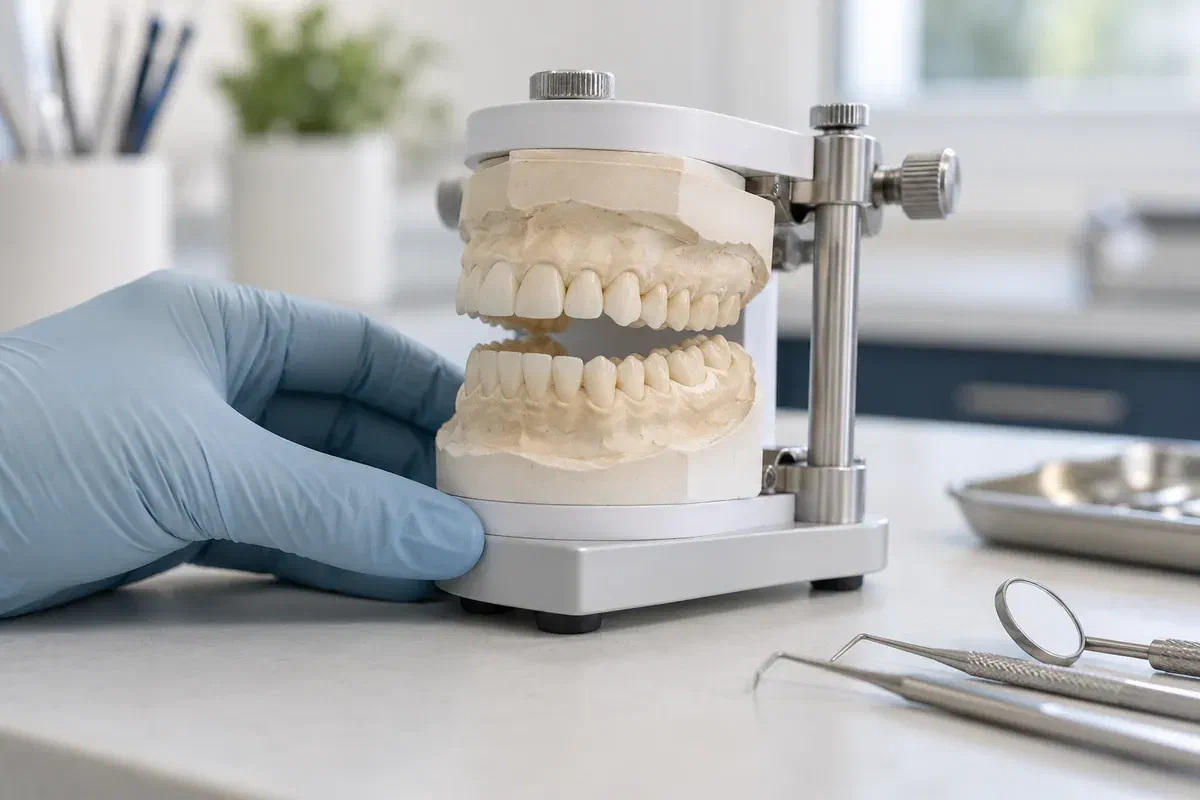
Dental study models mounted in an articulator to illustrate bite planning
When a broader review may help

Several connected problems deserve a connected plan.

A full-bite assessment can be useful when the condition of one tooth affects decisions about others. The aim is to understand those relationships before committing to a series of separate restorations.

Worn or shortened teeth

Changes in tooth shape can affect appearance and the space available for restoration. The dentist investigates the pattern of wear and possible contributors, including acid exposure and grinding, before deciding how to rebuild.

Repeated restorative problems

Several chipped crowns, broken fillings, or unstable repairs may justify looking at more than the latest damaged surface. Material, tooth structure, bite, maintenance, and other causes all need consideration.

Missing teeth and uneven function

Gaps and heavily restored teeth can complicate the way a replacement is planned. Discuss where you chew comfortably and which areas you avoid so the assessment reflects how your mouth actually functions.

Jaw pain has many possible causes. Bite reconstruction should not be presented as an automatic cure for jaw-joint symptoms without a separate diagnosis and an appropriate discussion of alternatives.

The value of coordinated care

A clearer sequence for complex restorative decisions.

The main benefit of a reconstruction plan is coordination. Decisions about tooth shape, available space, replacement teeth, and the order of treatment can be considered together. This may help avoid completing one restoration before understanding how it fits the next stage.

Complex treatment also involves trade-offs: cost, time, maintenance, changes to tooth structure, and uncertainty about long-term performance. A thoughtful plan explains these considerations and identifies where conservative treatment or monitoring may be preferable to a larger intervention.

Priorities you can understand

Separating urgent disease or damage from later functional and appearance goals helps you understand which recommendations matter first and why the sequence is proposed.

A chance to assess proposed changes

Models, photographs, and sometimes provisional restorations can support the discussion. Where appropriate, these steps allow aspects of the plan to be evaluated before definitive work is completed.

Maintenance built into the decision

A restoration needs ongoing care. Planning should address cleaning access, review appointments, and whether protection from grinding or other risk factors is appropriate for the completed work.

From assessment to staged treatment

Understand the starting point before changing the bite.

Reconstruction usually requires more planning than a single filling. Ask how the diagnosis will be established, which parts of the plan are optional, and what happens if a tooth’s condition changes during treatment.

  1. Gather a full picture

    The assessment reviews symptoms, dental history, tooth and gum health, existing restorations, and relevant medical factors. Appropriate imaging, photographs, scans, or study models may help document the current situation.

  2. Set priorities and alternatives

    Discuss the goals for comfort, function, and appearance, along with costs and the expected sequence. Active disease may need treatment first, and some elements may require coordination with a specialist.

  3. Evaluate and restore in stages

    The sequence may involve stabilization, provisional work, and definitive restorations. Any proposed change in tooth contacts or dimensions should be explained and reviewed rather than introduced as an unexplained part of the process.

  4. Refine and maintain

    After treatment, reviews assess comfort, function, cleaning, and the condition of the restorations. Report persistent symptoms early so the dentist can investigate and decide whether adjustment or further evaluation is needed.

Living with the completed work

A reconstruction needs a practical maintenance routine.

Your care instructions depend on the restorations and natural teeth involved. Ask for guidance that explains how to clean each area and what changes should prompt a review.

Learn the cleaning access

Bridges, implant restorations, and individual crowns may need different cleaning techniques. Have the team demonstrate suitable tools and show you where plaque tends to collect around your own restorations.

Report a change in function

A new high contact, a persistent sore tooth, or repeated chipping should be assessed. Avoid repeatedly testing a painful area with hard foods or trying to adjust a restoration yourself.

Use prescribed protection consistently

If an appliance is recommended for grinding or clenching, follow the fitting and wear instructions. Bring it to reviews so its condition and fit can be checked as part of the maintenance plan.

Choosing the scope of treatment

The right plan may be limited, staged, or more comprehensive.

Ask what would happen with a smaller approach as well as with reconstruction. A recommendation should explain the expected benefit and the compromises of each reasonable alternative.

When problems can be managed locally

Targeted repairs and monitoring

Some situations can be addressed with selected repairs and prevention while other teeth are monitored. This may be appropriate when a broad change would add complexity without a clear clinical advantage.

When priorities need a sequence

A phased restorative plan

Disease control and vulnerable teeth can be addressed before later restoration or replacement stages. The plan should explain how interim work is maintained and what limitations remain between appointments.

When different areas of expertise are needed

Coordinated multidisciplinary care

Some mouths need restorative planning alongside periodontal, orthodontic, surgical, or endodontic care. Referral can help establish the sequence and clarify which clinician is responsible for each part.

Questions about bite reconstruction

Make room for the questions behind a bigger decision.

A detailed treatment plan should be understandable without dental training. Ask for explanations of the starting problem, proposed changes, alternatives, and responsibilities for follow-up.

(905) 876-4488
Does bite reconstruction mean crowning all my teeth?
No. The term describes coordinated planning rather than a fixed list of procedures. Some teeth may need small repairs, some may need larger restorations, and others may need no treatment. Ask for the clinical reason behind each proposed procedure in the plan.
Is reconstruction the same as a cosmetic smile makeover?
The goals can overlap, but reconstruction addresses restorative and functional needs across the bite. Appearance may be part of the conversation, while disease, remaining structure, and chewing function also influence the plan. Aesthetic preferences alone do not determine the treatment required.
Can the work be spread over several stages?
Often a plan can be phased, but the safe sequence depends on the teeth involved and how the stages interact. Discuss timing and budget early. Ask what interim restorations would be needed and whether delaying a particular stage would change its risks or options.
Will changing my bite fix jaw-joint pain?
That should not be assumed. Jaw-joint and muscle pain can have multiple causes and may require a separate assessment. Ask what diagnosis supports any proposed bite change and whether reversible or more conservative approaches should be considered before irreversible treatment.
What if I grind my teeth after the reconstruction?
Grinding can continue even after restorative work. Discuss how the underlying risk will be managed and whether a protective appliance is appropriate. Restorations still require monitoring, and an appliance does not make them immune to wear or damage.
Can I review another dentist’s reconstruction proposal with you?
Yes, you can request an assessment and bring the written plan, available records, and your questions. The dentist will need to evaluate your mouth independently. Understanding the rationale for different recommendations can help you make a more informed decision.
Bite reconstruction in Milton

Start with a clear view of the whole situation.

Book time at our Bronte Street practice to discuss multiple worn, damaged, or missing teeth. Bring existing treatment plans and your priorities so the consultation can focus on the assessment and sequence that make sense for your mouth.

For a newly broken tooth, significant pain, or swelling, please call so the team can discuss the urgency of your concern.

Visit Milton Dental Clinic
Unit 1, 342 Bronte St. S, Milton, ON L9T 5B7
Get directions Clinic hours
Monday–Thursday
11am–7pm
Friday–Sunday
By appointment only

How can we help?

Milton Dental Clinic

Have a question about your smile? Choose the option that works best for you.

For urgent dental concerns, please call.
Messages are reviewed during clinic hours.