Flattened, shortened teeth
Worn chewing surfaces grind food less efficiently and leave less room for restorations. Before planning, the dentist considers causes such as clenching, grinding and acidic drinks or reflux.


Cutting steak into tiny pieces, chewing only on the left, skipping apples altogether. When worn, damaged or missing teeth change how you eat, Burlington households can turn to us for a bite plan built around comfortable chewing.
People rarely describe their bite in dental terms. They say they have stopped eating crusty bread, that one side does all the work, or that a molar aches after a chewy meal. Those small workarounds usually build up over years, and they are often the clearest description of how the teeth are functioning.
Bite reconstruction is a coordinated plan to help teeth share that work again. It might be suggested when wear, a cluster of broken or failing restorations, or missing teeth make a single repair hard to plan well. No standard set of procedures applies. The dentist looks at each tooth, how the teeth meet, the gums and bone beneath, and why damage happened, then selects treatments and an order.
Before your visit from Burlington, it helps to notice your own habits for a week. Which foods do you avoid? Where do you chew? Does anything feel sore afterwards? Those observations, along with any past recommendations, give the assessment a practical focus.
A whole-bite review is useful when the state of one tooth limits what can be done for others. Seeing the relationships first means repairs can support each other rather than compete.
Worn chewing surfaces grind food less efficiently and leave less room for restorations. Before planning, the dentist considers causes such as clenching, grinding and acidic drinks or reflux.
If a crown keeps chipping or the same filling keeps breaking, the forces on that tooth may be part of the story. The remaining tooth, materials, bite and cleaning habits all need weighing.
Without some back teeth, the front and remaining molars take extra load, and spaces can shift. Tell us which areas you protect so a replacement can be planned around how you actually eat.
Sore jaw muscles or a clicking joint are not automatically a bite problem. These symptoms can have several causes and need a separate diagnosis before bite reconstruction is considered as an answer.
Coordinating the plan lets the dentist think about chewing surfaces, tooth height, gaps and the order of work all at once. A new restoration on one side can then be designed with the opposite teeth and future replacements in mind.
Larger plans involve trade-offs worth discussing openly: fees, appointments, ongoing care, tooth structure removed during preparation and uncertainty about how long work will last. Sometimes the best advice is a smaller repair or careful monitoring, and a good plan says so.
Decay, infection or cracked teeth are addressed before goals for chewing comfort and appearance, so each recommendation comes with a reason for its place in line.
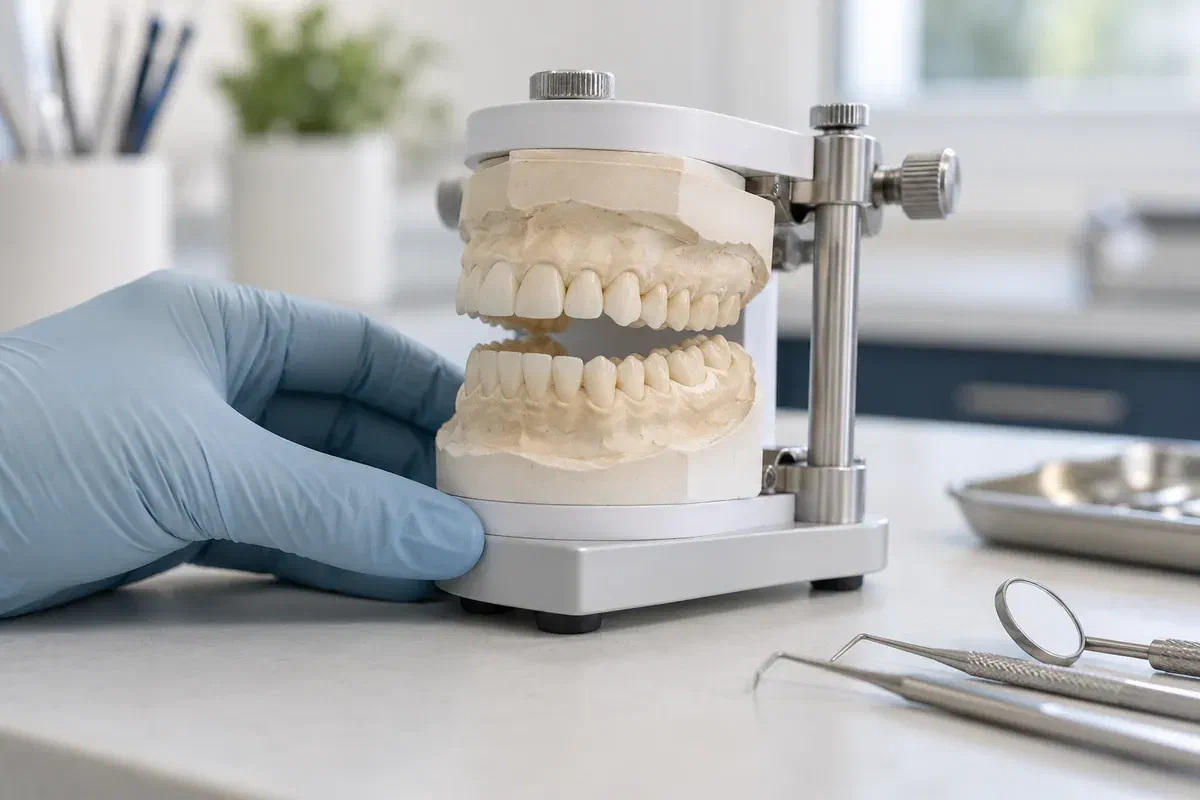
Models, photographs and, where appropriate, provisional restorations let you try out a proposed shape or bite before definitive restorations are made.
The plan should explain how to clean each restoration, how often it will be checked, and whether a guard is worth wearing to protect the work.
Reconstruction is planned with more care than a one-off filling. Ask how the diagnosis is made, which parts are optional, and how the plan changes if a tooth surprises everyone.
We cover symptoms, eating habits, dental history, teeth, gums, existing restorations and relevant health issues. Imaging, photographs, scans or study models may record the bite in detail.
We talk about what you want from chewing, comfort and appearance, and outline fees and sequence. Active decay or gum disease is usually treated first, sometimes with a specialist.
Stabilizing weak teeth may come before provisional restorations and then final ones. Changes to how teeth contact or to their height are explained and reviewed before they are made permanent.
Follow-up visits check chewing comfort, cleaning and the condition of restorations. Mention a tooth that keeps aching so the dentist can investigate and decide on any adjustment.
What you need to do depends on the restorations and natural teeth involved. Ask for instructions that cover each part of the mouth and the signs that should prompt a call.
Bridges trap food differently from single crowns, and implant crowns need their own care. Have the hygienist show you which floss, small brushes or threaders suit your restorations.
Notice whether any tooth hits early or stays tender. If one does, let us know rather than chewing through it, and never try to smooth or reshape a restoration yourself.
If a guard is recommended for clenching or grinding, wear and store it as instructed. Bring it to reviews so the team can check its fit and wear along with your teeth.
You should be able to follow a treatment plan without dental training. Ask about the starting problem, the proposed changes, the alternatives and who handles follow-up.
Book a consultation at our Bronte Street practice to discuss worn, damaged or missing teeth. Bring previous plans and a list of the foods and habits you have changed, and we will focus on an assessment and sequence that suits your mouth.
For a tooth that has just broken, strong pain or swelling, please call first so the team can talk through how urgent it is.
