Teeth worn thin over time
Worn enamel leaves teeth weaker and shorter, with less room for restorations. The dentist considers causes such as grinding, clenching or acid exposure before planning how to rebuild.


Tired of rushing in each time another crown cracks? For households in Campbellville, a planned approach to worn, broken or missing teeth can replace a cycle of urgent patch-ups with a clear, scheduled sequence.
For many rural households, a broken tooth means rearranging chores, work and other people’s schedules at short notice. When it happens once, that is manageable. When a different tooth breaks every few months, it is worth asking whether the problems share a cause and whether a planned approach would serve you better than a string of quick repairs.
Bite reconstruction is that planned approach. It coordinates treatment for teeth that no longer work well together because of wear, failing restorations, missing teeth or several of these at once. There is no standard package, and it does not require a crown on every tooth. Instead, the dentist checks every tooth on its own merits, then the way upper and lower teeth fit, the health of the supporting tissues, and the reasons damage keeps happening.
From Campbellville, you can let us know which days suit your household and whether others in the family need visits too. Then tell us about the pattern you have noticed: which teeth break, what you were eating, and any earlier advice you were given.
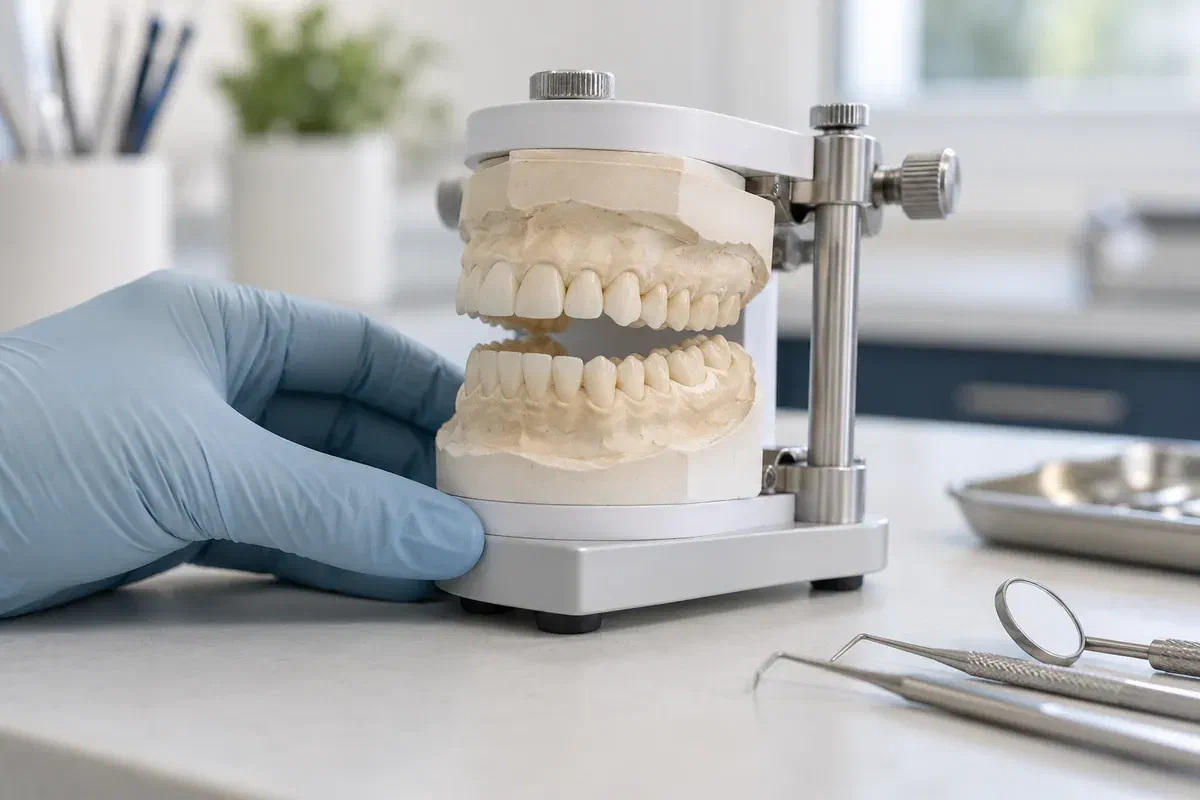
A wider assessment is useful when one tooth’s condition affects decisions for others. It can also reveal why repairs keep failing, so the next ones last as long as possible.
Worn enamel leaves teeth weaker and shorter, with less room for restorations. The dentist considers causes such as grinding, clenching or acid exposure before planning how to rebuild.
Repeated breakage may come from heavy bite forces, little remaining tooth, older materials or hard-to-clean areas. Looking at all of these helps avoid repeating the same repair.
With missing teeth, the remaining ones carry more of the chewing load. Mention the meals that give you trouble and the side you favour, so any replacement is planned around how you really eat.
Jaw pain can come from many places, and changing the bite is not a promised remedy. Jaw-joint and muscle symptoms deserve their own diagnosis and a look at reversible options.
With the whole bite considered at once, the dentist can decide tooth shape, space, replacements and the order of work together. Planned stages can then be booked in advance, which is often easier to fit around farm, work or family commitments than sudden repairs.
Planning does not remove trade-offs. Fees, appointments, upkeep, tooth reduction and uncertain longevity still apply, and a planned restoration can still chip. A good plan names these clearly and notes where monitoring or a smaller repair might be the better path.
Decay, infection and cracked teeth are flagged separately from later goals for chewing and appearance, so you know what must happen soon and what can be scheduled.
Study models, photographs or temporary restorations can let you see and feel proposed changes before definitive restorations are made, where that helps.
The plan covers cleaning tools, review intervals and whether a guard should protect the work from grinding or clenching.
Reconstruction takes more groundwork than a quick repair. Ask how the diagnosis is made, what parts could be left out, and how the plan adapts if a tooth changes along the way.
We look at symptoms, past repairs, teeth, gums, restorations and health factors. Imaging, photographs, scans or models can document the bite and the wear pattern.
We discuss goals for comfort, chewing and appearance, with fees and sequence. Active disease is usually treated first, and some steps may involve a specialist.
Weak teeth may be protected first, then provisional and final restorations follow. Any change to bite height or contacts is explained and reviewed with you.
Follow-ups check comfort, cleaning and the condition of restorations. Report lingering soreness promptly so it can be examined and adjusted if needed.
Your routine will depend on the restorations and natural teeth you end up with. Ask for clear instructions for each area and a list of the changes that should prompt a call.
Single crowns, bridges and implant restorations need different tools. Have the hygienist show you how to reach the spots where plaque gathers around yours.
A tooth that contacts first, tenderness that will not settle or tiny chips should be checked before they grow. Avoid biting hard on the area or adjusting anything yourself.
If an appliance is recommended for clenching or grinding, follow its wear and cleaning instructions, and have its fit checked when you come for reviews.
Nobody should need dental training to follow their own plan. Ask why the breaks happen, what the work will change, which other routes exist and who you contact afterwards.
Book a consultation at our Milton practice on Bronte Street and talk to us about worn, broken or missing teeth. Bring past plans and notes on what has failed so we can focus on the cause and a workable schedule.
If a tooth has broken suddenly and hurts, or there is swelling, phone the team so they can help you decide how soon to come in.
