Wear that has changed tooth shape
Shortened, flattened teeth leave limited room for restorations. The dentist looks for drivers such as grinding, clenching or acid exposure, since they will keep affecting new work if left unmanaged.


A rebuilt bite is only as durable as the routine that follows it. For people in Erin and Hillsburgh weighing a bite reconstruction, we plan the treatment and the years of home care and check-ups as one decision.
Picture the evening after your final restoration is placed. You brush, then reach for floss and realise the bridge needs a threader, the implant crown prefers a small brush and the bonded edges should not meet your teeth on a fork. The way you care for the work from that night on matters as much as how it was made.
Bite reconstruction is a coordinated restorative plan for teeth that no longer work comfortably together, usually because of wear, several failing repairs, missing teeth or a combination. No two plans look the same, and crowns are not placed on every tooth by default. The dentist reviews each tooth, the way the jaws close, the gums and bone, and what caused the damage before setting a sequence.
From Erin, it makes sense to think about upkeep at the planning stage. Ask how each option would change your daily routine and how often you would need reviews. Tell us what troubles you now, too: foods you avoid, sensitive spots or restorations that keep failing.
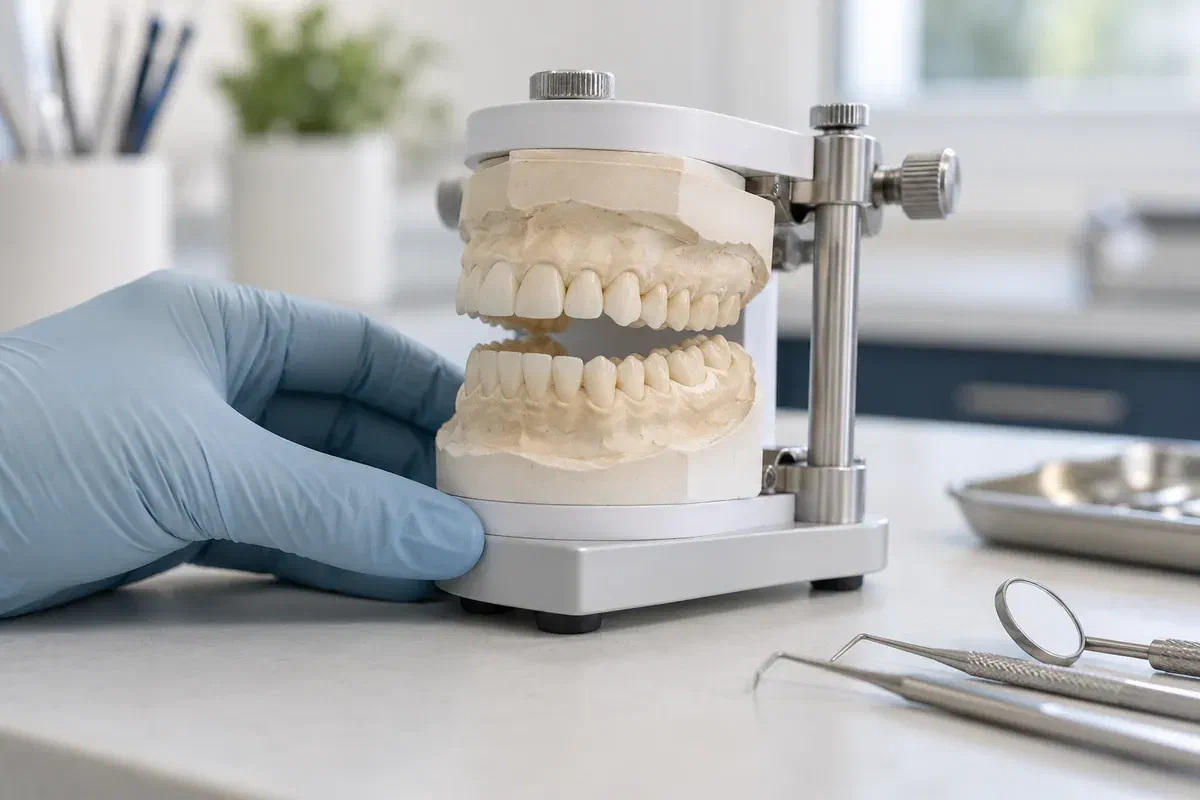
A broader assessment helps when one tooth’s condition shapes the options for its neighbours. It also shows early which areas will be hardest to keep clean, which can influence the design.
Shortened, flattened teeth leave limited room for restorations. The dentist looks for drivers such as grinding, clenching or acid exposure, since they will keep affecting new work if left unmanaged.
Leaking margins, recurrent decay and chipped crowns are often linked to how easily an area can be cleaned, as well as bite forces, materials and how much tooth remains.
Missing teeth alter how food packs and how the bite is shared, which affects replacement design. Mention which side you chew on and where food tends to catch.
Aching jaw joints or muscles have many possible causes. Bite reconstruction should not be treated as a reliable cure for them without a separate diagnosis and discussion of other approaches.
Planning the teeth together lets the dentist decide shape, space, replacements and timing at once, and include cleaning access in each choice. A contour that is easy to floss around can matter as much as how a crown looks.
Trade-offs remain. Fees, appointments, ongoing upkeep, tooth reduction and uncertain longevity all belong in the conversation. Sometimes a smaller repair or monitoring is the better choice, especially when a larger change would add hard-to-clean areas.
Active decay, infection or a cracked tooth is treated before goals for chewing and appearance, so you can see why the plan starts where it does.
Study models, photos and sometimes temporary restorations let you test shape, bite and cleaning access before final work is made.
Your plan should state how often restorations will be checked, which tools you will need at home, and whether a guard is recommended for grinding.
Reconstruction requires more preparation than a single repair. Find out what evidence the diagnosis rests on, which parts you could leave out, and how the plan would change if a tooth worsened during treatment.
Your symptoms, past treatment, home care habits, gums, existing restorations and medical factors all get a look. X-rays, photographs, scans or mounted models help record the starting point.
We discuss comfort, chewing and appearance alongside fees, timing and the maintenance each option brings. Active disease comes first, and a specialist may be involved.
Stabilizing weak teeth may come before provisional and final restorations. Changes to bite height or tooth contacts are explained and reviewed with you before they are finalised.
Regular reviews check comfort, function, gum health and restoration condition. A sore spot that outlasts a few days is worth a call, since a small adjustment may be all it needs.
Every mouth ends up with a different mix of restorations and natural teeth. Ask for a routine tailored to yours and a clear list of signs that mean you should book sooner.
Threaders under bridges, small brushes around implants and careful flossing at crown edges all take practice. Ask the hygienist to coach you in your own mouth, not just on a diagram.
A tooth that touches first, tenderness that will not settle or a small chip are reasons to call. Avoid chewing hard on a sore area and never try to smooth a restoration yourself.
If an appliance is recommended for grinding, keep it next to your toothbrush, clean it daily and bring it to reviews. Its fit can change, and so can your teeth.
You should understand your plan without a dental background. Ask about the starting problem, what will change, the maintenance involved and who handles follow-up.
Reserve time with us on Bronte Street and bring your questions about worn, damaged or missing teeth. Share past plans and your thoughts on daily care so we can suggest a sequence you can maintain.
Please call if a tooth has broken, or you are dealing with real pain or swelling. The team can help you judge how quickly to come in.
