Worn teeth beside the space
Neighbouring or opposing teeth that have worn down can limit the height and shape available for a replacement. The dentist considers causes such as grinding or acid exposure before planning.


A missing molar here, a weak tooth beside it, a worn tooth opposite: replacing one gap often depends on the others. From Georgetown, you can have the whole bite assessed so the replacement and repairs are planned as one.
It is easy to get used to a gap. You chew on the other side, food finds new places to catch, and the space stops feeling urgent. Over time, though, nearby teeth can tip, the opposing tooth may drift, and the remaining teeth carry more load. By the time you ask about replacing it, the gap is often part of a larger picture.
Bite reconstruction is how that larger picture gets planned. It brings together decisions about missing teeth, worn surfaces and failing repairs so they work as a set. It is not one procedure, and not every tooth needs treatment. The dentist examines each tooth, the way the jaws meet, the gums and bone, and how damage or loss came about before suggesting an order.
When you book from Georgetown, let us know how long the gaps have been there and how you currently manage: a partial denture, chewing on one side or avoiding certain foods. Share your hopes and concerns about replacement options as well, so the assessment covers what matters to you.
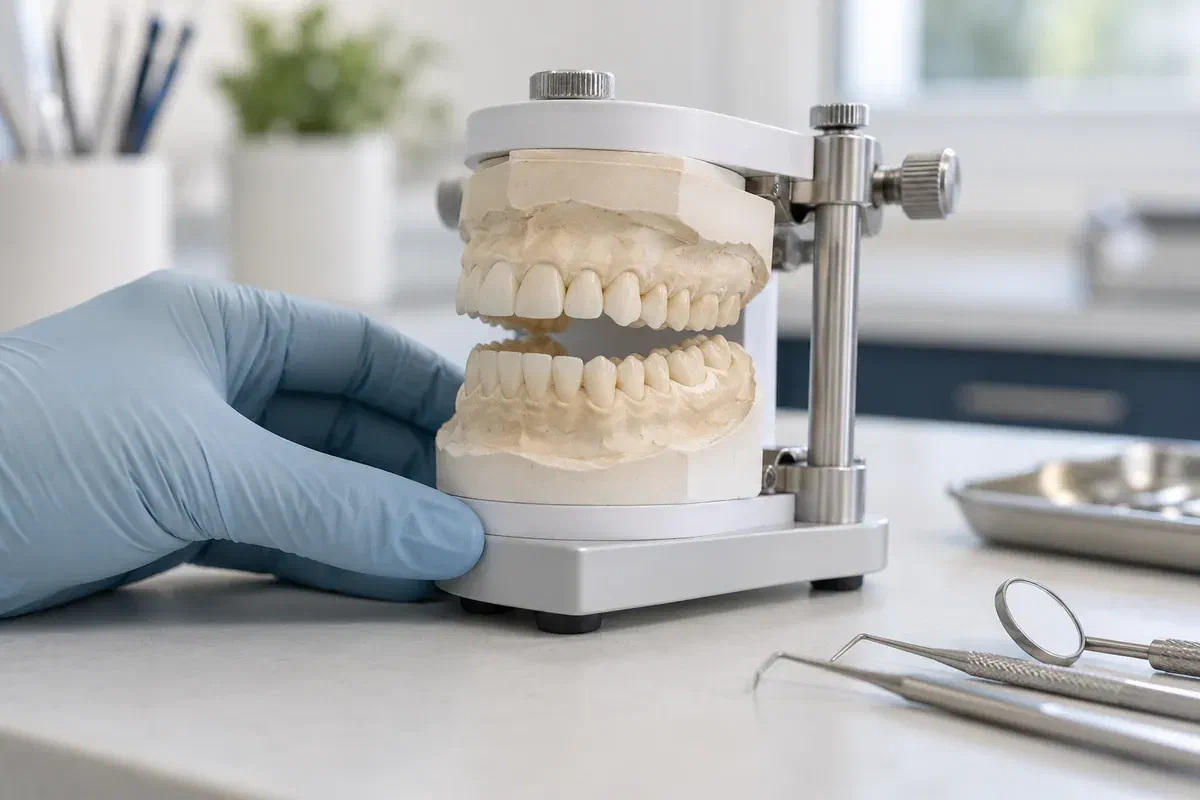
A broad review helps when the state of one tooth affects options for replacing another. Mapping those links prevents placing a replacement that later conflicts with the teeth around it.
Neighbouring or opposing teeth that have worn down can limit the height and shape available for a replacement. The dentist considers causes such as grinding or acid exposure before planning.
A bridge needs strong anchor teeth, and heavily restored ones may not be ideal. Remaining structure, bite forces, materials and how well the area can be cleaned all influence the choice.
Teeth near a long-standing gap can tilt or drift, changing how a replacement fits. Explain which side you rely on and what you avoid so the plan reflects your everyday bite.
Jaw discomfort can have many sources. Filling gaps or reshaping the bite is not a guaranteed cure for jaw-joint symptoms, which deserve a separate diagnosis and an open discussion of alternatives.
Planning together lets the dentist decide tooth shape, spacing, replacement type and order of work as one design. A crown on a neighbouring tooth, for example, can be shaped with a future bridge or implant in mind rather than redone later.
Replacing teeth also carries trade-offs. Fees, number of visits, upkeep, preparation of neighbouring teeth for a bridge, healing time for implants and uncertain longevity all play a part. Sometimes leaving a gap and monitoring is reasonable, and the plan should say so.
Decay, infection or a cracked tooth comes before replacement or appearance goals, so you can see why the plan begins where it does.
Study models, photographs and sometimes provisional restorations show how a replacement might look and fit before definitive work is completed.
Bridges and implants trap plaque in new ways. The plan should cover cleaning tools, review visits and whether protection from grinding is needed.
Reconstruction involves more planning than replacing a single tooth. It is worth asking how the diagnosis is reached, which stages you could skip, and how the plan would adapt if a supporting tooth weakens.
We review symptoms, history, existing restorations, the gaps and relevant medical factors. Imaging, photographs, scans or models may be used to judge bone and spacing.
We discuss goals for chewing and appearance, along with fees, timing and alternatives. Gum disease and decay are generally treated first, and implants may involve a surgical specialist.
Treatment may include stabilizing weak teeth, provisional restorations and then final work. Changes to bite height or contacts are explained and reviewed with you before they become permanent.
Reviews check comfort, function, cleaning and the condition of replacements and natural teeth. Mention lingering soreness so the dentist can investigate and adjust where needed.
Aftercare varies with the replacements and natural teeth involved. Ask for specific guidance for each area and for the warning signs that should bring you back.
Bridges need threaders or special floss beneath them, while implant crowns may suit small brushes. Ask the hygienist to show you the right tools for your mouth.
A new tooth that feels high, a tender neighbouring tooth or a chip should be checked. Avoid biting hard on a sore area or adjusting anything yourself.
If a guard is recommended, follow the wear and cleaning instructions. Having it checked at reviews means wear on the guard is caught alongside any changes to the replacements.
A treatment plan should be clear without dental training. Ask about the starting problem, what will change, the alternatives and who manages follow-up.
Arrange a planning appointment on Bronte Street and walk us through your missing, worn or damaged teeth. Bring any denture you wear, previous plans and your priorities so the assessment can focus on a realistic replacement sequence.
Phone ahead for a freshly broken tooth, significant pain or swelling. The team will help you judge whether it needs a prompt visit.
