Flattened chewing surfaces
Grinding can wear cusps flat and shorten front teeth, reducing room for restoration. Acid exposure can add to it. The dentist assesses both before planning how to rebuild.


Waking with tired jaw muscles, flat molars, crowns that keep chipping: grinding can quietly damage a whole bite. From anywhere in Halton Hills, we can look at the cause first and then plan restoration that accounts for it.
A partner mentions a grinding noise at night. You notice your jaw feels tight in the morning, or that a crown placed two years ago already has a chip. Clenching and grinding often go unnoticed because they happen during sleep or concentration, yet the forces involved can wear enamel and break restorations across many teeth.
When that damage has spread, repairing one tooth at a time may simply move the problem along. Bite reconstruction is the coordinated planning used to restore teeth together, with the cause kept in view. It is not a single procedure and does not automatically mean crowns everywhere. The dentist checks each tooth, how the jaws meet, the gums and bone, and the reasons damage developed, including habits like grinding.
Families in Halton Hills, whether in Georgetown, Acton, Glen Williams or a smaller hamlet, often juggle busy schedules. When you come in, tell us what you have noticed: sore muscles, sensitive teeth, chipped edges, or repairs that never seem to last. Those clues shape the assessment.
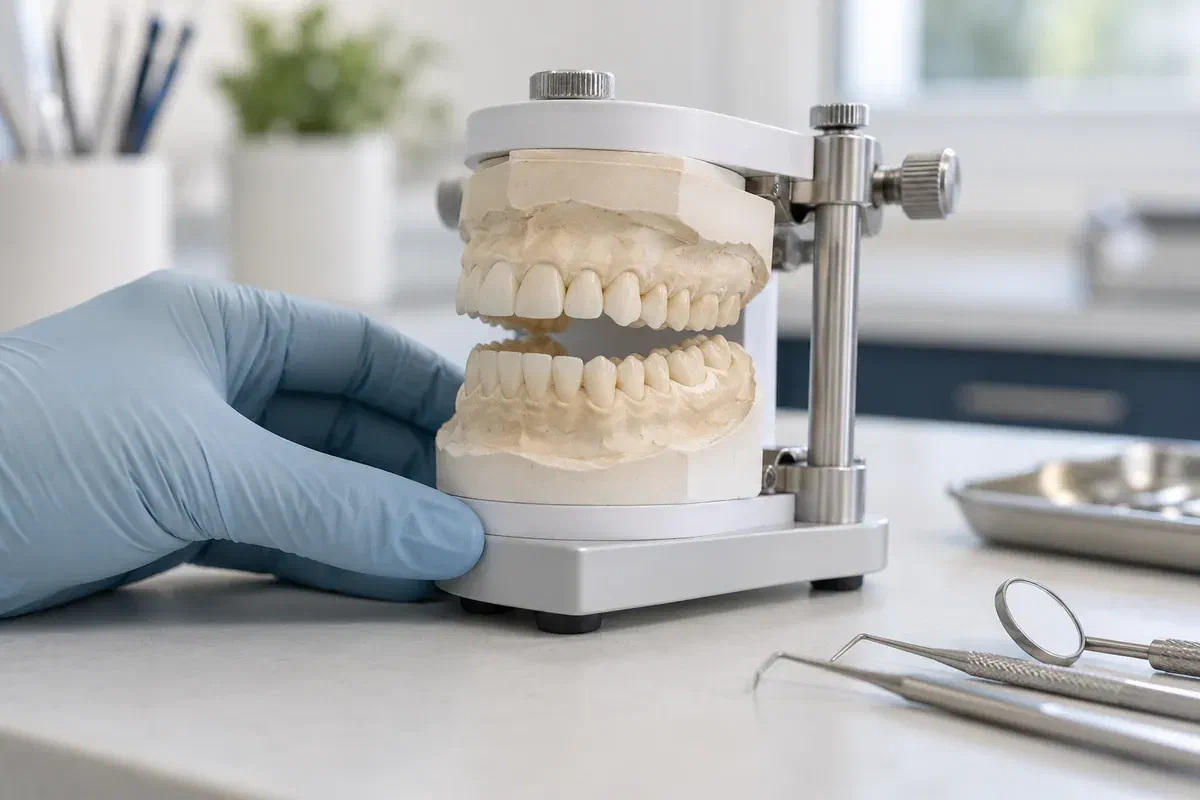
A whole-bite review is useful when the condition of one tooth affects the plan for others. With grinding in the picture, it also helps decide how much protection new restorations will need.
Grinding can wear cusps flat and shorten front teeth, reducing room for restoration. Acid exposure can add to it. The dentist assesses both before planning how to rebuild.
Repeated breakage may reflect strong forces on the teeth rather than a fault in one repair. Remaining tooth, material choice, bite pattern and daily care all need to be considered.
Gaps leave fewer teeth to absorb grinding forces, which can accelerate wear on the rest. Describe where you chew and what you avoid so the plan reflects your actual bite.
Tight muscles and jaw-joint aches can be linked to clenching, but also to other causes. A bite reconstruction should not be promised as a cure for these symptoms without a separate diagnosis and a discussion of alternatives.
When teeth are planned together, the dentist can choose shapes, materials, contacts and order of work with grinding forces in mind. That is hard to do one tooth at a time, especially when the opposite teeth are also worn.
There are trade-offs worth hearing plainly. Fees, appointments, maintenance, tooth preparation and uncertain longevity all apply, and grinding can still shorten the life of new work. A good plan shows where protection and monitoring may be wiser than more restoration.
Decay, infection and cracked teeth are separated from later goals for chewing and appearance, so the order of treatment has a clear rationale.
Models, photographs and sometimes provisional restorations allow new contacts and tooth shapes to be tested before definitive restorations are made.
Cleaning access, review visits and, where appropriate, a night guard are part of the plan, because the habit that caused the damage may continue.
Reconstruction requires more preparation than a single repair. Ask how grinding will be assessed, which stages are optional, and how the plan responds if a tooth changes during treatment.
We review symptoms, sleep and daytime habits, dental history, teeth, gums, restorations and health factors. Photographs, imaging, scans or study models help document wear and the current bite.
We discuss comfort, chewing and appearance, then outline fees, sequence and alternatives. Active disease usually comes first, and some aspects may need a specialist.
Treatment may involve stabilization, provisional restorations and then final work. Any change in bite height or contacts is explained to you and reviewed, not added without discussion.
Reviews look at comfort, chipping, cleaning and the condition of restorations and any guard. Report soreness that lingers so the dentist can examine it and adjust if appropriate.
Your routine depends on which restorations and natural teeth are involved. Ask for advice on each area and a clear sense of which changes mean a review is needed.
If an appliance is recommended, wear it as instructed and clean it daily. Bring it to every review so the team can check its fit and look for signs of heavy wear.
Many people clench while driving, working or concentrating. Teeth should usually rest slightly apart. Mention daytime clenching so it can be discussed as part of your care.
A tooth that hits first, a sore area or small repeated chips should be assessed. Avoid testing it with hard foods, and never try to adjust a restoration yourself.
A treatment plan should make sense to you without dental training. Ask about the cause, the proposed changes, the alternatives and how follow-up will be handled.
Set up a consultation on Bronte Street and tell us about worn, chipped or missing teeth and any grinding you have noticed. Bring past plans and your own observations so we can focus on the cause and a sensible order of care.
If a tooth has broken suddenly, or there is significant pain or swelling, please phone so the team can advise how urgent it is.
