Rebuilding worn teeth
Restoring lost height changes how teeth meet and look. The dentist first investigates why wear happened, such as grinding, clenching or acid, and then considers whether to test new proportions.


Nervous about committing to a new shape or bite you have never felt? From Rockwood, you can plan a bite reconstruction where proposed changes are often trialled first, so you can live with them before anything is final.
One of the hardest parts of agreeing to a large restorative plan is imagining the result. How will the new teeth feel when you bite into a sandwich? Will your smile still look like yours? Could your speech change? For many plans, those questions can be partly answered before final work, through models and temporary restorations you can wear and assess.
Bite reconstruction is a coordinated plan for teeth that need to function together better, often after wear, repeated restoration failures or tooth loss. There is no fixed formula, and it does not mean crowns on every tooth. The dentist examines individual teeth, how they contact, the gums and bone, and the causes of damage, then proposes a sequence that may include a trial stage.
If you are coming from Rockwood, tell us at the consultation what worries you most about change: appearance, comfort, speech or cost. Share what bothers you about your teeth now as well. Both sides help decide how much previewing your plan needs.
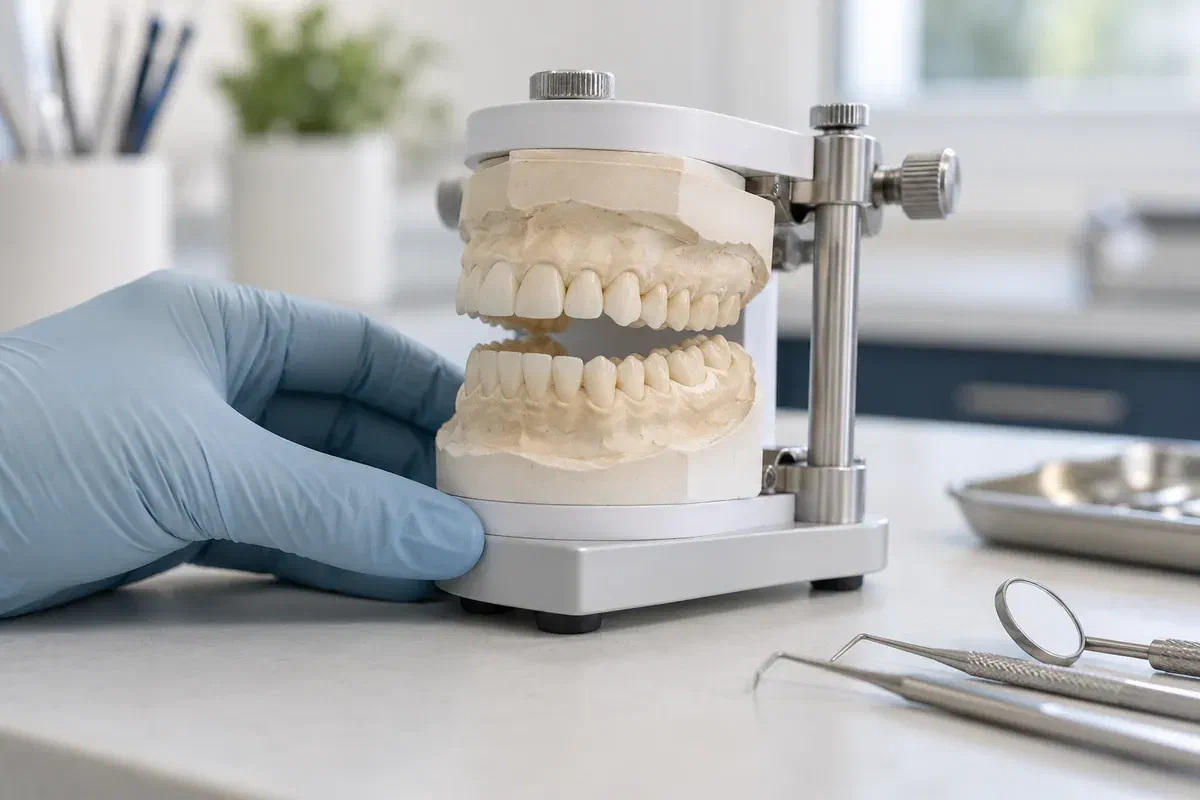
Previewing matters most when the plan alters tooth length, shape or contacts across several teeth. A full-bite assessment shows whether that kind of change is involved at all.
Restoring lost height changes how teeth meet and look. The dentist first investigates why wear happened, such as grinding, clenching or acid, and then considers whether to test new proportions.
When several crowns or fillings are redone, the shape and bite can shift. Remaining tooth structure, materials, bite forces and cleaning access all guide the design, which can be tested first.
Replacing missing teeth changes how chewing is shared. Say which side you use and what you avoid, so any trial replacement can be judged against your daily routine.
Jaw-joint and muscle symptoms need their own diagnosis. Trialling a new bite is not a test that proves reconstruction will cure jaw pain, and gentler options should be discussed first.
Planning the teeth together lets the dentist design shape, space, replacements and sequence as one. A trial stage then turns that design into something you can bite on, look at in the mirror and live with for a period before final restorations are made.
Trials have their own trade-offs. They add appointments and cost, provisional restorations are less durable, and some details only settle once final work is in place. Fees, maintenance, tooth preparation and longevity still need discussion, along with when a smaller approach would do.
Urgent needs such as decay, infection or cracked teeth are treated before the trial and final stages, so the sequence has a clear logic.
Models, mock-ups, photographs and provisional restorations let you comment on shape, comfort and appearance while changes are still easy to make.
Wearing provisional work shows where cleaning is tricky and whether grinding is an issue, which helps plan tools, reviews and protection.
A reconstruction with a trial stage needs careful preparation. Ask how the diagnosis is reached, which elements could be skipped, and what happens if a tooth changes during the trial.
We look at symptoms, history, teeth, gums, existing restorations and health factors. X-rays, photographs, digital scans and mounted models help us study the bite.
We discuss your goals for function and appearance, fees and timing. Active disease is treated first, and a specialist may be involved. Proposed changes can be mocked up on models.
Where appropriate, temporary restorations let you try the new shape and bite for a period. Any change in height or contacts is explained, reviewed and adjusted with your feedback.
Final restorations are based on what worked during the trial. Reviews then check comfort, function and cleaning. Mention persistent soreness early so it can be assessed.
Care instructions depend on the final mix of restorations and natural teeth. Ask for specific advice for each area and a list of the changes that should bring you back.
Many people discover during the trial which spots trap food. Keep using the floss, brushes or threaders the hygienist showed you around crowns, bridges or implant work.
Final restorations should feel close to the trial version. If a tooth now hits first, stays tender or chips, let us know, and avoid adjusting anything yourself.
If grinding showed up during the trial and a guard is recommended, wear and clean it as directed, and bring it to reviews to have its condition checked.
Your plan should be clear without any dental training. Ask about the starting problem, what the trial will show, the alternatives and who looks after follow-up.
Book a planning visit at our Bronte Street practice and bring your questions about worn, damaged or missing teeth. Share previous plans and your concerns about change so we can decide how much previewing your treatment needs.
If a tooth breaks without warning, or you notice strong pain or swelling, call the team so they can talk through how urgent it is.
