A sharp spot your tongue keeps finding
When porcelain chips, the core beneath may still be intact. Whether polishing or bonding makes sense depends on the defect’s size, its location, the exposed material, and the bite pressure there.


Eating around a cracked bridge, or talking with a gap where it used to sit, wears thin quickly. For Acton households, we examine what failed, look after the anchor teeth, and explain your repair and interim options clearly.
People often adapt to a broken bridge without meaning to. They cut food smaller, chew carefully on the other side, and avoid laughing openly. Those workarounds are understandable, but they can delay care for a problem that may be getting worse underneath.
A bridge fills a space by joining replacement teeth to anchors, which can be natural teeth or implants. When it chips, cracks, or loosens, the dentist needs to know whether the problem is the surface material, the joints between units, or the anchors themselves. Those answers lead to quite different plans.
When calling from Acton, let us know whether you can eat and speak comfortably, when the damage occurred, and whether the bridge moves or hurts. Bring any fragments in a lidded container. Notes about the bridge or the implant brand, if you have them, help us prepare.
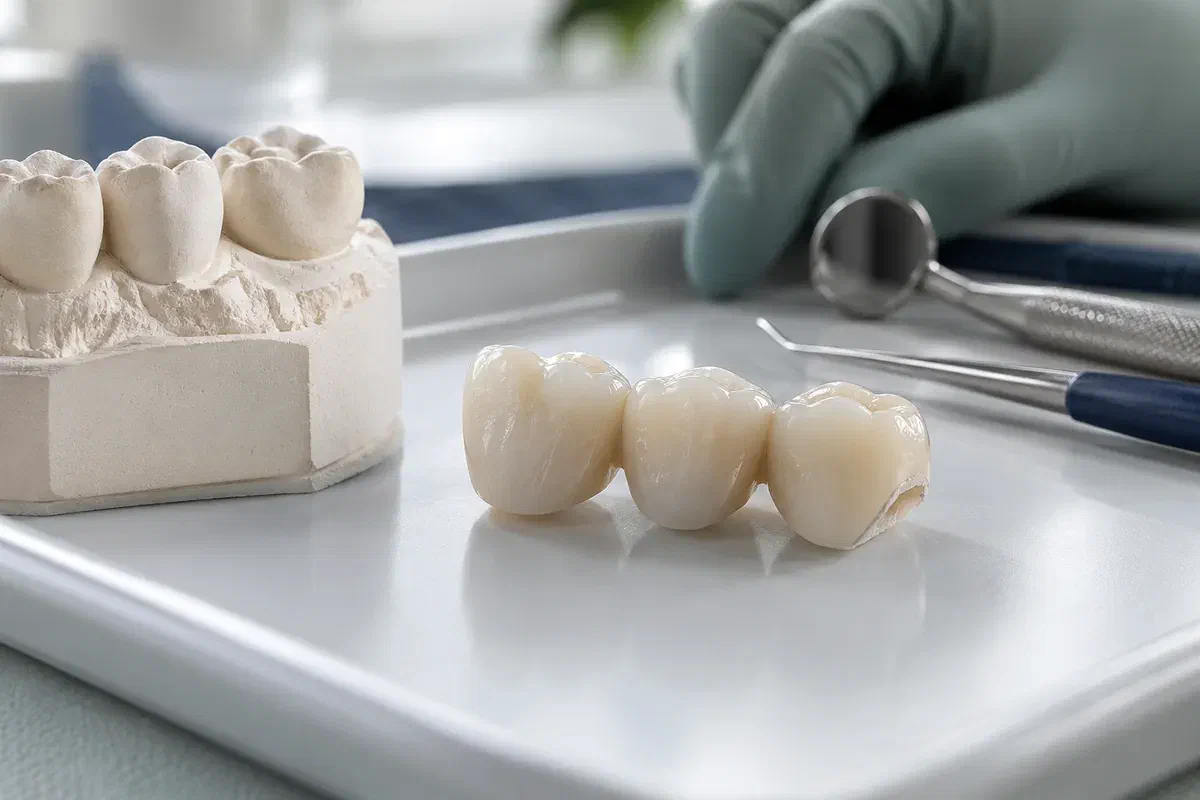
The bridge does not have to come out before you call. Tell us about new damage, movement, or discomfort, and the team can suggest timing and ways to manage until your visit.
When porcelain chips, the core beneath may still be intact. Whether polishing or bonding makes sense depends on the defect’s size, its location, the exposed material, and the bite pressure there.
Movement during chewing may mean the seal or an anchor tooth has failed. Try not to keep checking it, and do not use any household adhesive to stick it in place.
If you have started avoiding one side because of tenderness or sensitivity, the anchor or gum may be involved. The dentist examines supports, gums, and bite rather than focusing only on the visible chip.
Call for emergency help if a loose part could be swallowed or breathed in, or if breathing becomes difficult. Mention a detached bridge or piece when you book.
If the damage is limited and the bridge still fits and works, a repair may restore comfortable chewing while keeping a restoration that is otherwise doing its job, as long as the material and location allow it.
A repair has limits on an ageing bridge. Its bond, appearance, and wear all vary, and the cause of the original break may still be present. Knowing whether a fix is temporary or intended for longer service helps you plan meals, work, and future visits.
Patient information: Cleveland Clinic — dental bridges
The assessment separates a minor surface chip from structural or anchor issues that need a different kind of treatment, so the workaround is not masking something larger.
Sharp edges, how you chew, how easily you can clean, and the way your teeth meet are all reviewed, so the result works for real meals.
If replacement is the better path, the dentist explains why and discusses what can be done to keep you comfortable and functional while it is prepared.
Expect the first appointment to focus on diagnosis and stabilization, with a definitive repair possibly later. Ask what can be achieved on the day and whether lab work or more visits are needed.
The dentist checks the bridge, tests whether it is secure, and asks how eating and speaking have been affected. Earlier records may help identify materials or implant parts.
The supporting teeth or implants and gum tissue are examined. Imaging may be recommended to look for decay, root problems, or anything not visible on the surface.
Care could include polishing, a small repair, re-cementing, or a plan for a new restoration. If a temporary measure is used, you are told what it can handle and what it cannot.
Fit, bite, and comfort are checked, and you can try speaking and gentle chewing. Ask which signs mean trouble and whether a follow-up visit is worth booking.
Aftercare depends on the material and procedure. If the bridge is temporarily held or waiting for replacement, eating and cleaning guidance may be more cautious.
Start with softer meals and avoid hard or very sticky foods on the repaired area. Never use it to open packaging, and ask when normal chewing is appropriate if a temporary step is in place.
Food can collect beneath the replacement tooth. Ask the team to show you a threader, floss designed for bridges, or a small interdental brush suited to your restoration.
If you find yourself chewing around the bridge again because of looseness, roughness, or soreness, book a review. Save any detached piece and avoid repeatedly pushing it back.
Bridge damage varies. Bring any pieces, explain how eating and speaking are affected, and ask how the anchor teeth influence the recommendation.
Book a visit at our Bronte Street practice for a bridge that is chipped, cracked, or loose. We examine it and the teeth holding it, explain realistic repairs and interim options, and outline what else may be needed.
Please call us directly if the bridge is moving, painful, or the gum is swollen. Use online booking for non-urgent requests.
