Chipped porcelain
A fragment can break from the surface while the core stays sound. The dentist looks at the chip’s size and position, what is exposed, and the bite force there before suggesting smoothing or a bonded repair.


Your bridge is in your hand, or half off, and you are not sure what to do next. From Burlington, we can see you to find out why it failed, check the anchor teeth, and explain whether it can be reused or should be replaced.
Start by putting the bridge somewhere safe: a clean, closed container, not a tissue that can be thrown away. Rinse your mouth gently, check whether anything feels sharp or sore, and resist the temptation to push the bridge back in or glue it. Then call to describe what happened.
A bridge joins replacement teeth to anchor teeth or implants on either side of a gap. It can come out because the cement wore through, because an anchor tooth decayed or fractured, or because the bridge itself cracked. Those causes look similar in your hand but lead to very different plans.
For people travelling from Burlington, a call before you set out helps us know how much time to book and what to examine first. Mention whether you can eat and speak comfortably. Any notes about who placed the bridge, or which implant system was used, can also help us plan.
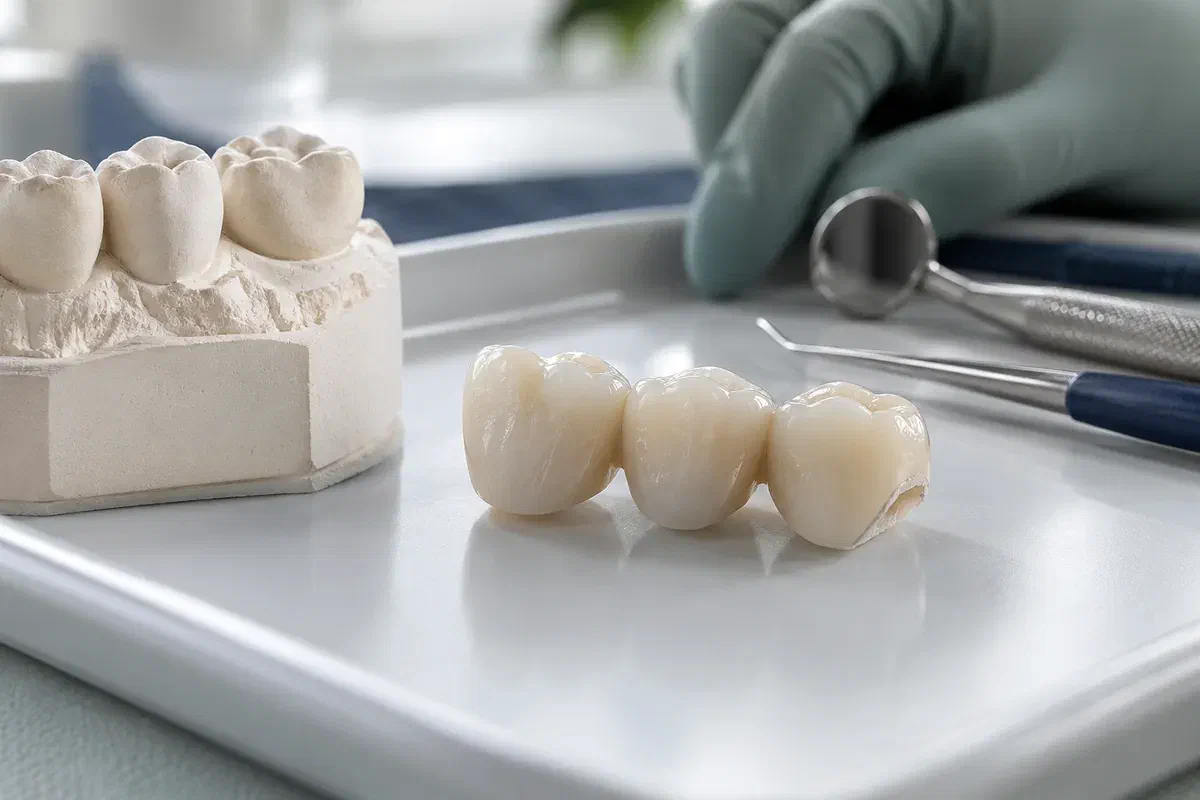
A bridge does not have to come out completely to need attention. Phone when you notice damage or movement so we can talk through timing and how to keep the area protected.
A fragment can break from the surface while the core stays sound. The dentist looks at the chip’s size and position, what is exposed, and the bite force there before suggesting smoothing or a bonded repair.
Sometimes only one side of a bridge comes loose, so it pivots when you chew. That can trap food and strain the other anchor. Avoid flexing it and keep household adhesives away.
Pain, sensitivity, or gum swelling around a supporting tooth may signal decay or infection rather than a simple break. Anchors, gums, and bite are all assessed before treatment is chosen.
If a loose bridge or piece could be swallowed or inhaled, or you have trouble breathing, call for emergency help. Otherwise, tell the clinic about any detached part when you book.
A bridge that has loosened in one piece, or has only a small chip, may be worth keeping if it still fits well. Repair or reattachment can avoid replacing sound work too early, provided the material, design, and anchor teeth make that suitable.
No repair makes an older bridge new. The strength of the bond, appearance, wear, and the original reason it failed all affect the outcome. You should know before you leave whether a fix is a stop-gap or intended for longer service.
Patient information: Cleveland Clinic — dental bridges
The exam separates a worn cement seal or a surface chip from a structural problem in the bridge or its anchors that needs a different approach.
Edges, cleaning access, and how your teeth meet are checked along with appearance, so the result works for the way you actually use the bridge.
If reuse or repair is unlikely to last, you will hear why and can compare options, including the condition of the anchors and any interim needs.
The first visit may be about diagnosis and making you comfortable rather than a finished repair. Ask what can be done on the day and whether a lab or a return visit will be needed.
The dentist examines the bridge in and out of the mouth, looks at the cement and margins, and asks how it came loose. Records may help identify the material or implant parts involved.
The supporting teeth or implants and surrounding gum are checked. Imaging may be recommended to look for decay, a cracked root, or other findings that cannot be seen directly.
Care might involve re-cementing, polishing, a small repair, or planning a new restoration. Any temporary placement and its limits are explained before you start depending on it.
After treatment, the fit, bite, comfort, and cleaning access are reviewed. Ask which signs would mean something is wrong and whether a follow-up check is recommended.
Aftercare depends on the procedure and material. A bridge that is temporarily seated or waiting for replacement may come with different eating and cleaning advice than one that has been permanently re-cemented.
Chewy caramels and hard foods can stress fresh cement or a repair. Ask how long to be cautious, especially if a temporary measure is in place, and never use the bridge to open things.
The space under the replacement tooth needs daily cleaning. Ask the team to show you floss threaders or interdental brushes suited to your bridge, rather than forcing floss down between the teeth.
If the bridge loosens again or your bite feels different, book a review. Keep it safe if it comes out and call; repeatedly pushing it back in can make assessment harder.
Each failure is a little different. Bring the bridge, describe any pain or movement, and ask how the anchor teeth influence the plan.
Book an assessment at our Bronte Street practice to have a loose, chipped, or broken bridge examined. We check the restoration and its anchors, discuss realistic options, and explain what further care may be needed.
Please call if the bridge is loose, painful, or the gum is swollen. Online requests are for non-urgent appointments.
