A chip that seems minor
Surface porcelain can break while the framework holds. The chip’s size and position, exposed material, and bite load guide whether polishing or a bonded repair is reasonable before your plans.


A small chip in your bridge a few weeks before a trip, a wedding, or a busy season is easy to put off. For households in Caledon, an early assessment shows what failed, whether the anchors are sound, and what can be done in time.
Damage to a bridge has a habit of turning up just before something important: a long-planned holiday, a family celebration, or a stretch when work leaves no time for appointments. A minor-looking chip can be tempting to ignore until afterward, but it is far easier to deal with at home than to manage while away.
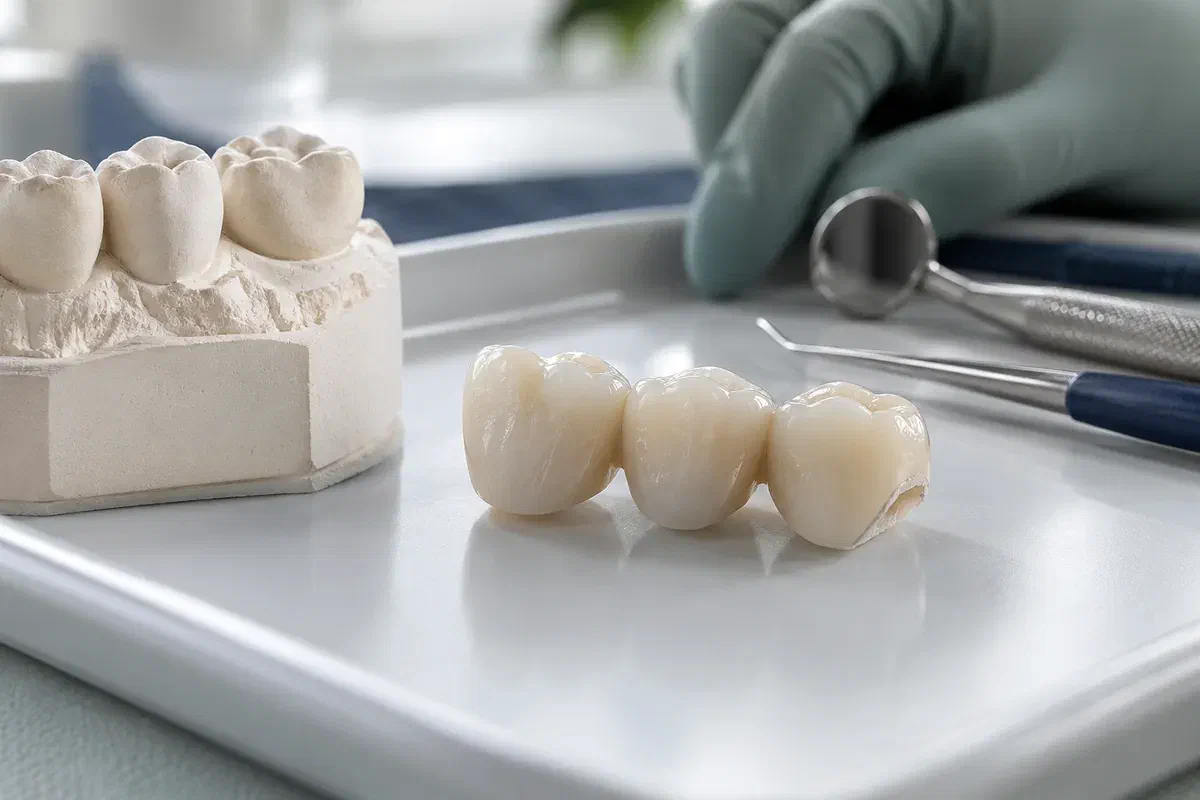
Bridges carry chewing forces across a gap, using anchor teeth or implants at each end to hold one or more replacement teeth. A visible chip might be a simple surface flaw, or it might be the first sign of a cracked connector, a weakening seal, or decay at an anchor. Knowing which tells you how much time you have.
Calling from Bolton or anywhere across Caledon, mention any upcoming dates along with the damage itself. Describe when it happened and whether the bridge moves, hurts, or rubs your tongue. Bring broken fragments in a small closed container, and any records of the bridge material or implant system.
There is no need to wait for the bridge to fall out. Phoning as soon as something changes gives the team room to fit you in, especially with travel or a deadline coming up.
Surface porcelain can break while the framework holds. The chip’s size and position, exposed material, and bite load guide whether polishing or a bonded repair is reasonable before your plans.
A bridge that shifts may lose its seal completely at an inconvenient time. Avoid testing it, never secure it with household glue, and call to be seen sooner rather than later.
Discomfort or swelling near an anchor may signal decay or gum problems under the bridge. These can worsen over a few weeks, so the dentist checks supports, gums, and bite before you leave.
If a loose part could be swallowed or inhaled, or you have difficulty breathing, seek emergency help immediately. Tell us about any detached piece and your travel dates when booking.
With limited damage and a bridge that still fits and works, a repair can be a conservative choice that keeps sound work in place. Seen early, there is more time to plan it properly, if the material and site allow a dependable bond.
Any repair on an older bridge has limits on bond strength, colour match, and durability, and the original cause of the break may persist. Knowing whether a fix is short-term or meant for longer service helps you decide what to do before and after your plans.
Patient information: Cleveland Clinic — dental bridges
You find out whether you are dealing with cosmetic flaking or something deeper in the frame or anchors that could give out mid-trip and needs other treatment.
Rough spots, how well you can clean underneath, and the way your teeth meet get as much attention as looks, so a hectic stretch is not spent chewing carefully.
If a repair is unlikely to be dependable, you hear why and can time a replacement around your schedule, with interim steps discussed.
That first appointment is mostly about understanding the break and keeping the bridge steady. Find out what can be wrapped up before your date and whether a lab stage or another visit would follow your return.
The dentist checks the damage and stability and asks about your upcoming plans. Any records you bring can identify materials or implant parts, which affects what is possible quickly.
Attention moves to the supporting teeth or implants and the gum line. An x-ray can reveal hidden decay, root trouble, or bone changes that would change what is safe to do before you go.
Care might include smoothing, a localized repair, re-cementing, or a temporary measure with a replacement planned for later. The limits of any interim step are explained.
Fit, bite, and comfort are checked. Ask what to do if something changes while you are away, and when to return for a review or the next stage of care.
Aftercare depends on the material and procedure. A bridge held temporarily, or waiting for replacement, needs extra caution with food and cleaning, especially when your routine is disrupted.
Travel menus are full of crusty rolls, nuts, and chewy treats. Keep those off the repaired side, never tear packets open with your teeth, and check which foods are off limits while any interim fix is holding.
Bring the threaders or interdental brushes you use for your bridge, since cleaning beneath it matters even on holiday. Ask the team to recommend compact options.
If the bridge comes loose, keep it safe in a clean container and seek local dental advice if needed. Avoid gluing it or repeatedly pushing it back, and call us when you return.
Come with the fragments, your calendar, and whatever is on your mind. It is worth asking how the state of the anchors steers the advice and how long each route takes.
Let us know your dates and we will try to fit you in at our Bronte Street practice with time to spare. The dentist checks the damaged bridge and the teeth carrying it, tells you what can sensibly be finished beforehand, and helps schedule whatever comes next.
Wobbling, aching, or a puffy gum around the bridge means phoning us directly. Save the online form for appointments that can wait.
