A cracked or chipped unit
Porcelain may fracture on the surface while the framework survives. The chip’s size and position, exposed material, and the bite on that area help determine whether smoothing or a bonded repair is reasonable.


A fall in the yard, a stray elbow, or a hard knock can crack a bridge in an instant. For Campbellville households, we check the restoration and the teeth beneath it after an impact, then talk through repair or replacement.
Busy rural days bring their share of bumps: a slip on an icy step, a gate that swings back, a tumble during weekend chores. When the face takes a hit, a bridge can chip, crack at a joint, or be jolted loose, and the teeth holding it can be injured too, even if they look fine at first.
That matters because a bridge is a single connected piece. Replacement teeth are fixed to anchor teeth or implants on each side, so force on one part travels through the rest. After an impact, the dentist checks the bridge, every anchor, the surrounding gum, and how your teeth now meet.
From Campbellville, call first and describe what happened. If you hit your head, have facial swelling, or cannot close your teeth together normally, seek emergency medical care before anything else. Otherwise, keep any broken pieces in a small container and bring them, along with any records about the bridge or implant system.
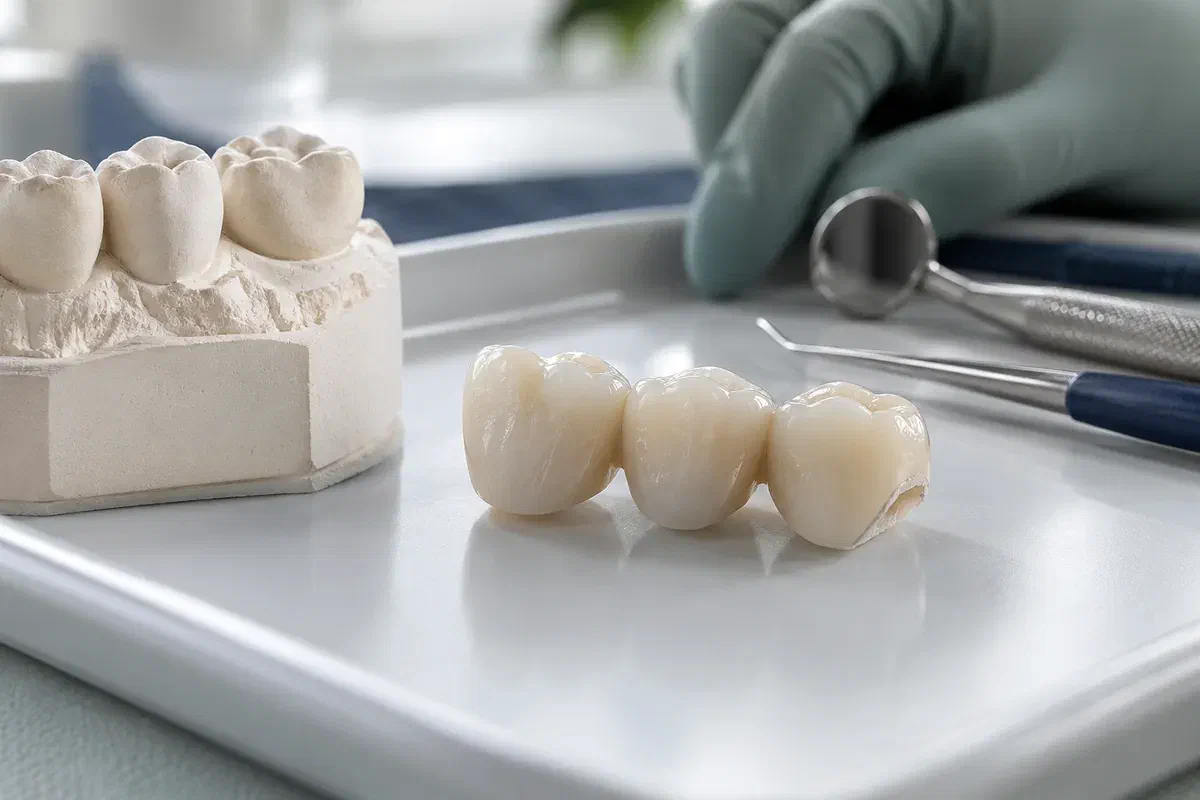
A bridge can be affected by a blow even if it stays in place. Phone about new damage, movement, or pain so the team can advise how soon to examine it and how to protect the area.
Porcelain may fracture on the surface while the framework survives. The chip’s size and position, exposed material, and the bite on that area help determine whether smoothing or a bonded repair is reasonable.
An impact can break the cement bond or injure an anchor tooth, leaving the bridge mobile. Avoid moving it to test, and never try to hold it with glue.
Soreness, a change in colour, or gum swelling around an anchor after a blow can signal injury to the tooth or its nerve. The dentist examines supports, gums, and bite, not only the bridge surface.
Seek emergency care for a head injury, a suspected jaw fracture, trouble breathing, or a loose piece that could be inhaled. Let the clinic know about any detached bridge or fragment when you book.
If the impact caused only a limited chip and the bridge still fits and works, a repair may be a conservative option. It can address the defect without replacing sound work, provided the material and location make bonding practical.
Impacts can also cause problems that take time to show, such as nerve injury in an anchor tooth. A repaired surface does not rule those out. The dentist should explain whether any fix is temporary, how long it is meant to last, and whether follow-up checks are wise.
Patient information: Cleveland Clinic — dental bridges
The examination distinguishes surface damage from a cracked framework, a loosened anchor, or an injured tooth that would change the treatment plan.
After a blow, teeth can meet differently. Edges, cleaning access, and bite are reviewed with appearance so the repair works in daily use.
If the damage means repair would not be reliable, you hear why and can compare replacement approaches, including the condition of the anchors and interim needs.
The first visit may centre on examining the injury and stabilizing the bridge rather than finishing a repair. Ask what is possible on the day and whether lab work or follow-up visits are likely.
The dentist asks about the impact, checks the bridge for cracks and movement, and looks at the soft tissues. Any records you bring can identify materials or implant components.
Anchor teeth or implants and the gums are assessed. X-rays may be recommended to look for root fractures, bone changes, or other injury that cannot be seen directly.
Depending on findings, care may include smoothing, a localized repair, re-cementing, or planning a replacement. If a temporary fix is placed, its limits are made clear.
Because some injuries take time to show, a follow-up visit may be suggested to recheck the anchors and the repair. Ask which symptoms should prompt an earlier call.
Aftercare depends on the injury, the material, and what was done. A bridge that is temporarily held or awaiting replacement may need more cautious eating and cleaning.
Choose softer meals and avoid biting hard foods with the injured area. Do not use the bridge to open packaging, and ask when normal chewing is safe.
Keep the area clean even if it is tender, including beneath the replacement tooth. Ask the team which floss threader or soft interdental brush suits your bridge while things heal.
Darkening of an anchor tooth, new sensitivity, or swelling days or weeks later deserve a call. Keep any piece that comes off and avoid repeatedly reseating a loose bridge.
Impacts affect bridges in different ways. Bring any pieces, describe exactly what happened, and ask how the anchor teeth influence the plan.
Arrange an assessment at our Bronte Street practice after an impact or any other damage to your bridge. We look at the restoration, the anchor teeth, and your bite, explain realistic repairs, and suggest any follow-up checks.
For a head injury, breathing trouble, or suspected jaw fracture, seek emergency care. Call us for a loose or painful bridge; online booking is for non-urgent visits.
