A broken-off sliver
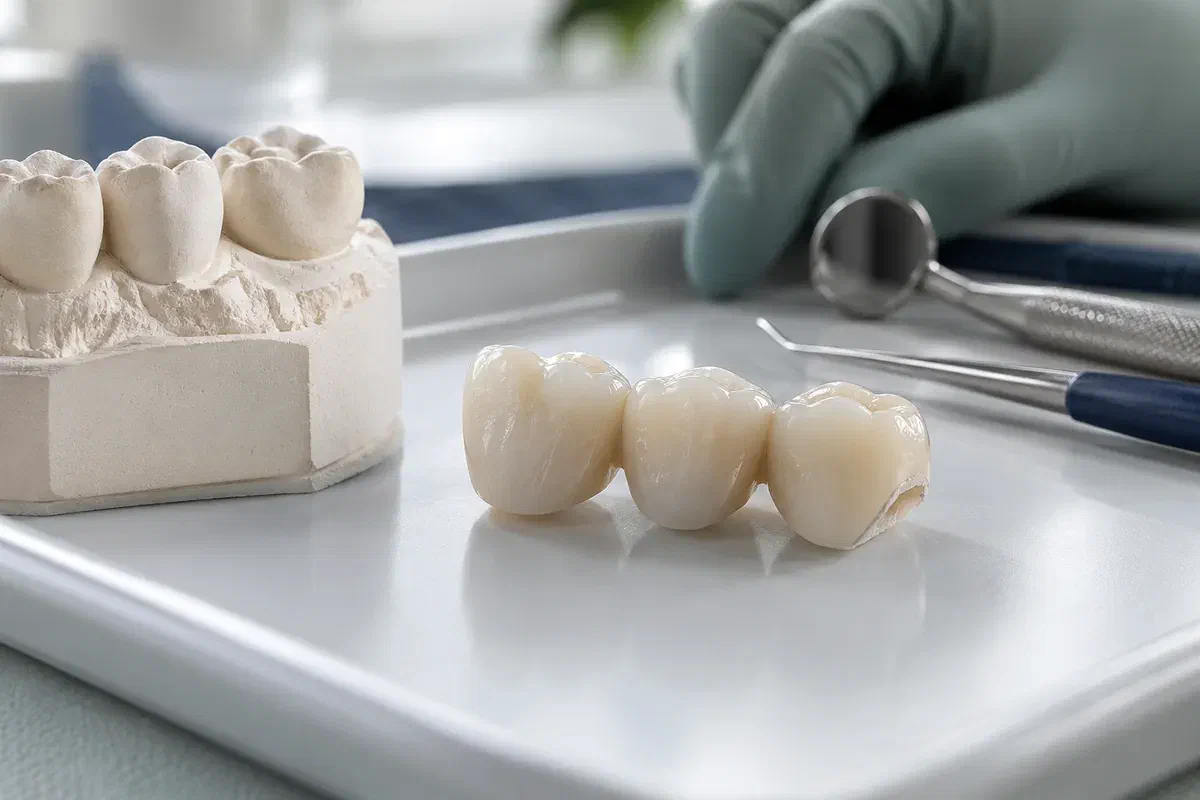
Surface porcelain may break away even when the core is still solid. The size of the defect, where it sits, what is exposed, and the bite force on it help determine whether smoothing or bonding is reasonable.


A damaged bridge raises a bigger question: fix this one, or start thinking about what comes next? From Georgetown, you can have the bridge and its anchors examined and weigh repair against replacement with clear information.
Most people with a damaged bridge want two answers: can it be saved, and is saving it a good idea? Those are not always the same thing. A tidy repair on a bridge whose anchors are failing may cost you time, while replacing a basically healthy bridge over one small chip may be more than you need.
To answer both, the dentist looks at the whole structure. A bridge links replacement teeth to supporting teeth or implants, so its condition depends on the porcelain, the connectors, the cement seal, and the anchors underneath. The visible damage is one data point among several.
Calling from Georgetown, tell us when the damage happened and how the bridge feels now, whether firm, loose, sore, or rough against your tongue. Bring broken fragments in a closed container. If you know the age of the bridge or the implant system involved, that context helps frame the decision.
No need to wait for the bridge to come out entirely. Phone when you see damage or feel movement, and we can talk about how quickly to see you and how to protect the area.
Surface porcelain may break away even when the core is still solid. The size of the defect, where it sits, what is exposed, and the bite force on it help determine whether smoothing or bonding is reasonable.
Clicking or movement can mean the cement or an anchor has failed. It is best not to keep testing it, and household glue should never be used to hold it in.
Discomfort, sensitivity, or swelling near the bridge can point to decay or gum disease affecting the supports. That information weighs heavily when deciding whether repair or replacement makes sense.
If a loose part could block your airway or you have trouble breathing, get emergency help. Let us know about any detached bridge or piece when you arrange your appointment.
Minor damage on a bridge that still fits and functions often makes repair the conservative decision, saving a restoration that has more life in it. Whether that is practical depends on the material and the defect’s location.
Repairs on older bridges come with trade-offs. Bond strength, colour match, and wear all vary, and the original cause of damage may persist. Knowing whether a repair is a short-term measure or a longer one lets you plan rather than react.
Patient information: Cleveland Clinic — dental bridges
The examination distinguishes a localized flaw from structural or anchor problems, so the repair-versus-replace decision rests on real findings.
Edges, cleaning access, and your bite are considered alongside appearance, so the chosen path suits how the bridge is used every day.
If a repair is unlikely to be reliable, the dentist explains why and compares replacement approaches, including anchor condition and interim arrangements.
The first appointment may be focused on assessment and stabilizing the bridge. Ask what can be completed that day and whether a laboratory step or further visit would be involved.
The dentist examines the damage, tests stability, and asks how and when it happened. Records may identify the material or implant system, which affects repair possibilities.
Anchor teeth or implants and the gums are assessed. X-rays can reveal decay, root problems, or bone changes that influence whether the bridge is worth repairing.
You hear what repair would involve, what replacement would involve, and the reasoning behind the recommendation. Polishing, bonding, or re-cementing may be done if appropriate.
If treatment is completed, fit, bite, and comfort are checked. Ask what changes would suggest revisiting the decision and when a review would be helpful.
Instructions vary by material and procedure. If the bridge is temporarily seated or a replacement is being planned, eating and cleaning advice may differ from usual.
Do not crunch hard foods or open packages with the repaired area. Ask which foods to avoid while a temporary arrangement is in place, and when normal chewing can return.
Anchor teeth and gums decide how long any bridge lasts. Clean under the false tooth daily using the threader, floss, or brush the team shows you for your bridge.
New movement, rough spots, or an altered bite are reasons to book a review. Keep any detached piece and call; reseating a loose bridge over and over can complicate things.
Every bridge has a different story. Bring the pieces, describe what changed, and ask how the anchor teeth figure into the recommendation.
At our Bronte Street practice, the dentist looks over the damaged bridge and the teeth that carry it, lays out what repairing it and replacing it would each mean for you, and leaves the decision in your hands with the facts in front of you.
Movement, soreness, or a swelling gum is a reason to phone rather than fill in a form. The online form handles non-urgent bookings.
