A craze line or small chip
Fine cracks or minor chips in the porcelain may not affect the framework. The defect’s size, location, exposed material, and the bite force on it help decide whether to monitor, polish, or repair.


Sometimes a failing bridge is spotted at a checkup before you ever feel it. From Puslinch, you can plan a visit that examines the bridge and anchor teeth, explains what was found, and sets out repair or replacement options.
It can be surprising to hear that a bridge you have no complaints about has a hairline crack, an opening margin, or early decay at an anchor. Yet many bridge problems develop quietly. Finding them at a routine visit usually means more choices than discovering them when something gives way at dinner.
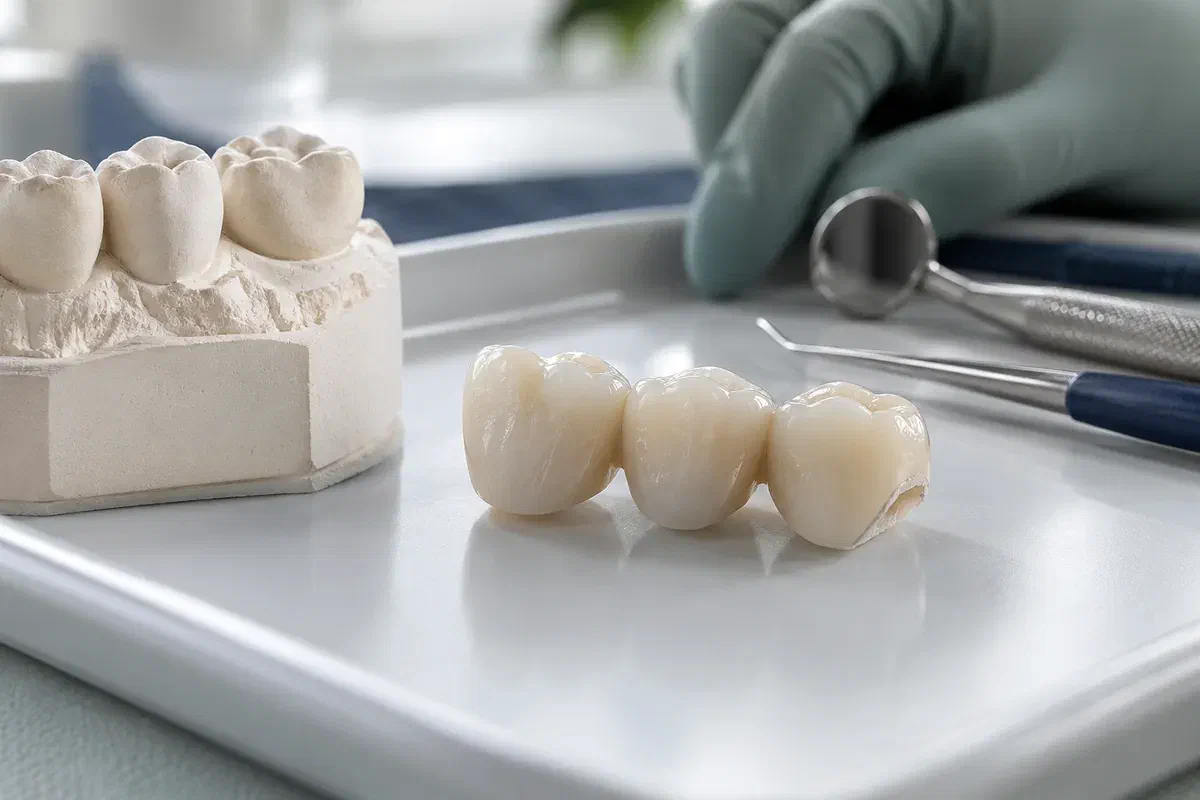
A bridge spans a gap with one or more artificial teeth, held in place by crowned natural teeth or implants. Its weak points are the porcelain surface, the joints between units, the cement seal, and the anchors themselves. Each can deteriorate without pain, which is why regular checks matter.
For rural households in Puslinch, it often helps to group appointments. If a concern has been flagged, you might combine a bridge assessment with a cleaning or another family visit. When you call, mention what was found, whether anything moves or hurts, and any records naming the bridge material or implant system.
A bridge does not have to fall out to need care. If something was noted, or you notice a change yourself, call so the team can advise on timing and how to protect the area.
Fine cracks or minor chips in the porcelain may not affect the framework. The defect’s size, location, exposed material, and the bite force on it help decide whether to monitor, polish, or repair.
A gap where the bridge meets an anchor, or a hint of movement, can mean the cement seal is breaking down. Avoid testing it, and do not try to secure it with household adhesives.
Decay at the edge of an anchor crown, or inflamed gums nearby, may develop without pain. The dentist assesses anchors, gums, and bite, because these findings often shape the plan more than the visible surface.
If a loose part could be swallowed or inhaled, or you have trouble breathing, seek emergency help. When booking, tell the clinic if any part of the bridge has come away.
When a problem is caught early and the bridge still fits and functions, a limited repair or careful monitoring may be reasonable. The aim is to address a contained defect while keeping sound work in place, provided the material and site allow it.
Early detection is not a guarantee of an easy fix. On an ageing bridge, a repair’s bond, appearance, and durability vary, and the underlying cause may continue. The dentist should be clear about whether a step is temporary, monitoring, or meant to last.
Patient information: Cleveland Clinic — dental bridges
You learn whether the issue is a cosmetic surface flaw, a breaking seal, or a problem in an anchor that needs a different approach.
Edges, cleaning access, and your bite are checked alongside appearance, so any treatment suits how the bridge is used day to day.
If the bridge is nearing the end of its useful life, an early warning lets you compare replacement options and plan, rather than reacting to a sudden failure.
The assessment visit may focus on confirming the issue and stabilizing anything that needs it. Ask what can be done that day, and whether lab work or additional visits would be required.
The dentist looks closely at the area of concern, checks stability, and discusses any symptoms. Previous records can identify materials or implant parts that affect repair possibilities.
Anchor teeth or implants and gum tissue are assessed. X-rays may be recommended to confirm decay, root problems, or bone changes that are not visible.
Options may include monitoring, polishing, a localized repair, re-cementing, or planning a replacement. If a temporary measure is suggested, its limits are explained.
Whether treatment was done or the bridge is being watched, ask how often it should be rechecked and which symptoms should prompt a call sooner.
Your aftercare depends on what was found and what was done. A bridge being monitored, repaired, or held temporarily may each come with slightly different advice.
Avoid crunching ice, cracking nuts, or tearing packaging with the bridge. If a temporary measure is in place, ask which foods to avoid and for how long.
The edges of the anchor crowns and the space under the replacement tooth are where problems often begin. Ask the hygienist which threader or interdental brush suits your bridge.
For a bridge under watch, regular checks are how changes are caught. Between visits, call about new looseness, roughness, or soreness, and keep any piece that breaks off.
Every bridge ages differently. Ask to see what was found, describe any symptoms, and ask how the anchor teeth affect the recommendation.
Book a visit to our Bronte Street practice to have a flagged or damaged bridge examined. We check the restoration and its anchors, explain what was found, and discuss monitoring, repair, or replacement.
Call instead of booking online if the bridge is loose, painful, or the gum is swelling. Online requests suit non-urgent visits.
