A chipped or worn edge
Porcelain may chip from the surface while the framework stays intact. The defect’s size and location, the material exposed, and the bite pressure on it help determine whether smoothing or bonding is reasonable.


Helping a parent or partner whose bridge has cracked or come loose? From Rockwood, we can examine the restoration and anchor teeth, consider their health history, and explain repair or replacement in plain terms.
Many calls about a broken bridge come from a son, daughter, or spouse rather than the person wearing it. An older relative may mention it only when eating becomes awkward, or you may notice the bridge sitting differently. Knowing what to gather and what to ask makes the first appointment far more useful.
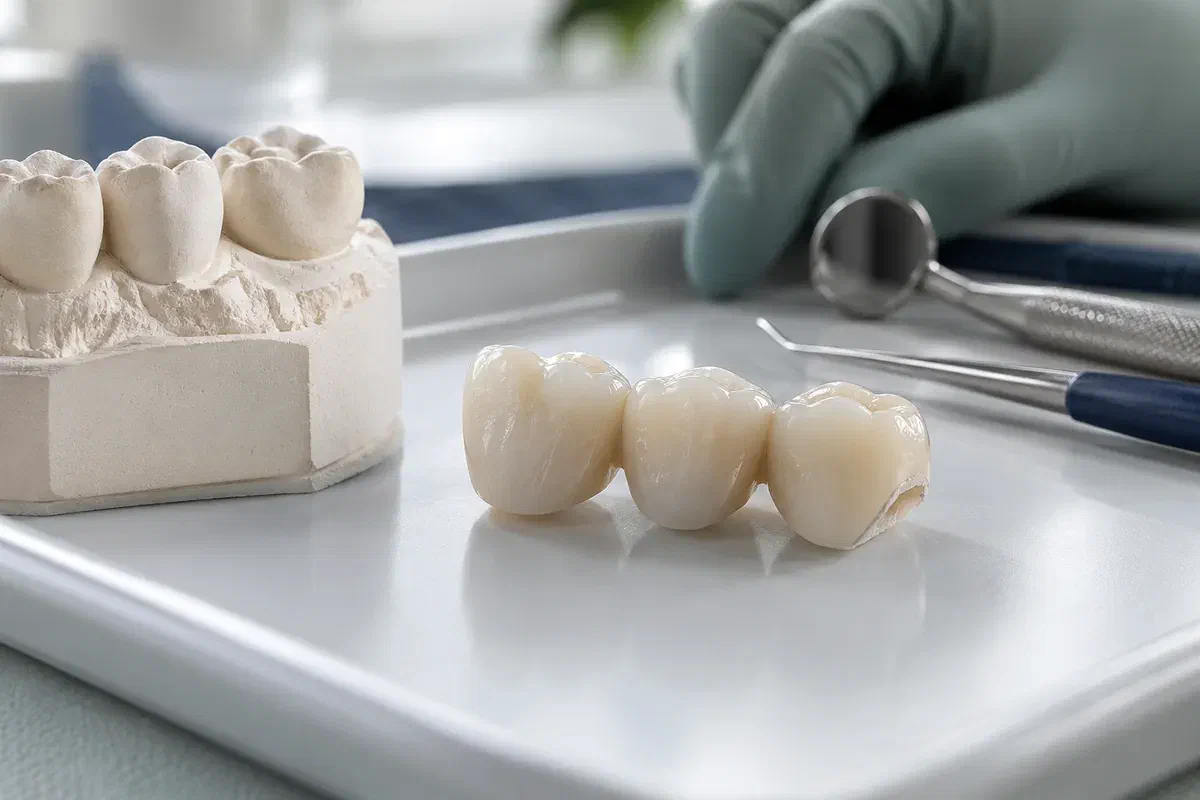
A bridge replaces missing teeth by joining artificial teeth to anchor teeth or implants. With bridges that have been in place a long time, damage can come from worn porcelain, a weakened seal, or decay at an anchor. Health conditions, medications, and dry mouth can also influence what happened and what care is suitable.
If you are booking from Rockwood on someone’s behalf, tell us when the problem began, whether the bridge moves or hurts, and whether eating or speaking is harder. Bring any broken pieces in a small container, a list of current medications, and any records of the bridge or implant system.
A bridge does not need to fall out before it deserves a call. If you notice changes in how someone eats or talks, phone so the team can advise on timing and how to keep them comfortable.
Porcelain may chip from the surface while the framework stays intact. The defect’s size and location, the material exposed, and the bite pressure on it help determine whether smoothing or bonding is reasonable.
Skipping harder foods or chewing on one side can be a sign that the bridge has loosened. Encourage them not to wiggle it, and make sure no household glue is used to fix it.
Tenderness, swelling, or a persistent taste near the bridge may mean decay or gum disease around an anchor. The dentist examines supports, gums, and bite rather than assuming the chip is the whole story.
If a loose part becomes a choking risk or breathing is affected, seek emergency help immediately. Let the clinic know about any detached piece when arranging the visit.
For modest damage on a bridge that otherwise sits and chews well, repairing it can be the gentler route, keeping good work in place and often suiting someone who would rather keep treatment simple. The material and the spot involved decide whether it is possible.
A repair has limits on an older bridge. Its bond, appearance, and lifespan vary, and the original cause may continue. The dentist can explain whether a fix is short-term or intended for longer use, so you can plan together.
Patient information: Cleveland Clinic — dental bridges
The examination separates a surface chip from a structural or anchor problem, and the dentist explains the difference in language the whole family can follow.
Sharp edges, the ability to clean around the bridge, and how the teeth meet are reviewed alongside appearance, with practical daily care in mind.
If repair is not dependable, replacement choices are compared with the person’s health, preferences, and ability to manage cleaning and appointments taken into account.
The first appointment may focus on diagnosis and comfort rather than a finished repair. Ask what can be done on the day and whether more visits or lab work may be needed, so you can plan transportation and support.
The dentist asks about medical conditions and medications, examines the bridge, tests its stability, and hears how the problem started. Records may identify materials or implant parts.
Supporting teeth or implants and gum tissue are evaluated. Imaging may be suggested to look for decay, root problems, or bone changes not visible during the exam.
Treatment may include smoothing, a small repair, re-cementing, or planning a new restoration. Any temporary measure is explained, including its limits, to the patient and family.
Fit, bite, and comfort are checked, and cleaning is demonstrated. Ask what symptoms to watch for and whether a follow-up should be booked.
Aftercare depends on the material and procedure. A bridge held temporarily or awaiting replacement may need gentler eating and different cleaning advice.
Encourage softer foods on the repaired side and avoid hard or sticky items. The bridge should not be used to open anything. Ask which foods to avoid while a temporary step is in place.
Cleaning under a bridge can be awkward, especially with reduced dexterity. Ask the team to suggest tools such as threaders, water flossers, or larger-handled brushes that are easier to use.
If looseness, roughness, or difficulty eating returns, book a review. Keep any detached piece and call; repeatedly pushing a loose bridge back can make assessment harder.
Questions from family members are welcome. It helps to ask how the anchor teeth and your relative’s overall health shape what the dentist suggests.
Arrange an appointment at our Bronte Street practice for a family member’s chipped, cracked, or loose bridge. We examine the restoration and its anchors, consider their health, and explain realistic repair options.
Call us if the bridge is moving, painful, or causing swelling. Online booking is meant for non-urgent requests.
