A crack through the base
A split acrylic base may be repairable when the pieces can be accurately related. The clinician checks whether the break followed an accident or suggests a continuing fit or loading problem.


A broken denture can turn an ordinary meal into a challenge. Contact our Milton team to assess the damage, discuss repair possibilities, and understand how the fit of the denture affects the next step.
A denture can break after a fall, develop a crack through its base, or lose one of its artificial teeth. Those problems can affect eating, speech, and confidence, even when the surrounding mouth is not painful. A repair assessment looks at both the damaged appliance and the tissues supporting it.
The reason for the break matters. A denture dropped into a sink presents a different question from one that repeatedly fractures during chewing. Poor fit, worn teeth, changes in the ridge, and the way opposing teeth meet may influence whether a simple repair is enough.
Call our Milton team and explain what happened before trying to wear or fix the appliance. Bring every piece you can find, including a detached tooth. Keeping the original parts together can help the clinician understand the damage and discuss realistic repair and replacement choices.
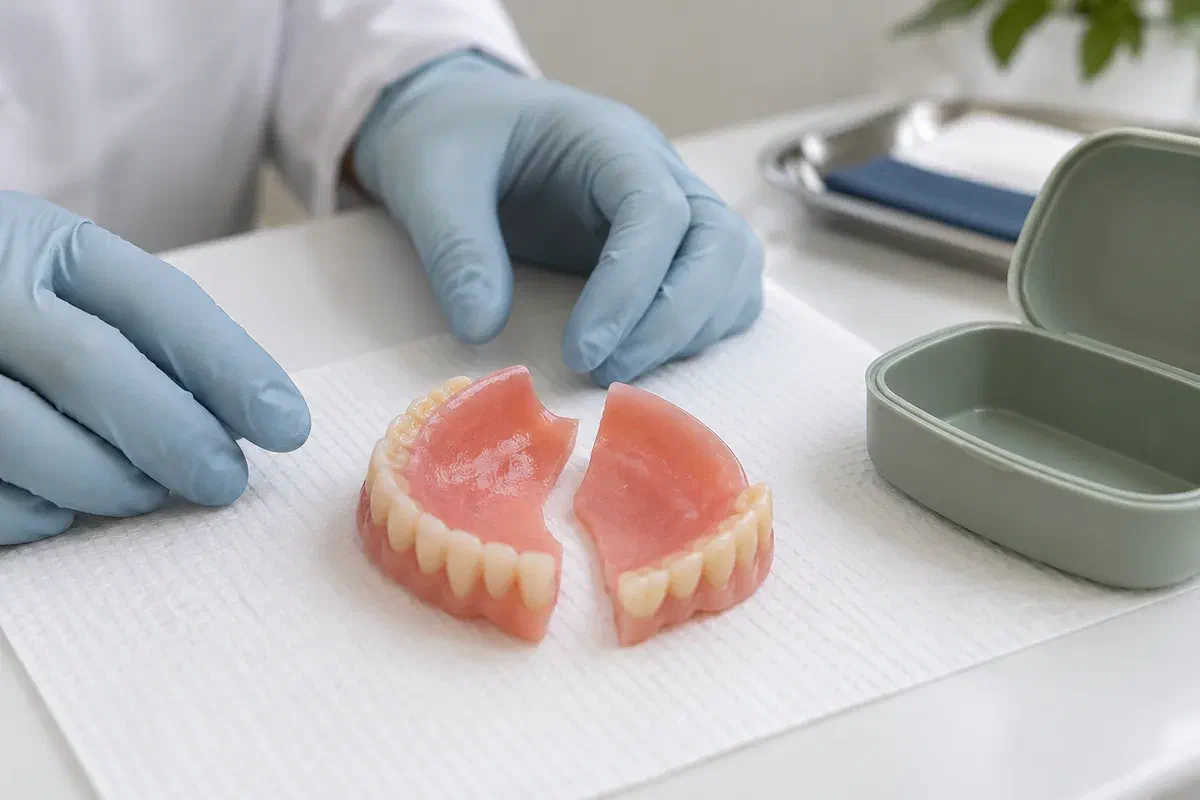
The material, extent of damage, and overall condition of the denture affect the recommendation. The appointment should also consider whether the appliance still fits your mouth well enough to justify a repair.
A split acrylic base may be repairable when the pieces can be accurately related. The clinician checks whether the break followed an accident or suggests a continuing fit or loading problem.
An artificial tooth can separate from the denture while the rest of the base remains intact. Its position, condition, and the material around it help determine whether reattachment or a replacement tooth is appropriate.
A damaged metal component on a partial denture can affect retention and stability. These repairs differ from acrylic-base repairs and may need laboratory work or a broader review of the appliance design.
Do not use household glue, bend a clasp, or file the edges yourself. These changes can alter the fit, damage the material, and make professional repair more difficult.
When the denture remains otherwise suitable, repair can address a specific break without starting again with a complete new appliance. The clinician considers how accurately the pieces can be positioned and whether the repaired denture will still fit and function acceptably.
Repair does not reverse every change in an older denture. Worn teeth, an unstable fit, or repeated fractures may point toward relining, rebasing, or replacement. The useful question is not only whether the pieces can be joined, but whether the result will serve your mouth sensibly.
Patient information: ADA — caring for partial dentures
Examining the mouth as well as the appliance helps identify sore areas or instability that could continue to cause trouble after the visible break is addressed.
You can understand which part of the problem a repair will solve and which limitations will remain. That makes it easier to compare repair with a new denture.
Handling, storage, and cleaning guidance can help protect the appliance. If the break happened during chewing, the review can also investigate factors beyond an accidental drop.
Repair time depends on the damage, material, laboratory requirements, and appointment availability. Explain any difficulty eating or managing without the denture so interim needs can be included in the discussion.
Bring the denture, every detached piece, and any previous repair history. The clinician checks the material and fracture pattern and asks whether the appliance was dropped or broke while being worn.
The gums, remaining teeth where present, and opposing bite are assessed. An impression or other record may be needed to help the repair relate accurately to your mouth.
Suitable repairs may involve rejoining the base, replacing a tooth, or addressing a component. Some work needs a dental laboratory, and the team should explain when the appliance is expected to be available.
The repaired denture is checked for fit, retention, bite, and sharp edges. Tell the clinician about pressure or movement, and arrange any recommended review rather than trying to adjust a sore area at home.
A repaired denture should be used according to the instructions given for its material and condition. Report persistent discomfort or instability instead of assuming every change is simply part of getting used to it.
Clean over a folded towel or a basin partly filled with water to reduce damage if the denture slips. Use products and water temperatures suitable for its material; hot water can distort some appliances.
Clean the denture and the supporting oral tissues as advised, including any natural teeth that remain. Ask about overnight removal and storage requirements for your particular appliance.
If the repair leaves a persistent pressure point or the appliance rocks, contact the clinic. More adhesive is not a substitute for an assessment of a denture that no longer fits properly.
Tell us what has broken and whether you can safely manage without the denture. The assessment helps separate an urgent practical need from the type of repair the appliance can support.
Contact our Bronte Street practice about a cracked base, detached tooth, or damaged component. Bring the appliance and all available pieces so we can assess repair possibilities, review its fit, and discuss a realistic timetable.
Please call if the appliance is injuring your mouth or you cannot manage comfortably without it. Repair timing depends on assessment and availability.
