Plate cracked or snapped
Acrylic that has broken into pieces may be joined when those pieces relate accurately. Whether an accident or ongoing stress from a poor fit caused it affects what the clinician recommends.


A broken denture never picks a convenient week. From Georgetown, an early call lets our team see what has failed, check how the appliance sits, and give you a realistic sense of repair timing before you plan around it.
Dentures have a way of failing right before something that matters. A front tooth lets go days before a wedding photo. The plate cracks on the eve of a trip. With a date on the calendar, it is tempting to grab glue and hope, but a quick home fix can leave you with a denture that fits worse and repairs less cleanly.
Timing is only half the question. The other half is cause. An appliance that broke because it hit the floor is usually simpler to reason about than one that fractured while you were eating. Chewing breaks can trace back to a loose fit, worn-down teeth, a ridge that has changed shape or a bite that meets unevenly.
Call as early as you can from Georgetown and explain both the damage and the date you are working toward. Keep every fragment, along with any detached tooth, safely in a container. The original parts give the clinician the clearest view, and the conversation about timing can then be honest from the start.
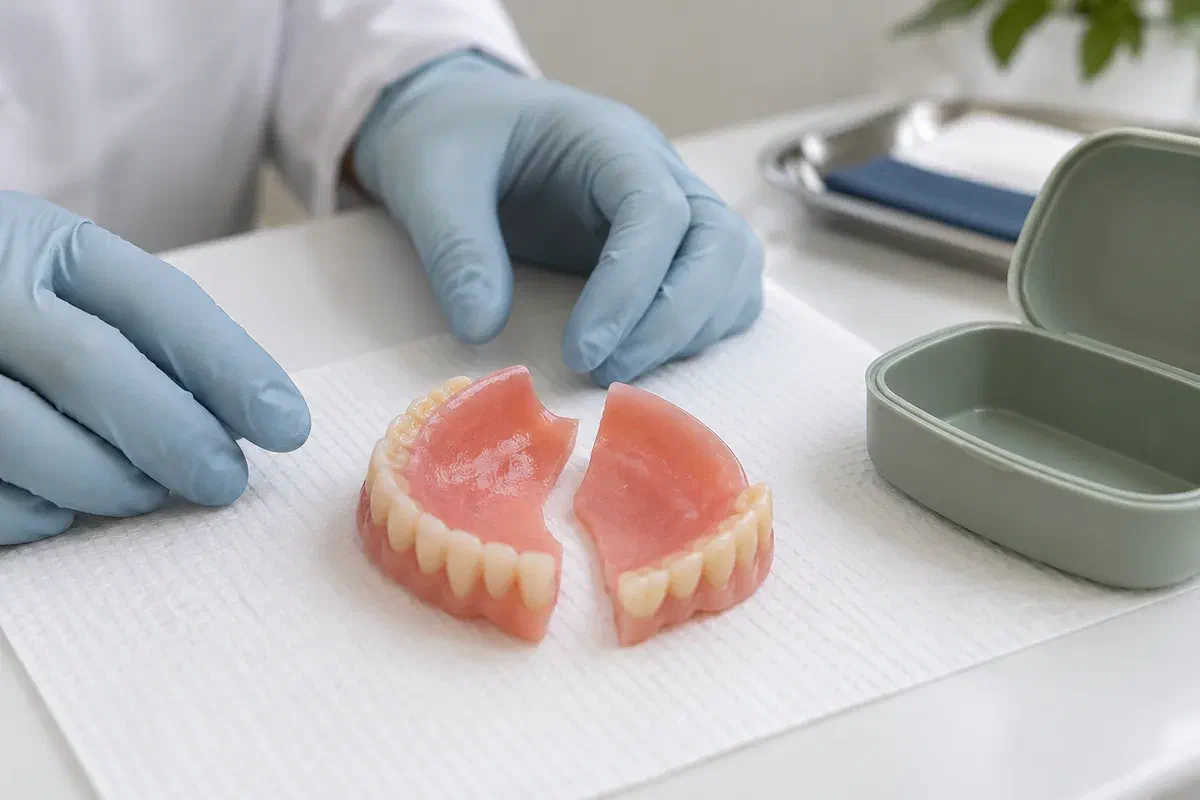
What the denture is made of, how widely it is damaged and its overall condition decide how involved the repair is. Its fit decides whether repairing it is worthwhile at all.
Acrylic that has broken into pieces may be joined when those pieces relate accurately. Whether an accident or ongoing stress from a poor fit caused it affects what the clinician recommends.
A tooth can separate while the rest stays sound. Its position, whether you still have it and the state of the acrylic around the gap help decide between reattaching it and fitting another.
Metal components hold a partial in place. When they bend or break, the repair follows a different path from acrylic work and may involve a lab or a rethink of the design.
Rushing a home repair before an event usually backfires. Glue, bent clasps and filed edges can all change the fit and make the professional repair more complicated.
If your denture was serving you well, repairing the broken part can avoid the longer journey of having a new one made. The clinician checks how precisely the parts will come back together and whether the finished denture will sit and work acceptably for you.
Not every problem is solved by joining pieces. Teeth worn flat, a fit that has loosened or a pattern of repeat fractures may lead to talk of relining, rebasing or replacement. It is worth knowing which applies before an important date, so expectations match what the denture can deliver.
Patient information: ADA — caring for partial dentures
An exam of your gums and bite can reveal sore spots or instability that would still be there after the crack is gone.
You’ll understand what the repair fixes and what it doesn’t, which helps if you’re deciding between repairing now and planning a new denture later.
Handling, cleaning and storage advice protects the appliance. If chewing caused the fracture, the clinician looks for causes beyond an accident.
How quickly a denture can be repaired depends on the damage, the material, lab requirements and appointment openings. If you have an event coming or can’t eat well without it, tell us at the outset.
We need the denture, every loose piece and any repair history. The clinician examines the break and asks how it happened, whether from a fall or while you were eating.
Gums, any natural teeth and how your jaws close together are checked. Taking an impression at this stage is sometimes needed so the mended denture matches your mouth.
Rejoining a plate, adding a tooth or fixing a clasp may be done depending on what’s agreed. If a lab handles it, ask when the appliance is expected so you can plan around your date.
We check fit, grip, bite and edges with the repaired denture in place. Mention any pressure or movement right away, and keep any review appointment instead of adjusting it yourself.
Use the repaired denture as advised for its material and condition. If it feels sore or loose beyond the first few days, call us instead of assuming it’s just settling.
A towel in the sink or a few centimetres of water in the basin softens any drop. Use products and temperatures suited to the material, since hot water can warp some dentures.
Care for your gums and any natural teeth daily, not only the denture. Ask whether it should be left out overnight and how to store it.
A spot that keeps rubbing or a denture that rocks should be checked. Reaching for more adhesive hides the issue rather than solving it.
Let us know what broke and whether you can manage without the denture for now. The assessment sorts out urgency and the type of repair your appliance can support.
Our Bronte Street practice can assess a split plate, a missing tooth or a damaged clasp. Bring the denture and every piece so we can look at repair options, check the fit and tell you what timetable is realistic.
Please phone if the denture is hurting your mouth or you can’t cope without it. When the repair can be done depends on the assessment and availability.
