Fractured or chewed base
A cracked acrylic plate may be repairable if the parts line up accurately. Chewed or distorted edges can be harder to restore, and the clinician will look at whether the shape has changed.

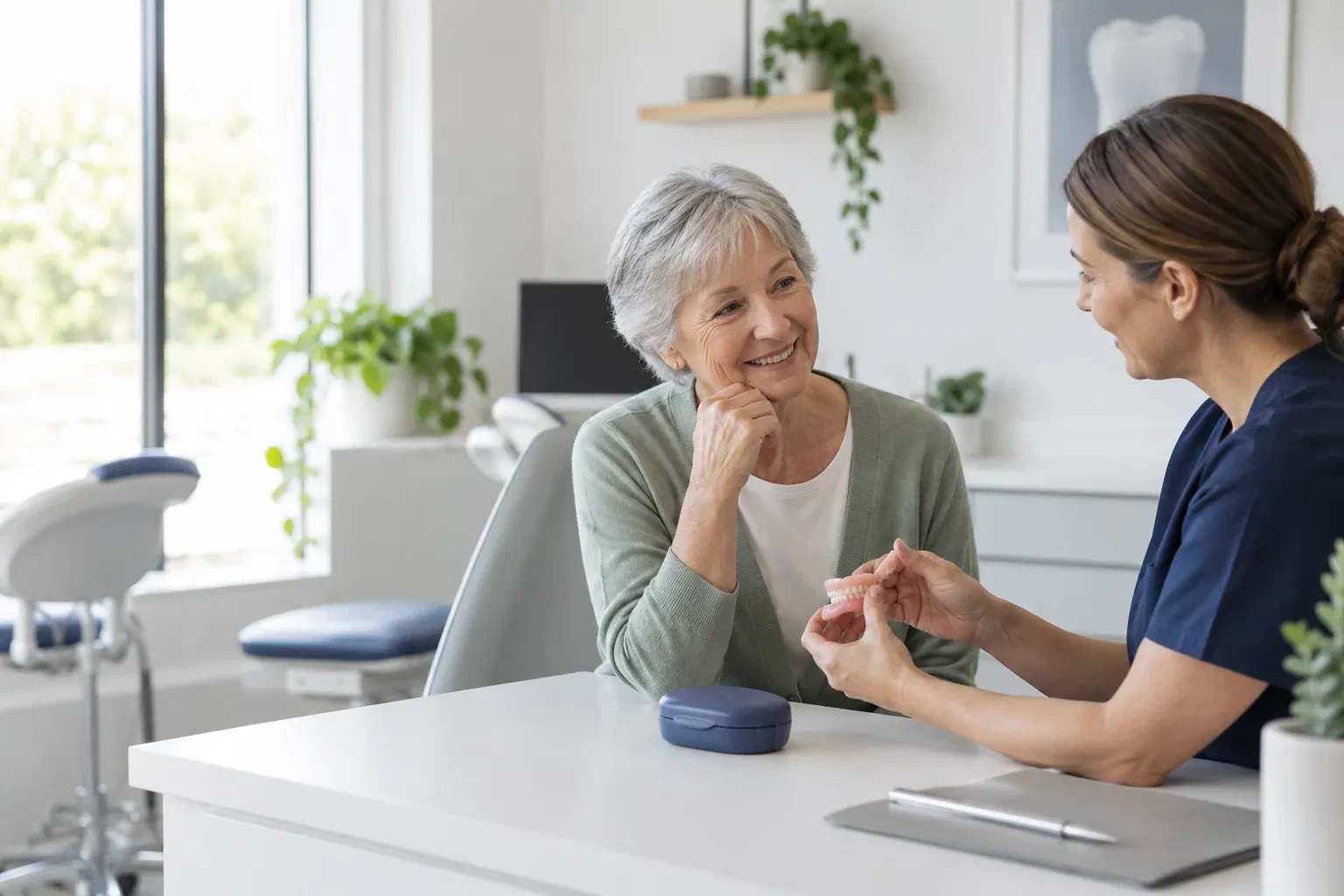
Dentures get dropped, sat on and, now and then, chewed by the family dog. Households across Halton Hills can contact us to have the damage examined, the fit checked and the choice between repair and replacement explained.
Household accidents cause a surprising share of denture damage. An appliance left on a low table attracts a curious pet. A grandchild knocks it off the vanity. Someone sits on it in a pocket. The result might be a crack across the plate, chewed edges, a missing tooth or a bent clasp, and suddenly breakfast is difficult.
Accidents are only one route, though. Some dentures break while being worn, sometimes again and again along the same line. That pattern often has more to do with fit, worn teeth, gradual change in the gums and bone, or an uneven bite than with bad luck, and it changes what a repair can be expected to do.
Whatever happened, reach out from Halton Hills before wearing the denture again or reaching for glue. Tell us how it was damaged. Gather each piece, teeth included, into one container. The clinician can learn a lot from the original parts, and that makes an honest conversation about repair or replacement possible.
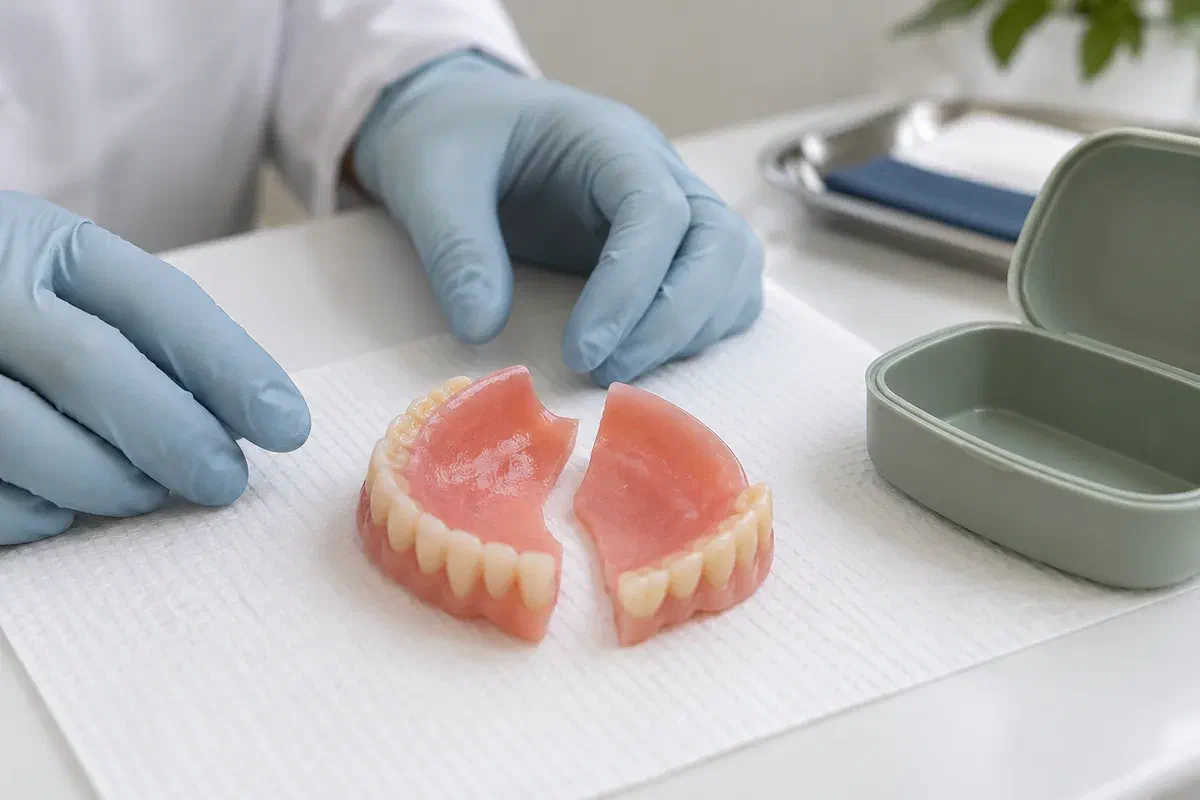
The material, the extent of damage and the appliance’s age all shape the advice. Fit matters too: a repair only makes sense if the denture still sits well on your gums.
A cracked acrylic plate may be repairable if the parts line up accurately. Chewed or distorted edges can be harder to restore, and the clinician will look at whether the shape has changed.
A fall or a pet can dislodge one artificial tooth while the base survives. Its position, whether it was found and the surrounding acrylic help decide between reattachment and a new tooth.
On a partial, a bent or broken clasp or framework can stop it gripping properly. Metal repairs are a separate task, often done by a lab, and may lead to a review of the partial’s design.
Don’t straighten a clasp, glue a crack or sand chewed edges smooth. Each of these can change the fit, damage the material and leave less for a proper repair to work with.
A denture that was comfortable right up until the mishap is often a good repair candidate, because fixing the damaged area spares you the longer road of having another one made. The clinician considers whether the pieces relate accurately and whether the repaired shape will fit and function as it should.
Repair has limits. It won’t restore teeth that have worn down, fix a fit that loosened over years, or stop a denture that keeps fracturing for underlying reasons. In those cases, relining, rebasing or replacement may be raised. What matters is whether the end result will work in your mouth.
Patient information: ADA — caring for partial dentures
Checking your gums and bite alongside the appliance helps uncover sore areas or rocking that could continue after the visible damage is repaired.
You’ll hear which parts of the problem the repair addresses and which will remain, so weighing a new denture is more straightforward.
Simple storage and handling habits help keep dentures away from pets, children and hard floors. If it broke during chewing, other causes are considered too.
Timing depends on the damage, the material, any lab work and our availability. Struggling at mealtimes while the denture is out of action? Say so, and we can talk about managing in between.
Bring the denture, all the pieces you found and any history of repairs. The clinician examines the damage and asks how it occurred, whether through an accident at home or during a meal.
The tissues that support the denture, any natural teeth and the opposite jaw are assessed. A record like an impression may be needed for an accurate repair.
Depending on the damage, that may mean bonding the plate, setting in a new tooth or fixing a clasp. Some work goes to a dental lab, and you’ll be told when the denture is likely to be ready.
The denture is tried in and checked for comfort, grip, bite and rough spots. Mention any pressure or movement, and come back for any suggested review instead of adjusting it yourself.
Follow the care instructions for your appliance’s material. If it stays sore or loose after the repair, let us know instead of waiting for it to sort itself out.
Keep the denture in its case, somewhere pets and small children can’t get to it. Clean it over a towel or a partly filled basin, and avoid very hot water, which can warp some materials.
Brush any remaining teeth and gently clean your gums each day, not just the appliance. Check with the clinician about taking it out at night.
Rubbing in one spot, or a tilt when you bite down, is a reason to contact the clinic. Adhesive can’t make up for a denture that no longer fits properly.
Let us know how the denture was damaged and whether you can manage without it for now. That helps us decide what needs quick attention and what sort of repair is realistic.
From Georgetown, Acton, Glen Williams or the hamlets around them, our Bronte Street practice can look at a chewed or cracked base, a lost tooth or a bent clasp. Bring the denture and all its pieces so we can assess it, check the fit and outline timing.
Phone right away if the appliance is hurting your mouth or going without it isn’t practical. We can only set a repair date once we’ve seen it and checked the schedule.
