Cracked acrylic base
A plate that has broken through may be joined again if the pieces relate precisely. Whether it followed an accident or reflects a loose, rocking fit makes a difference to the plan.


Helping a parent or partner whose denture just broke? Families in Mississauga can call us to arrange an assessment of the damage and the fit, and to hear plainly what a repair can and cannot do.
Plenty of denture repairs are arranged by a son, daughter or spouse rather than the wearer. A plate cracks on a hard crust, or it slides off a bedside table, and suddenly someone you love can’t eat comfortably or feels self-conscious talking. Pain may be absent, but the disruption is real.
Start by thinking about how it broke. A single drop onto a hard floor is one story. A denture that has split before, or that has felt loose for months, is another. Fit, tooth wear, gradual change in the gums and bone, and the way the bite comes together can all determine whether a straightforward repair will hold.
Call us before anyone tries to glue it or put it back in. Explain what happened and how they are managing. Then collect every piece, a detached tooth included, in one container. Those original parts help the clinician see the damage clearly and talk through realistic choices with both of you.
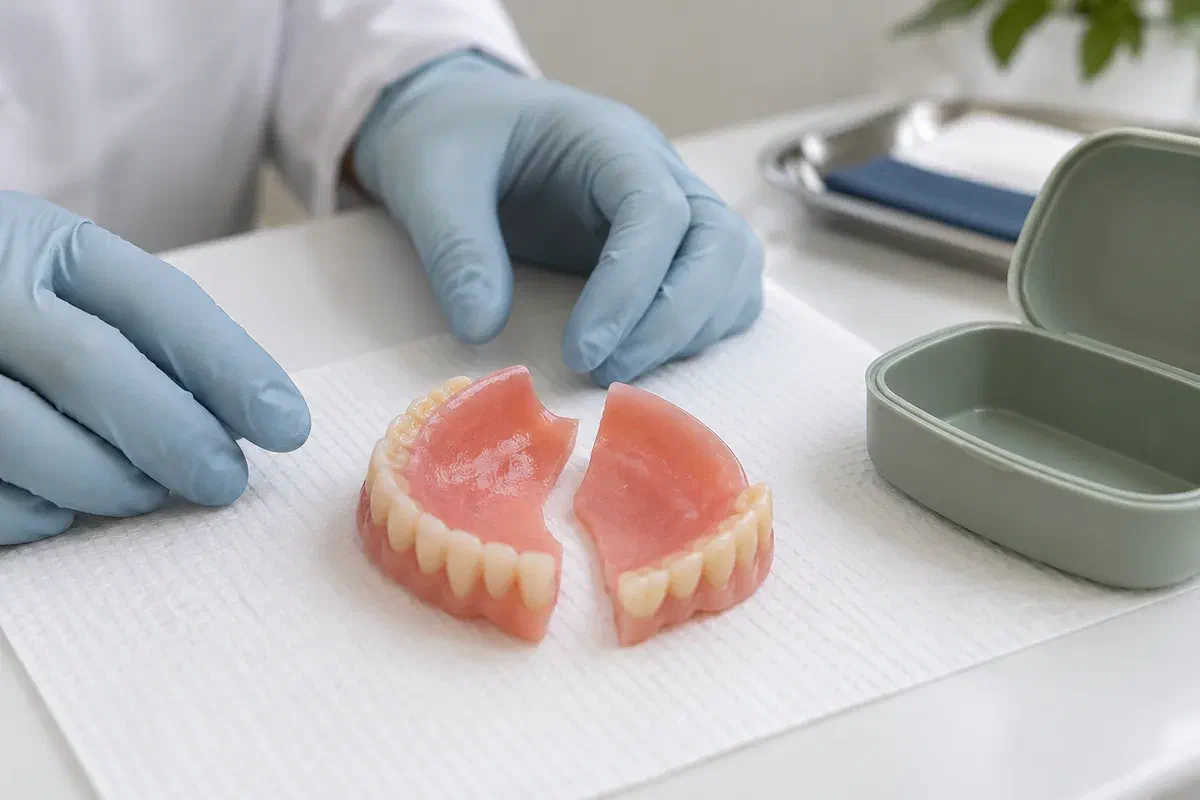
The denture’s material, how far the damage spreads and its general condition shape the advice. The clinician also checks whether it still fits well enough to make a repair worthwhile.
A plate that has broken through may be joined again if the pieces relate precisely. Whether it followed an accident or reflects a loose, rocking fit makes a difference to the plan.
Occasionally just one tooth breaks away and the base is untouched. The tooth’s location, its state and the acrylic surrounding it help decide between reattaching it and using a replacement.
With a partial denture, clasp or framework damage can leave it unstable. Fixing metal components calls for different techniques, often lab work, and sometimes a review of the overall design.
Please don’t let anyone glue the pieces, bend the clasp straight or sand the edges. Each of these can change how the denture sits and make a professional repair harder.
If the denture is still in reasonable shape, repairing the damaged section avoids the longer process of making a completely new one. The clinician considers how accurately everything can be repositioned and whether it will sit and work properly afterwards.
A repair will not undo age-related change, though. Worn teeth, a loose fit or a history of repeated breaks may make a reline, a rebase or a new denture worth discussing. The goal isn’t simply joined pieces. It is a denture that serves the person wearing it.
Patient information: ADA — caring for partial dentures
Looking at the gums and bite can show sore areas or instability that would keep causing trouble even after the crack is closed.
You and your family member learn which problems a repair solves and which will remain, making it easier to compare it with a new denture.
Advice on cleaning, storing and handling can reduce future accidents. If the break happened while chewing, the clinician can look for causes besides a fall.
Repair time varies with the damage, the material, any lab stage and appointment availability. Let us know if eating without the denture is a struggle, so short-term arrangements can be discussed.
Have the appliance, all loose fragments and any repair history with you. The clinician examines the material and the break and asks whether it was dropped or failed during a meal.
Gums, any natural teeth and the opposing bite are assessed. An impression or similar record may be taken so the repair matches the mouth accurately.
This may involve rejoining the base, replacing a tooth or repairing a component. When a dental lab is needed, the team will give an idea of when the denture should be ready.
The repaired denture is checked for comfort, grip, bite and sharp edges. Encourage the wearer to mention any pressure or movement, and arrange any recommended review instead of adjusting it at home.
Follow the care instructions given for the denture’s material and condition. If soreness or looseness persists, contact us rather than putting it down to adjustment.
A towel in the sink or a basin with a little water can stop a slip from becoming another break. Use products and temperatures suitable for the material, as hot water can warp some dentures.
Daily care of the gums and any remaining natural teeth matters as much as cleaning the denture. Ask about overnight removal and how it should be stored.
If the repaired denture rubs in one place or tips during chewing, call the clinic. More adhesive won’t fix an appliance that no longer fits.
Supporting someone through a denture repair raises its own practical questions. A short call describing the damage, and how your family member is coping, lets us judge what is urgent and what can wait.
Contact our Bronte Street practice about a broken plate, a lost tooth or a damaged clasp on a loved one’s denture. Bring every piece so we can assess what can be repaired, check the fit and outline a realistic timetable.
Please call if the denture is hurting the wearer’s mouth or they can’t cope without it. Repair timing depends on the assessment and on availability.
