The plate has fractured
Acrylic that has split cleanly may be rejoined when the halves relate accurately to each other. The clinician will also consider whether a fall caused it or whether pressure from a poor fit has been building.


A gap where a denture tooth used to be is hard to ignore when you smile or speak. If you’re coming from Oakville, call ahead so we can review the break, check the fit and explain what a repair can realistically do.
It often happens at the worst time. You bite into something firm the morning of a meeting, and a front tooth lifts away from the denture. Nothing hurts. Still, you notice the gap every time you talk, and chewing on that side feels uncertain.
A lost tooth is only one kind of damage. Plates crack after a tumble onto tile. Clasps on a partial can bend or snap. Before deciding anything, the clinician wants to understand why it failed, because a denture that breaks repeatedly under biting pressure may be telling you something about its fit, its worn teeth or the ridge it rests on.
So start with a phone call from Oakville rather than a tube of glue. Describe the damage and how it happened. Then gather every piece, the detached tooth included, and keep them in one container. Those originals give the clearest picture of what went wrong and what can sensibly be done.
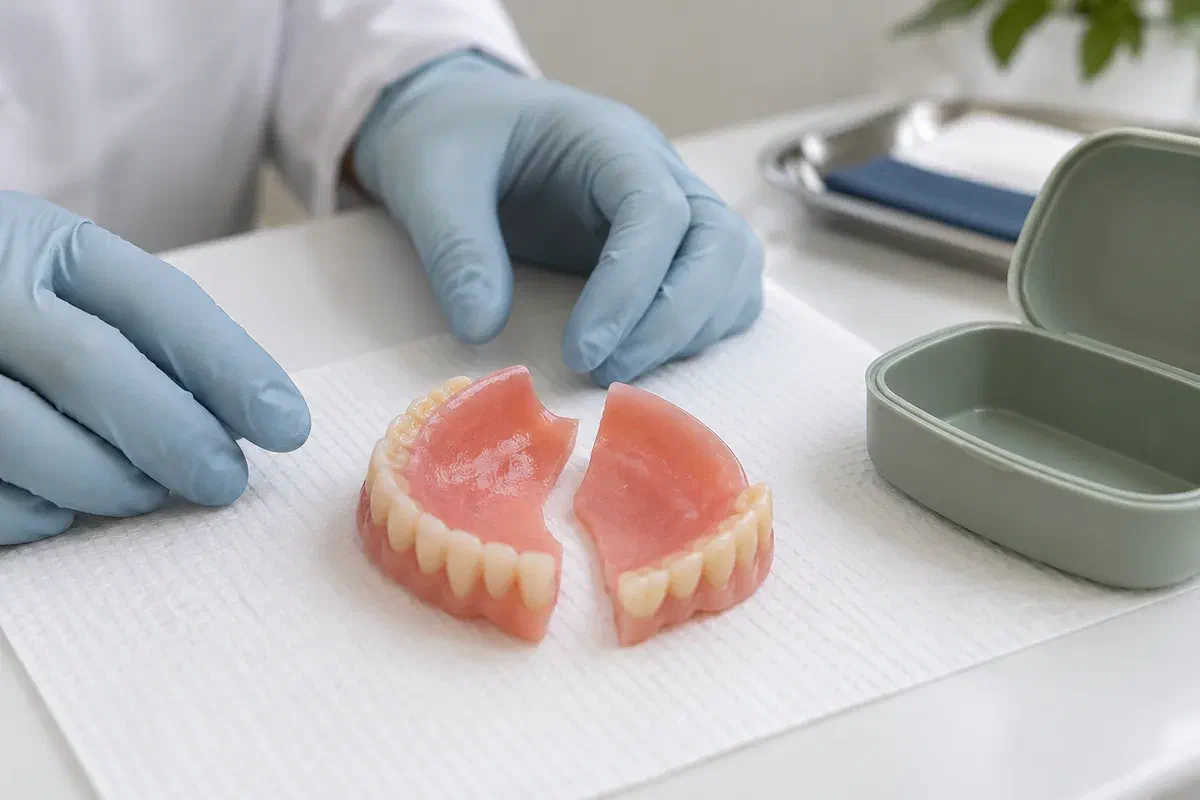
Each type of break raises its own questions. The material, how much is affected and how the denture has aged all matter, and so does one more question: does it still fit well enough to be worth repairing?
Acrylic that has split cleanly may be rejoined when the halves relate accurately to each other. The clinician will also consider whether a fall caused it or whether pressure from a poor fit has been building.
The base can stay whole while a single tooth breaks free. Where that tooth sits, whether you still have it and how sound the acrylic around it is all guide the choice between rebonding it and adding a new one.
Metal clasps and frameworks help a partial denture grip and stay steady. Fixing them is a separate kind of work from acrylic repair, and it may involve a laboratory or a rethink of how the partial is built.
Glue, pliers and emery boards can all make matters worse. Changing the shape or surface of a denture at home can affect how it sits and leave less to work with later.
A good repair targets the damaged area and leaves the rest of a well-functioning denture as it is. That can save you the longer process of having a new appliance made. The clinician considers how precisely the parts can be brought back together and whether the result will be comfortable and practical.
There are limits. Repair won’t refresh teeth that have worn flat or tighten a fit that has loosened over time. If breaks keep happening, a reline, a rebase or a new denture may be the more useful conversation. Joining the pieces is one goal; a denture that suits your mouth is the bigger one.
Patient information: ADA — caring for partial dentures
Examining your gums and bite alongside the appliance can catch sore areas or rocking that would otherwise linger after the break is fixed.
You’ll hear which problems the repair addresses and which will stay, so a decision about a new denture is easier to make.
Simple handling and storage advice protects the appliance. If chewing caused the break, the clinician can look for reasons beyond bad luck.
Some repairs are quick; others need lab time. The damage, the material and appointment availability all affect timing. Tell us if eating is difficult without the denture, so we can discuss how you’ll manage in between.
We look over the denture, any loose parts and whatever you remember about past repairs. Expect questions about the moment it broke: in your hand, on the floor or in your mouth?
The clinician checks your gums, any natural teeth and how the opposite jaw meets the denture. An impression may be taken so the repair lines up with your mouth.
Depending on the plan, the base is rejoined, a tooth is replaced or a component is fixed. If a laboratory handles the work, you’ll be given an idea of when it should be ready.
Once repaired, the denture is tried in and checked for comfort, grip, bite and any rough spots. Speak up about pressure or movement, and keep any follow-up visit instead of adjusting it yourself.
Your repaired denture should be worn and cleaned according to the advice for its material. Ongoing soreness or looseness deserves a call, not just patience.
A folded towel under your hands, or a little water in the basin, softens the landing if the denture slips. Avoid hot water and cleaners not meant for your appliance.
Your gums and any remaining teeth need daily care too. Ask the clinician whether to take the denture out at night and how to store it.
A spot that keeps rubbing, or a denture that tips when you bite, should be checked. Adhesive can hide a fit problem but can’t correct it.
Let us know what broke and whether you can get by without the denture for now. That helps sort what needs quick attention from what kind of repair is realistic.
Our Bronte Street practice can look at a cracked plate, a lost tooth or a broken clasp. Bring the denture with all available fragments, and we’ll assess the options, check the fit and give you a realistic sense of timing.
Phone us if the denture is causing injury or you’re finding it hard to cope without it. How soon a repair can be done depends on the assessment and on availability.
