A plate cracked through, or re-cracked
A split base may be repairable if the edges can be accurately related. Glue residue or an old repair line can complicate things, and the clinician also asks whether fit or biting pressure keeps reopening it.


Glued it already, or had it fixed before and it broke again? You’re not out of options. From Puslinch, call our team so we can look at the damage and any earlier repair, check the fit and talk through what comes next.
Out in the country, a broken denture often gets the same treatment as a broken tool: fix it now, sort it properly later. A dab of glue holds for a few days, then lets go. Or a repair done years ago finally fails along the old line. Either way, you are back to soft food and a careful smile.
What matters next is honesty about the history. A denture that broke once in a fall is a different case from one whose previous repair has given way, or one that keeps cracking while you chew. Looseness, worn teeth, gradual change in the gums and bone, and a bite that meets unevenly can all lie behind a stubborn fracture.
Phone us from Puslinch before adding more glue or wearing it again. Tell the team what has been tried, including any product used. Keep every piece and any detached tooth together in a container. The clinician can learn a lot from the parts as they are, and then explain what a professional repair or replacement could realistically offer.
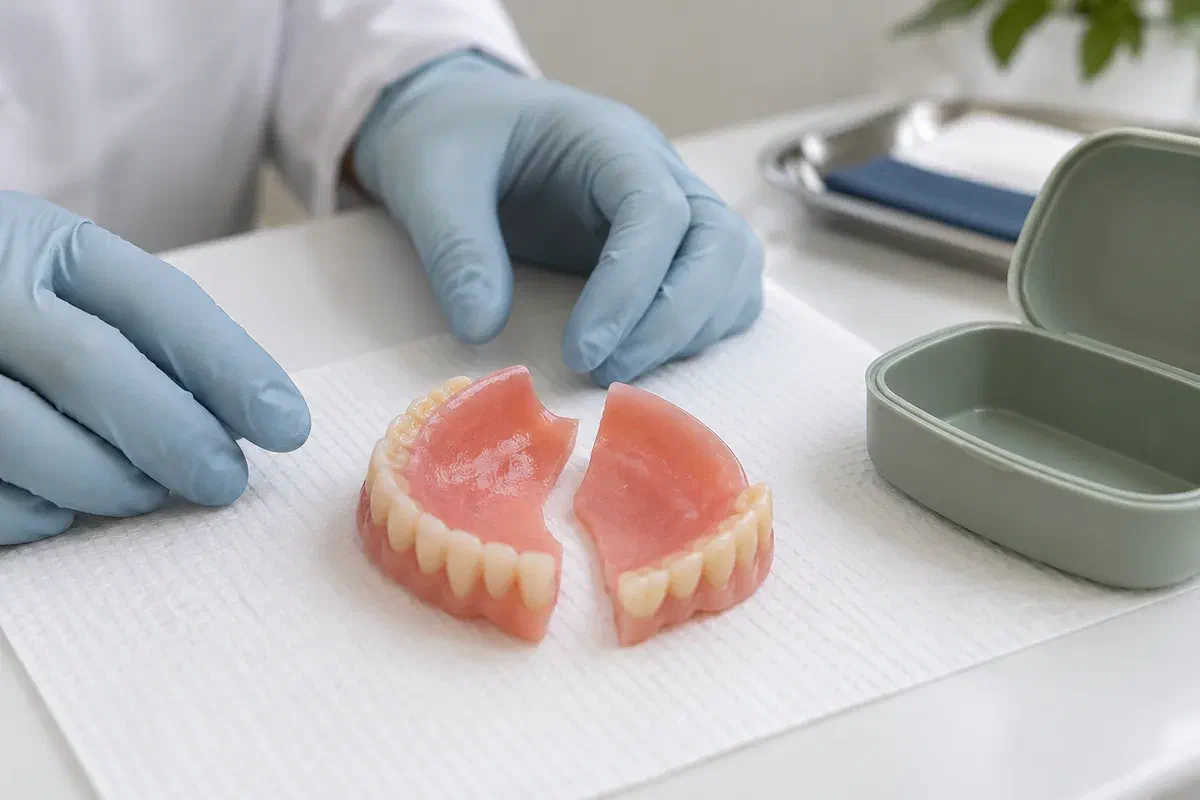
Material, extent of damage and the condition of the whole appliance guide the advice. Earlier repairs and home fixes are part of the picture too, along with whether the denture still sits well enough to be worth repairing.
A split base may be repairable if the edges can be accurately related. Glue residue or an old repair line can complicate things, and the clinician also asks whether fit or biting pressure keeps reopening it.
If a tooth has detached once more, where it sits, how worn it is and how much sound acrylic remains help decide whether rebonding or a replacement is more sensible this time.
Bent or broken metal on a partial affects how securely it holds. These repairs differ from acrylic work, often involve a lab, and may raise questions about whether the design still suits.
Please stop adding glue or filing rough edges. Each attempt can shift the pieces, change the fit and leave less sound material for a professional repair.
If the denture is otherwise in reasonable condition, a professional repair can address the break and spare you having a new appliance made. The clinician considers how precisely the parts can be rejoined, especially after a home fix, and whether the result will sit and work acceptably.
Some dentures have simply reached the limits of repair. Flattened teeth, slack fit and a break that keeps returning may lead to talk of relining, rebasing or replacement. It is worth asking both questions: can it be mended, and will the mended denture actually serve you?
Patient information: ADA — caring for partial dentures
An exam of the tissues under the denture and the way your teeth come together helps explain repeat breaks and catches sore areas that would persist after the fracture is fixed.
You’ll know what a repair can address and what it can’t, making it easier to decide between repairing again and starting fresh.
Handling and storage advice reduces accidental damage. If chewing is the trigger, the review looks at fit, wear and bite rather than blaming bad luck.
Timing varies with the type of break, the material, any earlier fixes, lab needs and our schedule. If going without your denture is making meals or work difficult, mention it so interim needs are considered.
Bring the denture, all loose pieces and any details of past repairs, including home fixes. The clinician studies the fracture and asks how and when it broke.
Gums, any natural teeth and the opposing bite are assessed. To make sure the repair seats correctly, an impression or another record might be taken.
Depending on the plan, the base is rejoined, a tooth replaced or a component fixed. Glue may need to be removed first. If a lab is involved, the team will explain when to expect it back.
Fit, retention, bite and edges are checked with the repaired denture in place. Mention any pressure or movement, and arrange any recommended review rather than reshaping it yourself.
Use and clean the repaired denture as advised for its material. If you feel soreness or instability that doesn’t ease, contact us instead of reaching for glue or adhesive.
Hold the denture over a towel or a basin with some water in it. Use cleaning products and water temperatures suited to its material, since hot water can warp some appliances.
Clean the tissues under the denture and any natural teeth as instructed. Ask about overnight removal and the right way to store your appliance.
If the repaired area feels rough, a sore spot appears or the denture rocks, contact the clinic. Adhesive isn’t a replacement for checking a denture that has stopped fitting.
Let us know what broke, what has already been tried and whether you can manage without the denture. That helps us separate an urgent need from the repair the appliance can support.
Re-cracked plate, a tooth that won’t stay on, a clasp that’s let go: our Bronte Street practice can look at all of these. Bring the denture, every piece and what you know of past fixes, and we’ll assess options, check fit and set out timing.
Please phone if the denture is hurting your mouth or you can’t cope without it. Repair timing depends on the assessment and availability.
