A crack from a fall
Acrylic bases can split when dropped. A clean break may be repairable if the pieces fit back together precisely, and the clinician will check that the crack wasn’t also helped along by an uneven fit.


New to dentures and already dealing with a crack or a lost tooth? It happens more than people expect. From Rockwood, our team can examine the damage, review the fit and help you understand what went wrong and how to fix it.
In the first year with a denture, there is a lot to learn: how to put it in, how to clean it, which foods take practice. Breaks during that time can feel discouraging. Often they come from handling, such as a slip during cleaning or a fall from the counter, and sometimes from a tooth that pops off under a firm bite.
Knowing the cause helps you avoid a repeat. An appliance dropped on tile is one situation. One that cracks while you chew, especially if it has felt unsteady, raises questions about fit, how the gums underneath have settled, and whether your bite meets evenly. Those questions apply to newer dentures as much as older ones.
So before you wear it again or try any fix, call our team from Rockwood. Explain what you were doing when it broke and how it has felt since you got it. Keep all the pieces, along with any detached tooth, in a small container. The originals give the clinician the clearest view and make it easier to discuss realistic choices.
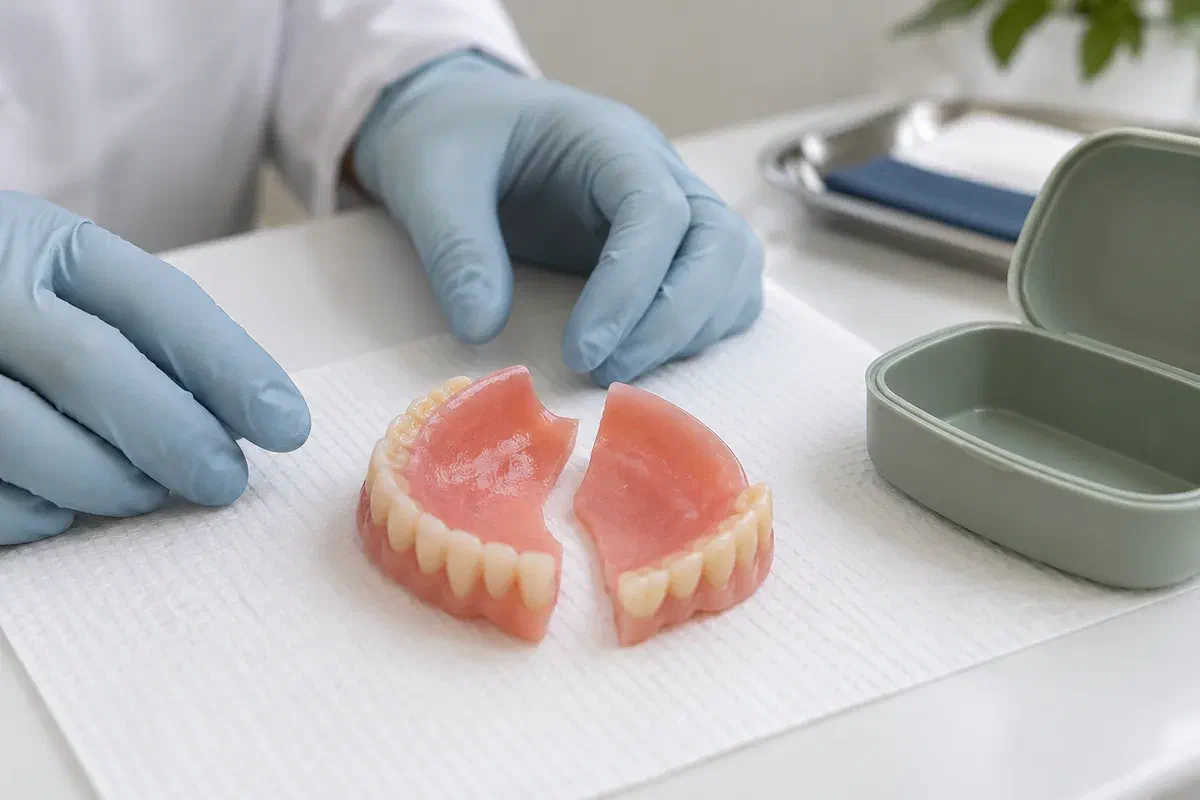
The type of material, how much is damaged and the overall condition of the appliance guide the plan. The clinician also checks whether it is fitting the way it should, since that affects whether a repair is the right answer.
Acrylic bases can split when dropped. A clean break may be repairable if the pieces fit back together precisely, and the clinician will check that the crack wasn’t also helped along by an uneven fit.
A single tooth can detach under a hard bite while the base survives. Where it sat, its condition and the surrounding acrylic help decide whether to reattach it or use a new one.
Clasps on a partial denture can bend if it is inserted or removed awkwardly. Metal repairs follow a different process from acrylic ones and may involve a lab or a review of the design.
However tempting, don’t glue, bend or file anything. Home fixes can change how a new denture fits and make it harder for a professional repair to restore the original shape.
If the appliance is otherwise in good condition, repair can address the specific damage without having a whole new denture made. The clinician looks at how accurately the parts can be rejoined and whether the result will fit and function well.
Even a newer denture can have a fit issue that a repair alone won’t solve. If the gums have changed since it was made, or the bite meets unevenly, a reline or an adjustment may be discussed. The goal is a denture that suits your mouth, not just one that is in one piece again.
Patient information: ADA — caring for partial dentures
Looking at your gums and bite helps spot sore areas or instability, which are common worries in the early months, so they can be addressed alongside the break.
You’ll know which part of the problem is solved and which might need further attention, so there are fewer surprises later.
Guidance on cleaning, inserting, removing and storing the denture can prevent many accidental breaks. If it broke while chewing, other causes are explored too.
Timing depends on the damage, the material, whether a lab is required and when appointments are free. If eating is difficult without your denture, let us know so we can discuss how to manage meanwhile.
Bring the denture, all loose pieces and any notes on when it was made. The clinician inspects the break and asks how it happened, including whether it was in your mouth at the time.
Your gums, any natural teeth and the opposing bite are checked. If needed, an impression captures your mouth so the repaired denture can sit accurately.
Depending on what’s agreed, the base is rejoined, a tooth is replaced or a clasp is fixed. When lab work is needed, the team will tell you roughly when it will be ready.
You try the repaired denture while we check comfort, hold, bite and any sharp areas. Say if anything presses or moves, and keep any follow-up appointment instead of adjusting it at home.
Care for the repaired appliance as advised for its material and condition. Ongoing soreness or looseness is worth a call, even in the early months when some adjustment is expected.
Lay a towel in the sink or fill the basin partly with water before cleaning. Stick to lukewarm water and denture-safe products; heat and harsh cleaners can damage certain materials.
Clean the tissues the denture rests on and any natural teeth, as well as the appliance. Your clinician can tell you whether it should spend the night in its case, and in what.
If the repaired denture rubs or tips when you bite, call the clinic. Adhesive is not a fix for a denture that isn’t fitting properly.
Early breaks often come with self-doubt. Describe what happened and how you’re coping, and we can sort what needs prompt attention from a repair that can be planned calmly.
Our Bronte Street practice sees newer dentures with split bases, lost teeth and bent clasps too. Bring yours along with every piece, and we’ll assess the options, check the fit and explain the timing.
Phone rather than wait if the appliance is hurting your gums or daily life without it is too hard. We’ll confirm repair timing after the assessment, based on what we find and on our schedule.
