A cusp from a back tooth
Fragments from molars are often small or crumbly, and chewing forces are high, so other repairs may suit better. The dentist checks the walls left and whether the fracture runs out of sight.

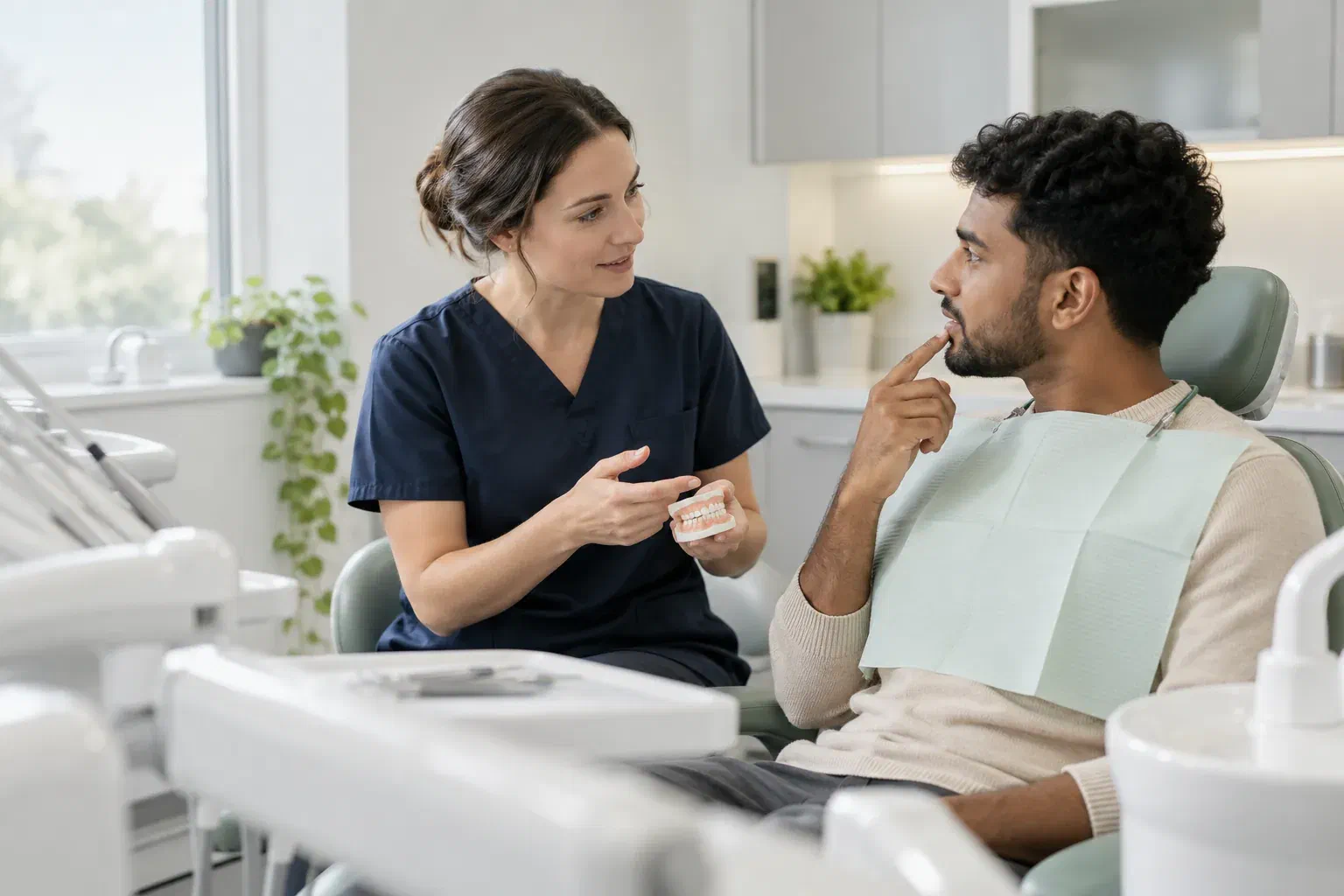
You found the broken piece, now what? For people in Campbellville, keeping that fragment moist and bringing it in gives the dentist one more option when planning how to repair the tooth.
People often spit out the broken bit and throw it away. Next time, keep it. A fragment stored in milk or saliva can sometimes be bonded back onto the tooth, and even when it can’t, it shows the dentist the shape and size of the break. It isn’t the whole picture, though. The remaining tooth, its root and its nerve still need to be examined.
Reattachment works best when the break is clean, contained and above the gum, and the piece is in good condition. If that isn’t the case, composite can rebuild the area instead. Bigger losses may call for an onlay or crown, an injured pulp may need root canal treatment, and a very deep fracture can lead to a discussion about keeping the tooth at all.
From Campbellville, ring our Bronte Street practice before setting out. Let us know when it broke, how you stored the piece, and whether there’s pain, swelling, a loose tooth or a change in your bite. Those answers shape the timing. And even with no discomfort, it’s worth calling soon, while the fragment is fresh.
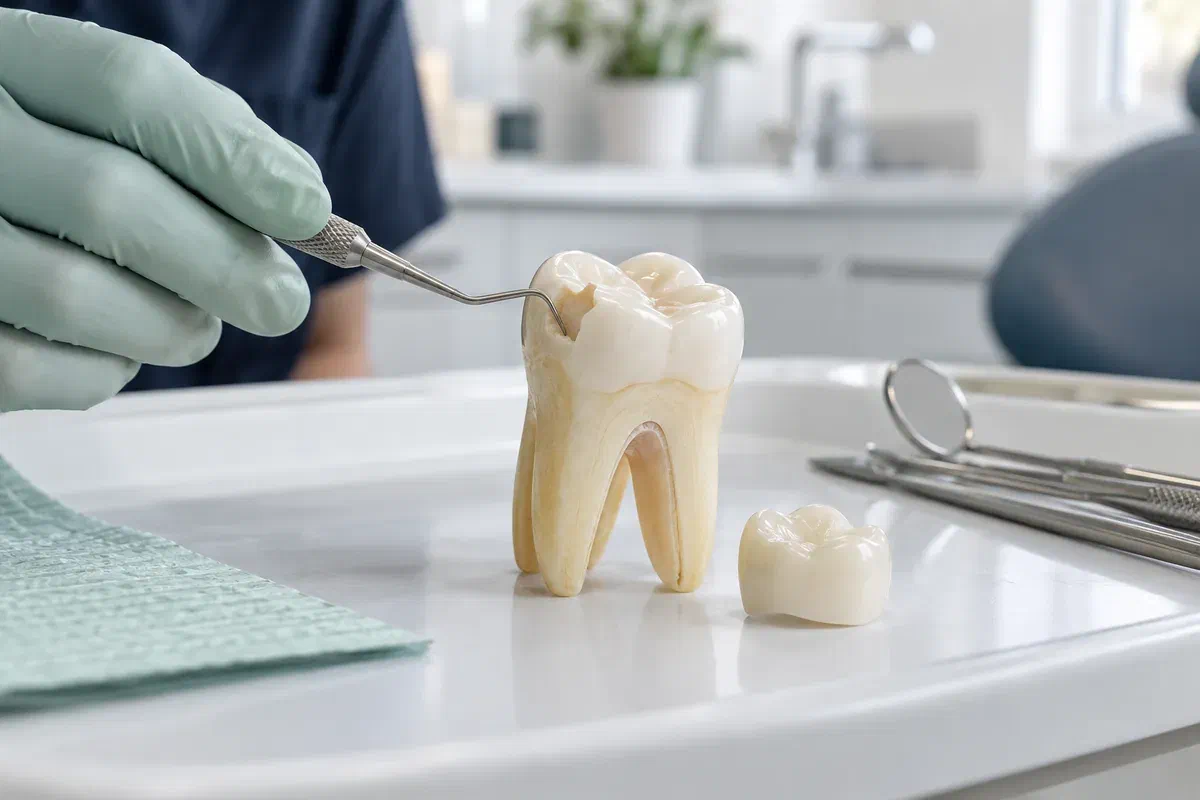
Whether a fragment can go back depends on more than the piece itself. Depth, location, remaining structure and signs of injury or infection all count, and a small chip can be more sensitive than a large break.
Fragments from molars are often small or crumbly, and chewing forces are high, so other repairs may suit better. The dentist checks the walls left and whether the fracture runs out of sight.
Clean front-tooth breaks are sometimes good candidates for reattachment. Tell us how it happened, and whether teeth feel loose, the bite has shifted or the lips and gums were hurt.
Symptoms help show whether the pulp is involved, which can change the plan. Mention whether pain fades fast or persists, whether biting triggers it, and whether the gum has swollen.
Store the piece in a small container of milk, or in your own saliva, so it doesn’t dry out. Don’t scrub it, rinse it under a hard tap, or try to fix it on with any glue.
When conditions are right, reattaching a fragment can restore the tooth’s natural shape and surface. Whatever the repair, an early look also reveals what a quick patch would miss, such as a deeper crack, decay, or an injured nerve that needs attention.
It helps to be realistic. Neither reattachment nor any other restoration can guarantee a badly broken tooth will last for good, and the outlook depends on the fracture and the tissue still present. Ask whether your repair is definitive, temporary, or part of a staged plan.
Patient information: NHS — chipped, broken or cracked teeth
Bonding the piece back, or covering the area, can shield exposed dentine and ease irritation. It doesn’t replace treating an infection if one is present.
The repair is chosen for what the tooth can support. A fragment is used only when it suits the break, not simply because it’s available.
Where it applies, we can talk about a mouthguard for sport, clenching, or other heavily filled teeth at risk of a similar fracture.
The first visit may focus on diagnosis and immediate needs. Ask whether reattachment can happen that day, what may need another visit, and how to protect the tooth meanwhile.
Tell us when and how the tooth broke and what you’ve felt since. Bring the piece in its container, and mention previous root canal treatment or large fillings.
The dentist looks at the fragment, the fracture surface, your bite, gums and, where appropriate, the nerve. X-rays can show how far the damage extends.
If the piece isn’t suitable, a temporary cover may be placed while the plan is set. Discuss benefits, limits, fees and other options before choosing.
The chosen repair is completed or arranged with other care. Your bite is checked, and follow-up is booked where trauma or nerve health needs watching over time.
A reattached fragment, a temporary and a final restoration each need their own care. Follow the instructions you’re given, and phone if anything loosens or feels different.
Until cleared, avoid biting hard or sticky foods with the repaired tooth, especially front teeth with a reattached edge. Don’t test the bond by pressing on it.
Brush and clean between teeth as usual, softly near any tenderness. If cleaning around the repair is awkward, ask for advice rather than skipping it.
Some repairs need a follow-up, a final restoration or a nerve review. Keep those appointments so the tooth isn’t left with an unfinished plan.
Advice depends on the break and your symptoms. Contact the clinic, describe what happened, and the team will help arrange a suitable assessment.
Call our Bronte Street practice if a tooth has broken and you’ve kept the fragment, or even if you haven’t. Describe your symptoms, so we can assess the tooth, explain whether reattachment suits and plan any further care.
Please phone for a recent injury, significant pain or swelling. Online requests aren’t monitored around the clock for emergencies.
