A gap where a cusp used to be
Your tongue finds it first, often near an old filling on a back tooth. The dentist checks whether what’s left can hold a repair and whether the crack goes further than the gap suggests.


Eating, brushing and sleeping all feel different with a broken tooth. For households in Erin and Hillsburgh, here’s how to manage at home and what the dentist checks before choosing a repair.
The days after a tooth breaks bring small, practical puzzles. Which side do you chew on? Is toast safe? Should you brush near the jagged bit or leave it alone? Those habits matter, because they protect the tooth until it can be seen. They don’t replace the assessment, though, where the dentist checks how deep the fracture runs, whether the root is sound and how the nerve is doing.
That assessment shapes the repair. Shallow damage may be rebuilt with composite, and sometimes a kept fragment can be bonded back. A tooth missing a lot of structure may need an onlay or crown, and if the pulp has been affected, root canal care may be needed first. Now and then, a fracture is too deep to repair reliably, and the dentist will talk through replacement.
Calling from Erin, tell our Bronte Street team when it broke and how daily life has been since: pain while eating, a swelling, a tooth that moves or a bite that feels off. That helps decide how soon to come in. Even if eating feels normal, a call is wise. A tooth that copes with soft food can still be weakened.
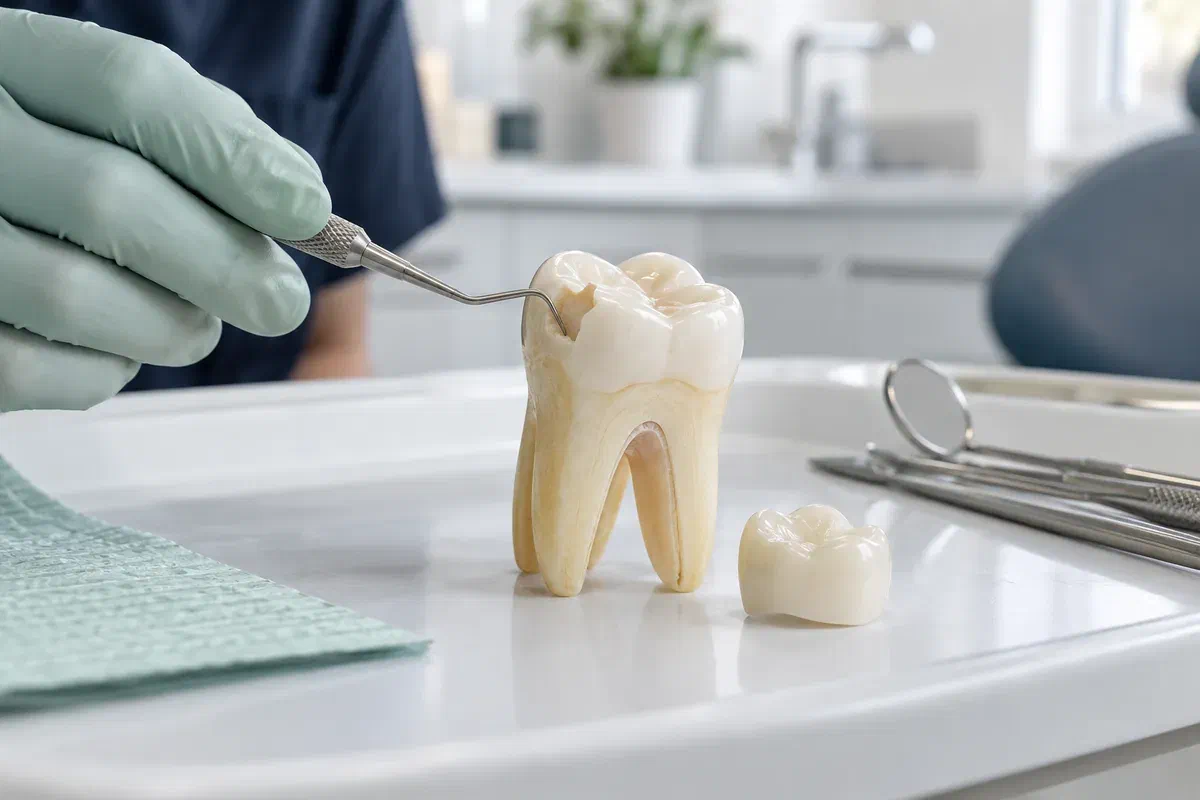
Cold milk might sting a small chip, while a larger break may feel oddly fine. The dentist takes depth, location, remaining tooth and any sign of injury or infection into account together, so share what you’ve noticed.
Your tongue finds it first, often near an old filling on a back tooth. The dentist checks whether what’s left can hold a repair and whether the crack goes further than the gap suggests.
A slip on ice or a fall from a ladder can affect several teeth and the gums. Describe the accident, and tell us whether anything feels loose or your teeth now meet differently.
Notice whether discomfort is a quick flash or lasts, whether chewing sets it off, and whether swelling or a sour taste has appeared. That helps the team judge urgency.
If a piece came off, pop it in a small container with milk or a little of your own saliva and bring it to the visit. Don’t scrub it clean or reach for the superglue.
A suitable repair rebuilds the tooth so ordinary meals feel ordinary again. Having it assessed promptly also catches what a quick cover-up would miss, such as decay under a filling, a crack heading deeper or a nerve that has been irritated.
Still, there’s no repair that can promise a badly broken tooth will last forever. How it fares depends on the fracture and the tissue still there. Ask whether each step is a final restoration, a temporary measure, or one part of a longer plan to keep the tooth.
Patient information: NHS — chipped, broken or cracked teeth
Covering or restoring a sharp area can protect it and stop it rubbing. What’s suitable depends on the findings, and it doesn’t take the place of treating infection.
The dentist chooses based on what the remaining tooth can support. Fast placement or a neat shade match alone isn’t the deciding factor.
We can talk about clenching, chewing ice or pens, large fillings elsewhere, or a mouthguard for sport, wherever they apply.
Your first appointment may be about diagnosis and comfort. Ask what can be fixed that day, what needs a return visit, and how to manage at home in between.
Tell us the day it broke, whether something hit it, and how eating and sleeping have been since. Bring the fragment and mention earlier root canal work or large fillings.
The dentist looks at the fracture, how your teeth meet and the gums, and may test the nerve. X-rays help show what lies beneath the surface.
A temporary cover may protect the tooth while the long-term repair is chosen. Talk through benefits, limits, fees and alternatives before deciding.
Treatment is finished here or coordinated with a referral. The dentist makes sure you can chew comfortably and explains any follow-up, especially after trauma or deep damage.
Home care differs a little before treatment, with a temporary and after the final restoration. Follow the instructions for your stage, and ring the clinic if anything loosens or feels new.
Choose softer foods and chew on the other side. Leave crusty bread, nuts, hard candy and sticky treats until you’re told it’s fine, and don’t test the tooth by biting.
Keep brushing and cleaning between teeth, slowing down around the broken area. If a sharp edge shreds floss or a temporary gets in the way, ask how to clean there.
A comfortable temporary is easy to forget about. Return for the definitive restoration, pulp review or referral so the tooth doesn’t stay half finished.
Advice depends on the injury and symptoms. Get in touch and describe what has happened, so the team can help you arrange an appropriate assessment.
Call our Bronte Street practice if a tooth has broken, chipped or cracked. Describe how it’s affecting meals and sleep, and bring any fragment, so we can assess the damage and plan a repair that suits.
For a recent injury, severe pain or swelling, call instead of booking online. Online requests aren’t watched continuously for emergencies.
