A twinge when you bite on a back tooth
Pain on chewing can suggest a cusp that has broken or is flexing along a crack, often beside a filling. The dentist checks the walls and whether the fracture line goes further than the visible break.


A sharp zing with cold water, a dull ache at night, or no feeling at all: how a broken tooth behaves offers clues. From Georgetown, an exam turns those clues into a clear repair plan.
Broken teeth behave in very different ways. One flinches at every sip of iced water; another aches quietly through the evening; a third feels like nothing happened at all. Each pattern hints at something, yet none of them tells the full story. The dentist still needs to see how deep the fracture reaches, whether the root is sound, and how the pulp is coping.
Brief sensitivity often points to exposed dentine, and a shallow break like that may be rebuilt with bonded composite, or the original piece reattached. A lingering ache or swelling raises the possibility of nerve involvement, which can mean root canal care before a crown or onlay. Occasionally the findings lead to a conversation about whether the tooth can remain.
So when you phone from Georgetown, describe the sensation as precisely as you can, along with when the tooth broke. Mention swelling, a tooth that moves, or a bite that feels off. Those details help the team judge timing. And if the tooth feels completely normal, call anyway: silence isn’t proof that all is well.
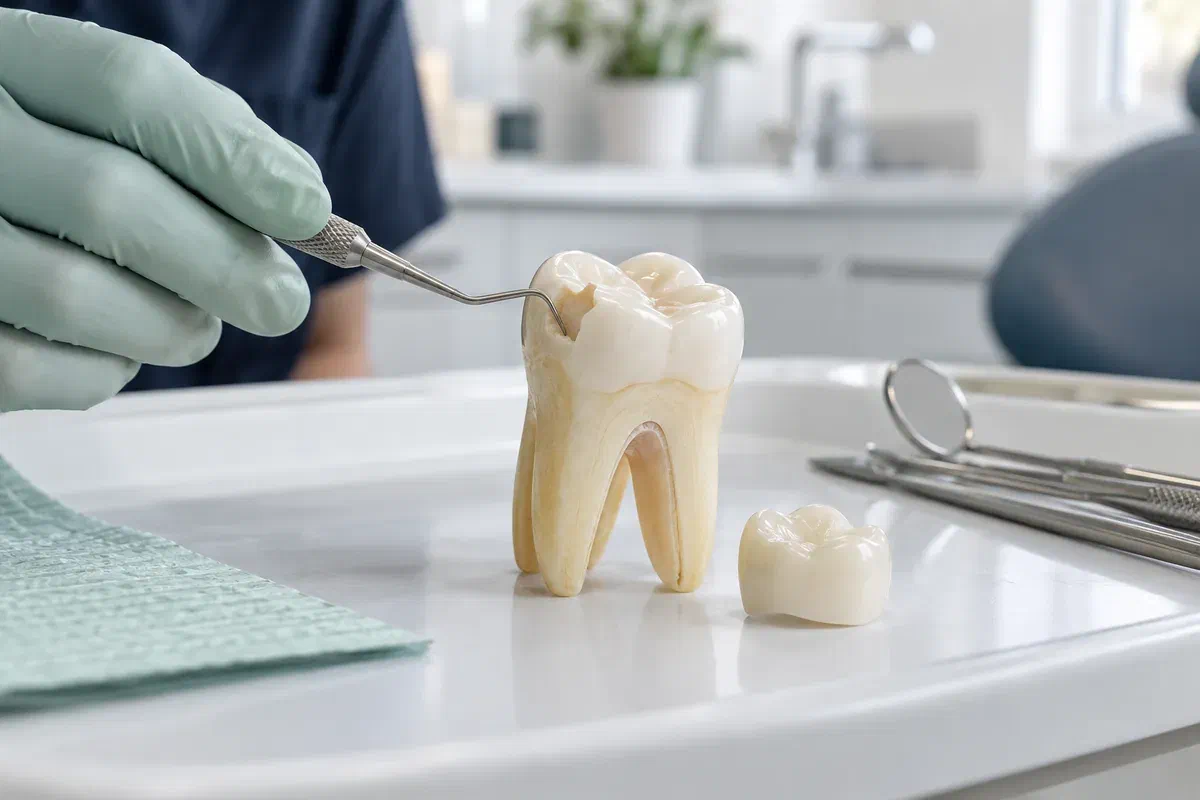
Small chips can leave a nerve-rich layer open to temperature, and large fractures sometimes stay quiet. The dentist combines what you feel with the depth, position and remaining structure of the tooth, plus any sign of injury or infection.
Pain on chewing can suggest a cusp that has broken or is flexing along a crack, often beside a filling. The dentist checks the walls and whether the fracture line goes further than the visible break.
A blow can bruise the ligament around a tooth as well as break it, and nearby teeth can be affected. Explain what happened and whether any tooth feels loose or your teeth meet differently.
Pain that hangs on after the trigger is gone, or a swollen gum with a sour taste, can mean the pulp or surrounding tissue needs attention. Tell us when it started and what eases or worsens it.
Any piece you recover can be kept moist in a little milk, or in your own saliva, inside a small lidded container. Bring it along, unwashed and unglued.
The right repair rebuilds the tooth and settles sensitivity, so you can eat without bracing for it. An early exam also catches what a quick cover would only mask: a crack running deeper, decay, or a pulp that is inflamed rather than just irritated.
Keep expectations realistic. No restoration can guarantee that a badly broken tooth will last forever, and its future hinges on the fracture and the tissue that remains. Ask the dentist whether a given step is the final repair, a temporary one, or part of a staged plan to keep the tooth.
Patient information: NHS — chipped, broken or cracked teeth
Sealing or rebuilding exposed dentine can reduce sensitivity and protect the area. The appropriate measure depends on what is found, and it doesn’t replace treating an infection.
The dentist picks a repair the remaining tooth can genuinely carry. Being quick to place or close in colour isn’t enough on its own.
If grinding, large fillings or sport contributed, we can talk about ways to protect your teeth from the next break.
The first visit may concentrate on finding the source of discomfort and easing it. Ask what can be treated straight away, what needs another appointment, and how to protect the tooth until then.
Tell us when the tooth broke, whether there was an impact, and exactly how it feels. Bring the fragment, and mention earlier root canal work or large fillings in that tooth.
The dentist inspects the break, bite and gums, and may test how the nerve responds to cold or tapping. X-rays can show what isn’t visible.
A temporary dressing or cover may calm the tooth while the long-term plan is agreed. Go through the benefits, limits, fees and alternatives before deciding.
The chosen treatment is carried out or coordinated. Your bite is checked, and the nerve may be reviewed later where trauma or uncertainty calls for it.
Interim dressings and final restorations have different needs. Follow the instructions given, and phone if a repair loosens or the pattern of discomfort changes.
Until advised otherwise, keep hard or sticky foods off that tooth. Don’t keep biting on it to find out whether the sensitivity has gone.
Continue brushing and flossing, using a soft touch near sore areas. If a temporary or rough edge gets in the way, ask how to keep the area clean.
Feeling calmer isn’t the same as finished. Keep the follow-up for the permanent restoration, nerve review or referral so the plan is completed.
The right advice depends on your injury and your symptoms. Contact the clinic and describe what has happened, and the team will help arrange a suitable visit.
If a tooth has cracked, chipped or lost a piece, our Bronte Street practice can help. Describe the sensations and bring any fragment, so we can assess the break, ease discomfort and plan a suitable repair.
Intense pain, new swelling or an injury that just happened all mean picking up the phone. Our online requests aren’t a channel for emergencies, as nobody watches them continuously.
