A split or chipped back tooth
A molar that broke as you bit down, often near a filling, needs its remaining walls checked. The question is whether they can support a repair and whether the crack runs past the edge you can see.

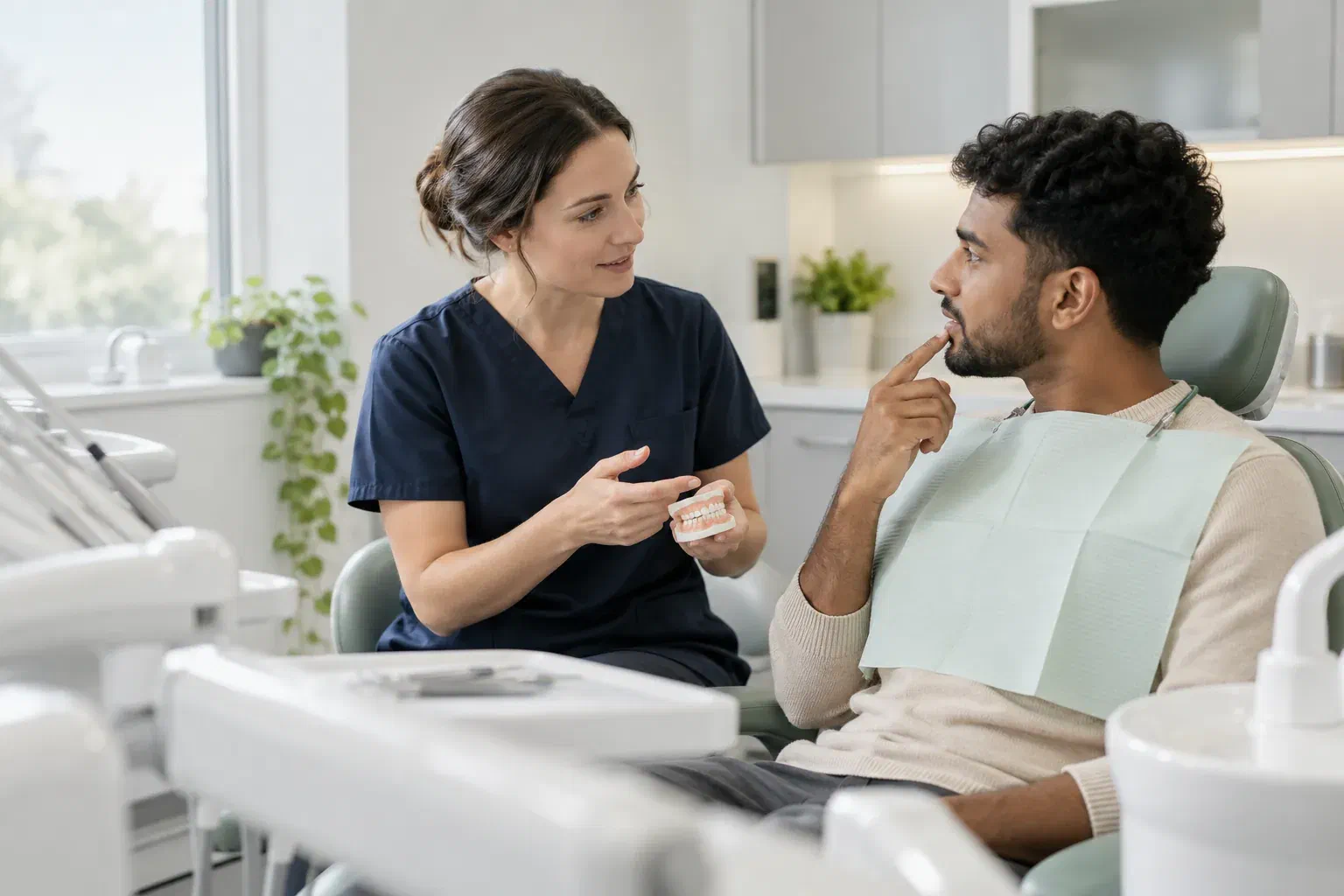
An elbow at hockey, a slip on the stairs, a fall from a bike. When a knock breaks a tooth, coming from Oakville for an assessment helps sort out what was injured and which repair is realistic.
Impacts break teeth in untidy ways. A front tooth may lose a corner, a back tooth may split, and the teeth beside them can be jarred without looking any different. That is why an exam after a fall or a hit looks beyond the obvious chip, at the root, the gums, the bite and the nerve inside the tooth.
Repair follows what survived. A clean, shallow break can often be rebuilt with bonding, and a saved fragment may even be fixed back in place. When more of the tooth is gone or the pulp is involved, the plan might include a crown, root canal care, or an open talk about whether the tooth can be kept.
Coming from Oakville, it helps to call before you set out. Tell the team how the injury happened, when, and what you notice now: pain, swelling, a tooth that wobbles, or teeth that no longer meet the way they did. A break that doesn’t hurt can still need prompt attention, so ask rather than wait.
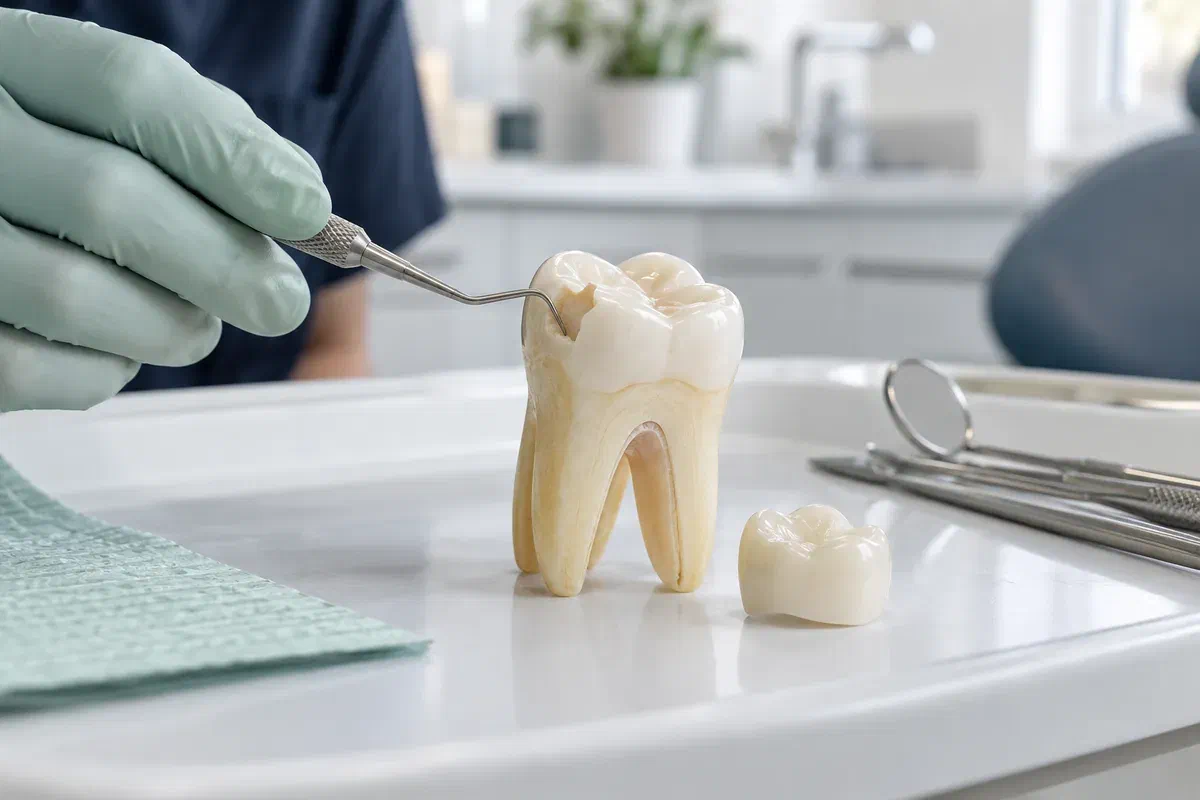
A small chip may open up a sensitive layer; a large fracture may feel strangely numb. The dentist combines depth, location, remaining tooth and any signs of injury or infection into one assessment.
A molar that broke as you bit down, often near a filling, needs its remaining walls checked. The question is whether they can support a repair and whether the crack runs past the edge you can see.
Trauma can shift teeth, bruise the gums or cut the lips as well as break enamel. Mention exactly what happened, any looseness, a bite that feels off, and injuries to the soft tissues.
What you feel helps locate the problem. Tell us if pain flashes and fades or keeps throbbing, if biting makes it worse, and if any swelling or bad taste has appeared.
Pick up any piece you can find. Keep it moist in milk, or in your own saliva, in a small sealed container. Don’t wash it with force or try to glue it on, and bring it to the appointment.
Prompt care can protect the broken surface, rebuild its shape and make the tooth usable again. An early look also catches what a quick cosmetic fix might cover up: a hidden crack, decay, or a nerve that took a hit.
Injured teeth don’t come with guarantees. How a badly damaged tooth does over time depends on the fracture and the surrounding tissues. Ask whether your treatment is the finished repair, an interim measure, or one stage of a plan to keep the tooth.
Patient information: NHS — chipped, broken or cracked teeth
Covering or restoring an exposed area can protect it and spare your lip and tongue. The right step depends on the findings and isn’t a substitute for treating infection.
The dentist chooses based on what the remaining tooth can support, not just on what is quickest to place or the closest colour match.
If sport played a part, ask about a properly fitted mouthguard. We can also look at grinding or other heavily restored teeth that may be at risk.
The first visit may be mostly about diagnosis and comfort. Ask what can be finished that day, what needs a later appointment, and how to guard the tooth in between.
Describe when and how the tooth broke and what you have felt since. Bring the fragment, and tell us about past root canal treatment or large fillings in the area.
The dentist looks at the fracture, nearby teeth, gums and bite, and tests the nerve where it makes sense. X-rays may show damage that can’t be seen directly.
A temporary cover may be used while the definitive repair is decided. Talk over expected benefits, limits, fees and alternatives before choosing.
Treatment is completed or coordinated with other care. Your bite is checked, and follow-up is booked where trauma or an uncertain nerve means the tooth should be watched.
Care for a temporary cover differs from care for a finished crown or filling. Follow the instructions for your tooth, and call if something loosens or your symptoms change.
Keep hard and sticky foods away from it until you’re told it’s ready. Avoid biting on it over and over to test its strength.
Continue normal cleaning while taking it slowly near sore gums. If a sharp edge or temporary material gets in the way, ask how to clean around it instead of avoiding the spot.
Feeling better doesn’t mean treatment is done. Keep the follow-up for the permanent restoration, nerve check or referral so the tooth isn’t left with an unfinished plan.
Advice depends on how the tooth was injured and how it feels. Call with a description and the team will help you arrange the right kind of assessment.
Phone our Bronte Street clinic about a tooth broken by a fall, a hit or a bad bite. Bring any fragment and tell us your symptoms, and we’ll assess the damage, explain repair choices and arrange further care if needed.
For a fresh injury, strong pain or swelling, please call. Online requests aren’t monitored continuously and shouldn’t be used for emergencies.
