A broken cusp with a hidden crack
When a back tooth loses a corner, the crack can continue toward the root or under the gum. The dentist checks how far it goes and whether the remaining walls are strong enough to repair.


The part of a broken tooth you can see is often the smallest part of the problem. For people coming from Puslinch, an exam and X-rays show where the fracture really ends before any repair is chosen.
Peering at a broken tooth in the bathroom mirror tells you roughly what’s missing. It can’t tell you whether a crack carries on below the gum, whether the root has been affected, or how close the break came to the nerve. Those hidden details are what the dentist is looking for, and they decide which repair makes sense.
With a clear view of the damage, the options sort themselves out. A break confined to enamel and outer dentine may be rebuilt with composite, and occasionally a saved fragment is bonded back. Fractures reaching further may need a crown or onlay, and one that has exposed or injured the pulp may need root canal care. A few run too deep to repair dependably.
Coming from Puslinch, a phone call to our Bronte Street practice is a sensible first move. Share when the tooth broke and what you notice: pain, swelling, looseness, or a bite that suddenly feels uneven. That guides how soon to come in. A break that feels fine can still be deep, so please call rather than wait for symptoms.
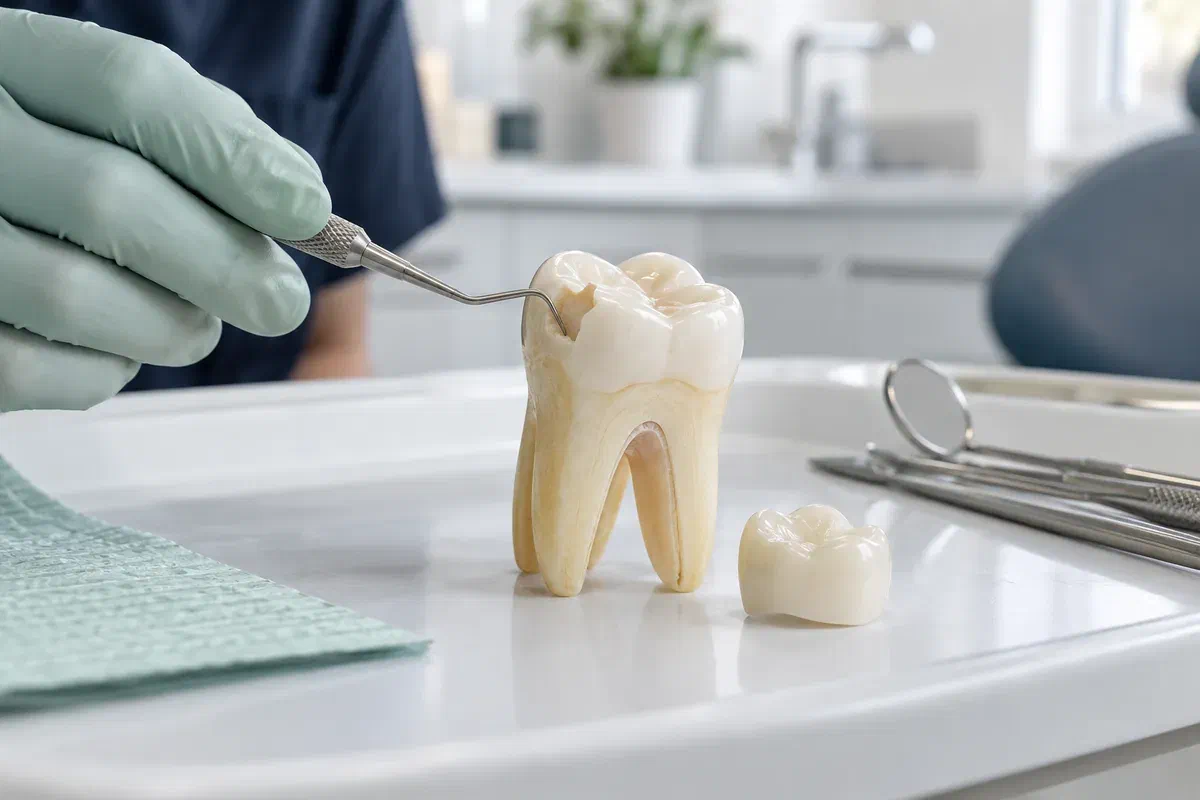
A tiny chip may uncover sensitive dentine, while a deep fracture can stay surprisingly silent. Depth, position, remaining tooth and signs of trauma or infection are all part of the same assessment.
When a back tooth loses a corner, the crack can continue toward the root or under the gum. The dentist checks how far it goes and whether the remaining walls are strong enough to repair.
An impact can damage the root or the bone around it without obvious signs. Tell us how it happened, and whether teeth feel loose, the bite has changed, or the lips or gums were injured.
Lingering pain, tenderness on biting or a swollen gum can suggest the break has reached deeper tissue. Mention how long discomfort lasts and whether a nasty taste has appeared.
If a piece came away, keep it moist in milk or your saliva inside a small container. Bring it with you, uncleaned, and don’t attempt to reattach it yourself.
When the full extent of the damage is known, the repair can be chosen to fit it, rebuilding the tooth and restoring comfortable chewing. A careful assessment also exposes what a surface patch would hide: a crack running deep, decay, or a nerve under strain.
Even with good images, no restoration can promise that a heavily fractured tooth will last for life. Its future depends on where the fracture ends and how much healthy tissue is left. Ask whether a step is meant to be final, interim, or part of a staged effort to keep the tooth.
Patient information: NHS — chipped, broken or cracked teeth
Covering or restoring an exposed or sharp area can protect it and reduce irritation. The measure depends on findings and doesn’t replace treating infection.
The material and type of restoration follow what the remaining tooth can support, rather than what is quickest or blends best.
X-rays may show other large fillings or cracks worth watching. Where relevant, we can discuss grinding or sports protection too.
Your first visit may be largely about diagnosis and urgent needs. Ask what can be finished on the day, what needs another visit, and how to keep the tooth safe meanwhile.
Explain when and how the tooth broke and what you’ve noticed since. Bring any fragment, and tell us about previous root canal treatment or large fillings in that area.
The dentist checks the fracture, bite and gums and may test the nerve. X-rays or other investigations help reveal the depth of the crack and the state of the root.
A temporary cover may be placed while a plan is made. Go through what the images show, along with the benefits, limits, fees and alternatives of each option.
Treatment is carried out here or arranged alongside further care. The dentist confirms the tooth functions well and may plan repeat checks or X-rays after trauma.
A temporary needs more care than a completed restoration. Follow the instructions for your tooth, and get in touch if anything loosens or the way it feels changes.
Avoid hard or sticky foods on that side until you’re told it’s fine. Biting down repeatedly to test it can widen a crack or dislodge a temporary.
Keep cleaning normally, with a lighter touch around sore gums. If a temporary or a sharp edge makes it hard, ask how to clean around it.
Interim care isn’t the last step. Return for the definitive repair, any follow-up imaging or nerve testing, or a referral, so the tooth is properly completed.
Advice depends on the injury and symptoms. Contact the clinic and describe the break, and the team can help you book an appropriate assessment.
Phone our Bronte Street practice if a tooth has cracked, chipped or broken. Describe how it feels and bring any fragment, so we can examine the damage, explain what the findings show and plan the right repair.
A recent injury, strong pain or swelling should be phoned in. Online requests aren’t checked continuously and aren’t for emergencies.
