A broken cusp, comfortable to chew
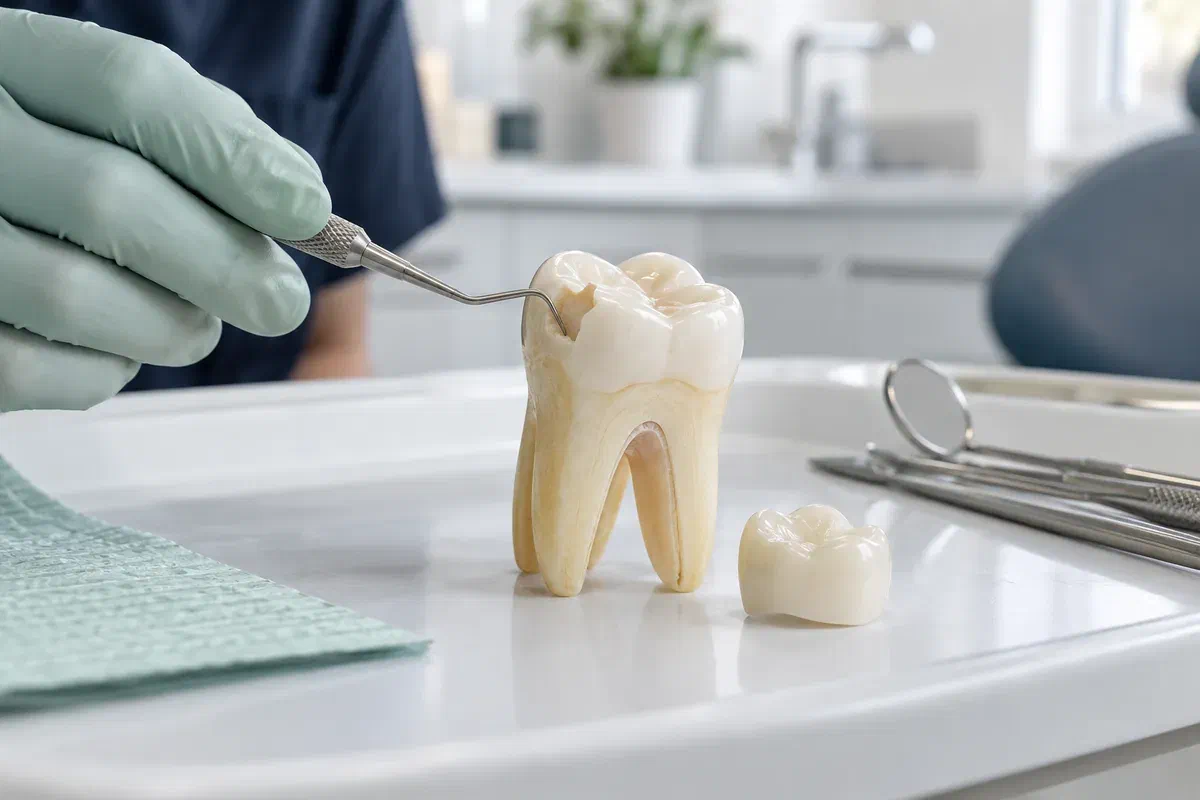
Corners lost from back teeth often leave the pulp untouched. The dentist confirms the remaining walls can support a repair and that the fracture doesn’t travel further than it appears.

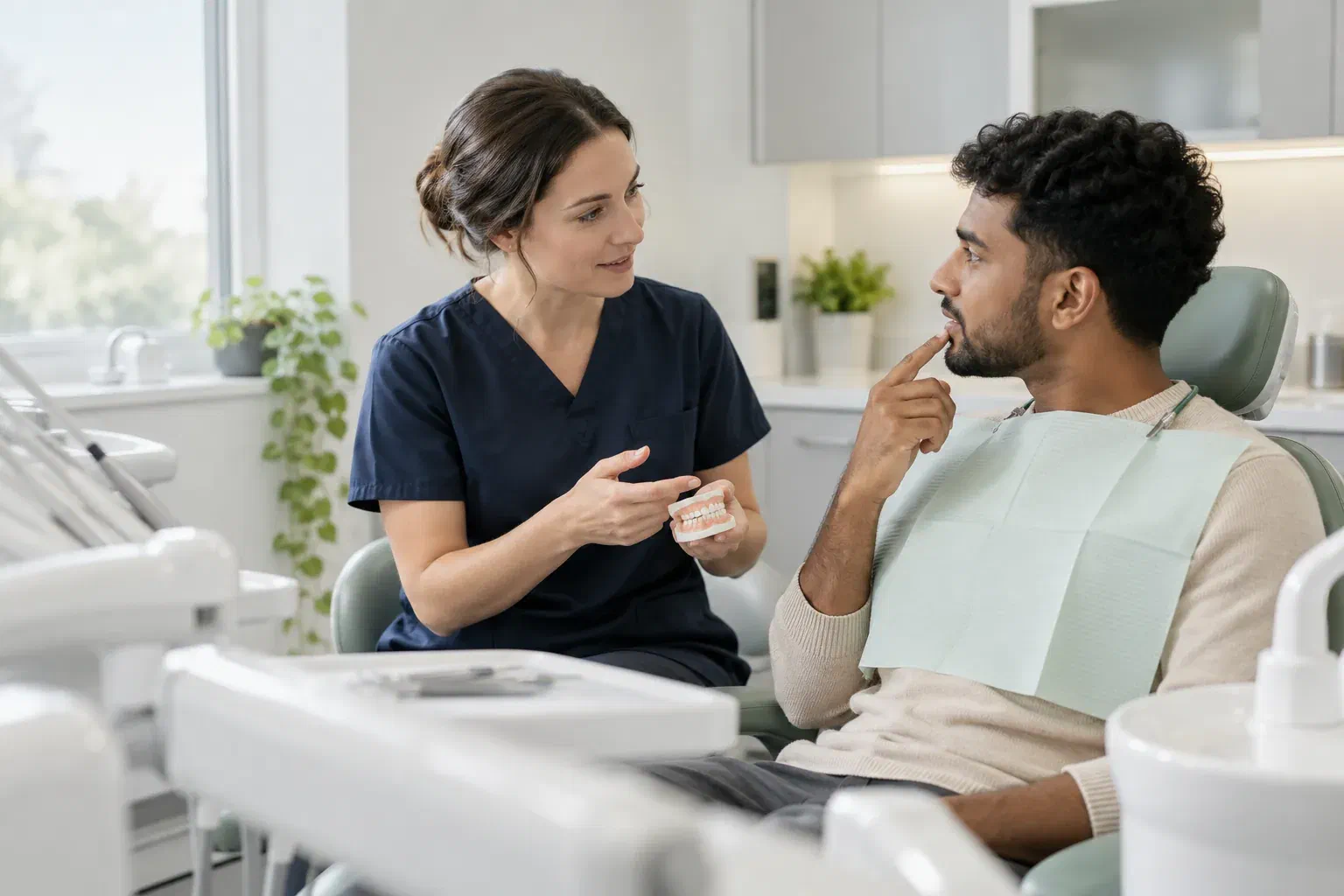
Many people assume a broken tooth means a root canal. Often it doesn’t. From Rockwood, an assessment of the nerve and the fracture shows whether pulp care is needed or a simpler repair will do.
The worry tends to arrive with the break itself: is this going to need a root canal? For many chips and fractures, the answer is no. Root canal treatment depends on the health of the pulp, the living tissue inside the tooth, and that can only be judged by examining the fracture, testing the nerve and looking at the root.
If the pulp is healthy and enough tooth remains, repair can be straightforward, perhaps bonded composite, or the original fragment fixed back on. A larger loss may need an onlay or crown. When the pulp has been exposed, injured or infected, root canal care may come before the final restoration. Rarely, a fracture is too deep to repair, and replacement is discussed.
From Rockwood, phone our Bronte Street practice and describe the break. When did it happen? Is there pain that lingers, swelling, a loose tooth, or a bite that feels changed? Those answers help set the timing. A tooth that feels perfectly comfortable still warrants a call, because the nerve can be affected without obvious pain.
Brief sensitivity from a small chip often means exposed dentine rather than nerve damage, while a large fracture can be quiet. The dentist weighs depth, location, remaining structure and signs of injury or infection as a whole.
Corners lost from back teeth often leave the pulp untouched. The dentist confirms the remaining walls can support a repair and that the fracture doesn’t travel further than it appears.
Trauma can affect the pulp even without a large break, and changes may appear weeks later. Describe the injury, and mention looseness, a shifted bite or damage to the lips and gums.
Pain that persists after hot or cold, throbbing that wakes you, or a swelling with a foul taste can suggest pulp inflammation or infection. These deserve a prompt call.
Recovered the broken piece? Keep it moist in milk or your own saliva in a small lidded container and bring it along. Please don’t scrub it or try to reattach it yourself.
Prompt assessment means the tooth can be restored to comfortable use, and nerve problems can be spotted while choices remain. It also uncovers what a quick cosmetic patch would cover over, such as a deep crack or decay close to the pulp.
Even so, no treatment can promise that a severely broken tooth will last a lifetime. Its prospects depend on the fracture and the remaining tissue. It’s fair to ask whether a proposed step is definitive, temporary, or part of a staged effort to keep the tooth.
Patient information: NHS — chipped, broken or cracked teeth
Sealing or covering the open surface can reduce sensitivity and help shield the pulp. It isn’t a substitute for treating an infection that is already present.
A healthy pulp opens the door to simpler repairs, and nobody should be steered into treatment the tooth doesn’t need. The restoration is chosen for what the tooth can support, not for speed or shade alone.
After trauma, the nerve may be checked again over time. We can also discuss grinding, large fillings or a sports mouthguard to reduce future breaks.
The first visit may centre on diagnosis and relieving discomfort. Ask what can be done straight away, what needs another appointment, and how to protect the tooth until then.
Let us know when the tooth fractured, whether there was an impact, and what you’ve felt since. Bring the fragment and mention any previous root canal treatment or big fillings.
The dentist examines the fracture, bite and gums and, where appropriate, checks how the tooth responds to cold or tapping. X-rays can show the root and surrounding bone.
A temporary cover or dressing may be placed while the plan is agreed. Review the benefits, limitations, fees and alternatives, including whether root canal care is needed.
The repair is carried out, with any pulp treatment done first or arranged by referral. The tooth’s function is confirmed, and nerve checks may be scheduled after an injury.
A temporary dressing and a completed restoration need slightly different care. Follow the advice for your tooth, and phone if a repair loosens or the pain pattern changes.
Until you’ve been cleared, avoid hard or sticky foods on the treated tooth. Don’t bite down repeatedly to check how it feels.
Keep brushing and cleaning between teeth, gently around any tender area. If the temporary or a sharp edge makes it difficult, ask for a better way rather than skipping it.
A dressing may settle the tooth before it’s finished. Come back for the final restoration, the pulp follow-up or the specialist visit you were referred for.
Each case depends on the break and symptoms. Contact the clinic with a description of what happened, and our team will help arrange a suitable visit.
Get in touch with our Bronte Street practice about a tooth that has cracked, chipped or broken. Describe your symptoms and bring any fragment, so we can check the fracture and nerve and plan the right repair.
Please phone for a recent injury, strong pain or swelling. Online requests aren’t monitored continuously for urgent care.
