It snags your tongue all day
A tiny irregularity can be hard to ignore. Before smoothing anything, the dentist judges how deep the chip goes and how the edge would look afterwards, so that a quick polish does not take away more than it should.


A chip at lunch can make the rest of the workday feel long. From Mississauga, you can book an evening exam to check the tooth, settle the sharp edge and choose a repair that is in proportion.
You bite into a granola bar at your desk and feel something crunch that should not. For the rest of the afternoon your tongue keeps finding a jagged ridge, and every time you speak you are aware of it. A chip like this is a piece of the tooth’s outer surface that has broken away, most often from a biting edge or corner.
The question most people ask first is how quickly it needs attention. That depends on what broke. A shallow roughness in the enamel is usually less pressing than a visible missing corner, and a break that exposes a more sensitive layer, causes pain or follows a blow is more pressing still. Which tooth it is and how your bite meets it matter too.
Our Bronte Street practice keeps weekday hours into the evening, which can help if you are coming from Mississauga after work. Tell us what you were eating and whether the edge had been thinning already. We will look at the whole tooth, and while your preferences on appearance count, the decision starts with its health and function.
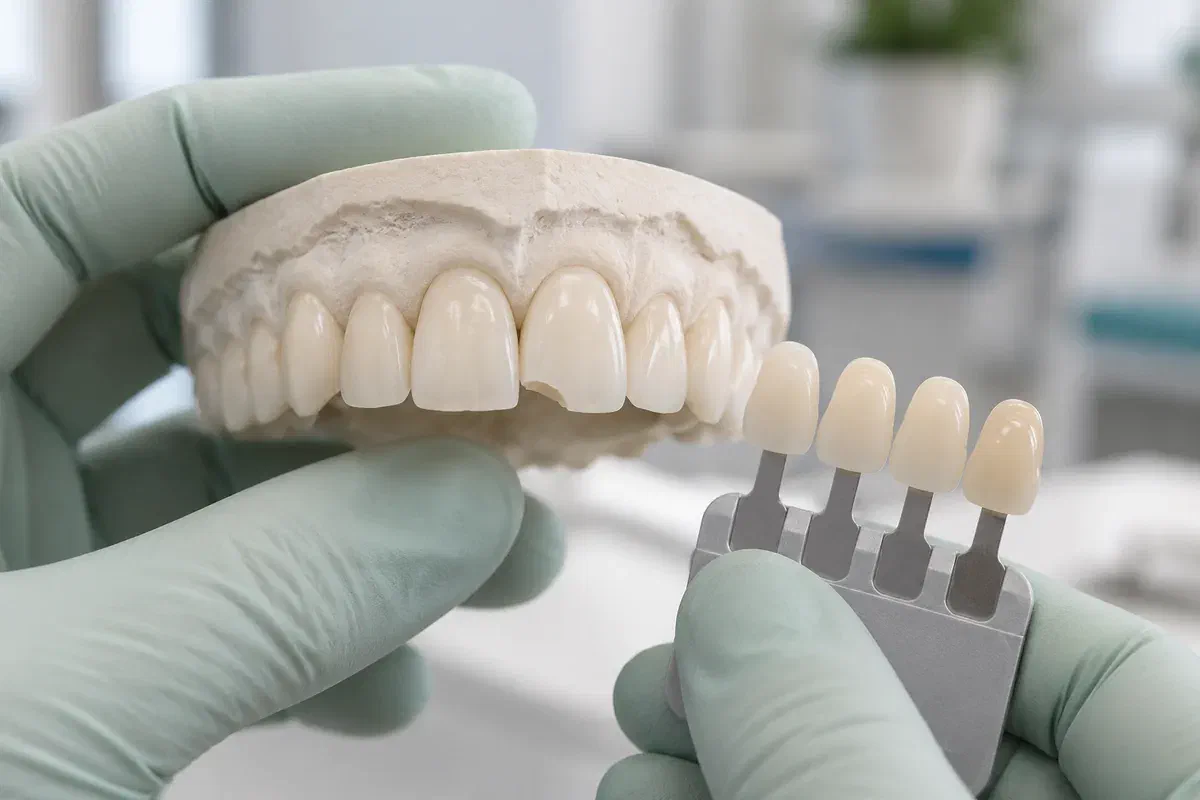
Many chips are shallow and simple. Some, though, sit over decay, travel further as a crack or result from an impact that affected more than the edge. The exam is how those cases are told apart.
A tiny irregularity can be hard to ignore. Before smoothing anything, the dentist judges how deep the chip goes and how the edge would look afterwards, so that a quick polish does not take away more than it should.
A chipped front corner can make a tooth look shorter or slightly crooked when you talk. Describe what changed, and bring a recent photo from before the chip if you have one handy.
When the same edge breaks again, the dentist looks at how your teeth come together, clenching during stressful stretches, wear and older repairs. Without that, a new patch may meet the same fate.
If the chip came from a fall or a knock, mention any looseness, bleeding or a bite that no longer feels right. An injured tooth may need a broader check.
Many small chips call for modest care: taking the sharpness away or adding back a little of what was lost. Composite bonding may be suggested when there is enough sound tooth to bond to and the bite will not overload the repaired spot.
It helps to know the trade-offs before you start. Composite comes in many shades, but blending it with natural enamel is a skill with limits, and the material can dull, stain or chip in later years. A clear explanation should cover what your tooth can support, with no promise of an invisible or lifelong result.
Patient information: NHS — chipped, broken or cracked teeth
Once the rough spot is dealt with, your tongue and lip can stop worrying at it, as long as the reason it chipped has also been looked at.
You can help decide how much length or curve to add. Choices are made with the neighbouring teeth and your natural smile line in mind.
An honest assessment helps keep a small chip from turning into a bigger treatment than it needs. If more is recommended, you can ask why a smaller repair would fall short.
Simple chips can often be looked after at a single visit, though the examination has the final say. Leave room in the appointment to hear what the dentist sees and to describe the result you want.
The chipped area, the tooth that remains and the nearby gums are all checked. What caused the chip and any symptoms you have help decide whether an X-ray or other test is needed.
Polishing, reattaching a fragment, bonding or a different repair may come up. Ask what each would change, and what to expect for colour, strength, lifespan and care.
Depending on the plan, the edge may be refined or the missing part rebuilt. Composite is shaded and sculpted for your tooth, then hardened with a curing light and polished.
Your bite is tested and the surface reviewed, and you can say whether anything feels off. A review visit may be suggested after an injury or if symptoms need watching.
Advice afterwards varies with the kind of repair: polished, bonded or something more involved. Ask about anything to avoid in the first day, and keep up the home care suggested for you.
Chewing pens, tearing open packaging or biting nails during a long day all load one edge heavily. Think about which habits played a part in the first chip and how to break them.
Brush twice a day with fluoride toothpaste and clean between your teeth once a day. If floss frays or the repaired surface feels rough, mention it at your next visit rather than trying to sand it down at home.
Let us know about any new chipping or a shift in how your teeth meet. Stress-related clenching or grinding is common, so ask whether a protective night guard should be considered.
For people commuting from Mississauga, busy schedules often shape the first questions about a chip. These answers cover timing, comfort and what a repair involves.
Monday to Thursday, our Bronte Street practice stays open into the evening. Bring in a rough spot, a missing corner or a tooth that keeps chipping, and we will examine it, explain your options and weigh shape, comfort and function together.
For a recent blow to the face, a loose tooth, sharp pain or swelling, please call rather than waiting for an online booking, so urgency can be discussed.
