

Illustrative conversation between a patient and dentist about complete dentures
Restorative Dentistry

Complete Dentures

Explore complete dentures in Milton with a conversation about your comfort, appearance, and everyday routine. We can assess your mouth and help you understand the steps involved in replacing a full arch of teeth.

A closer look at complete dentures

A new set of teeth begins with listening to you.

A complete denture is a removable appliance that replaces all the teeth in an upper or lower arch. It rests against the tissues of the mouth and is shaped to work with your jaw, lips, and cheeks. Planning a denture involves more than choosing the colour of the replacement teeth.

Perhaps you are preparing for your first denture, or an older appliance has become uncomfortable or difficult to manage. Tell us what eating, speaking, and smiling feel like now. Those details help frame a useful conversation about the fit, appearance, and practical limitations of a new appliance.

At Milton Dental Clinic, the starting point is an examination and a discussion of your priorities. We can consider the condition of your mouth, any remaining teeth, and the treatment sequence that may be appropriate. You should understand the proposed appointments and follow-up before deciding how to proceed.

Talk about complete dentures
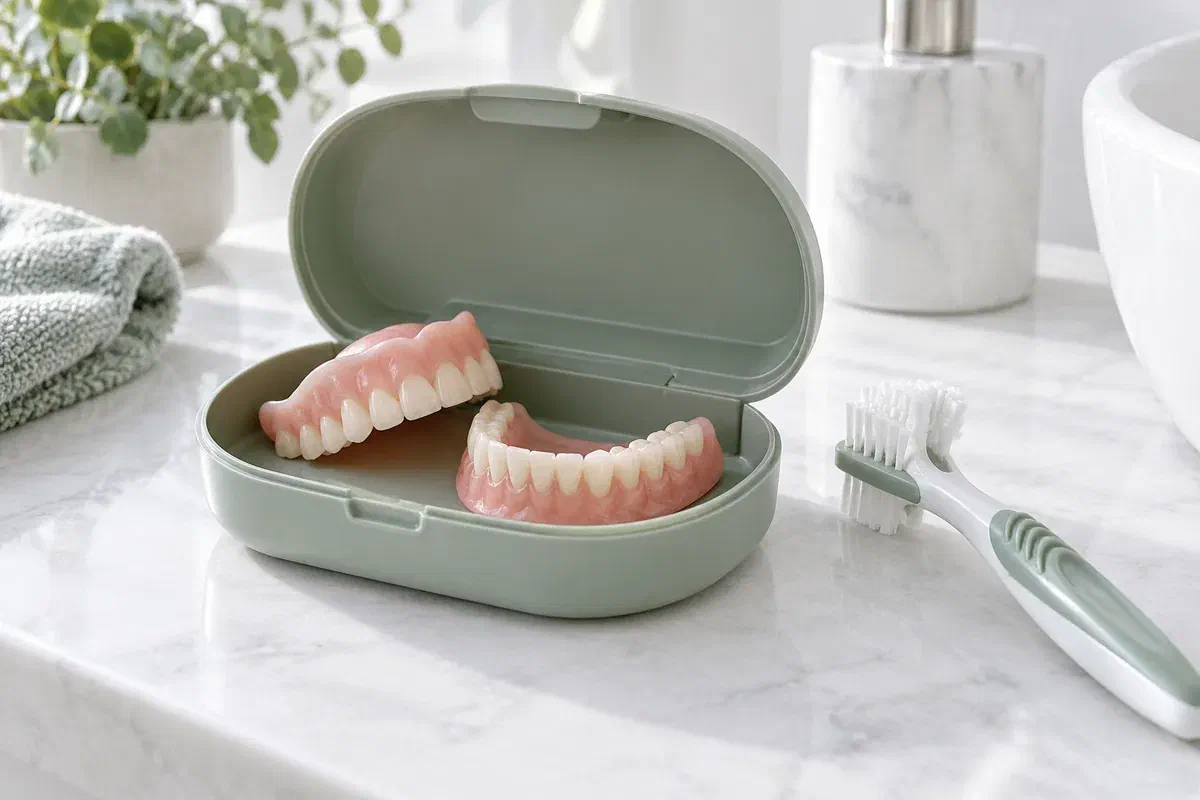
Complete denture appliances displayed as an educational example
When a full arch needs attention

Your daily experience belongs in the treatment plan.

Bring the concerns that matter to you, even if they seem difficult to describe. A denture consultation should consider how your mouth functions as well as how the replacement teeth might look.

Preparing to lose the remaining teeth

If several teeth have a poor outlook, ask which can reasonably be retained and why extraction is being considered. A complete denture should follow a considered assessment of the remaining teeth, rather than an assumption that removal is the only choice.

An existing denture no longer feels right

Movement, recurring sore spots, and changes in how the teeth meet deserve a review. Bring the appliance you currently wear so its fit and condition can be assessed alongside the tissues that support it.

Uncertainty about appearance or speech

An older photograph or a clear description of your preferences can help explain what feels natural to you. Discuss tooth display, shape, and speaking concerns early, while there is room to consider them in the proposed design.

A persistent ulcer, a lump, or an unexplained change in the mouth needs an examination. Do not assume every sore area is simply a normal part of wearing dentures.

Planning for everyday use

Comfort, appearance, and manageability need to work together.

A suitable complete denture can replace a missing arch and provide a surface for chewing and speaking. Its design also affects how the lips are supported and how the smile appears. The aim is a practical appliance that takes your individual mouth into account.

Removable dentures do not behave exactly like natural teeth. They can move, require adjustment, and take practice to use. Understanding these limits at the beginning helps you compare the available approaches and recognize when a concern needs professional attention.

A coordinated full-arch design

Tooth position, the bite, and the shape of the denture base are considered together. This allows the discussion to address the whole arch instead of treating the appearance of each replacement tooth in isolation.

An appliance you can remove to clean

A removable design allows access to the denture and the tissues beneath it. Ask for a demonstration of the cleaning routine and mention any difficulty with grip, vision, or handling small objects.

A plan that includes settling in

Delivery is one stage of care. Knowing how to request an adjustment and what changes to report can make the early weeks easier to navigate, especially if this is your first experience with a denture.

From assessment to adjustment

Build the plan around your mouth and your timeline.

The sequence varies depending on healing, any planned extractions, and whether an existing denture is being replaced. Ask which appointments are expected and when decisions about appearance and fit will be reviewed.

  1. Review the mouth and current appliances

    The dentist examines the supporting tissues and any remaining teeth, reviews your health history, and discusses your experience. Bring existing dentures, relevant concerns, and a list of questions about the treatment you are considering.

  2. Record the shape and jaw relationship

    Measurements and impressions or other suitable records help plan the denture. The team explains the proposed approach, including how the upper and lower teeth should meet and how the appliance will be made.

  3. Review the proposed teeth where possible

    Depending on the treatment sequence, a trial stage may allow discussion of tooth position, appearance, and the bite before completion. Ask what can be assessed at that stage and what limitations apply to an immediate denture.

  4. Fit the appliance and plan follow-up

    The denture is checked in the mouth, and you receive instructions for use and cleaning. Follow-up allows pressure areas or other concerns to be assessed, with further adjustments or longer-term changes discussed when appropriate.

Getting used to your denture

Allow time to learn, and ask for help when something hurts.

A new appliance can feel unfamiliar. The team should explain what to expect during adaptation and how that advice changes if teeth have just been removed. Persistent discomfort should be reviewed rather than endured.

Establish a cleaning and storage routine

Use the cleaning method recommended for the denture material and keep the mouth clean as well. Ask how to store the appliance when it is out and when to remove it, including any special instructions immediately after extractions.

Practise eating and speaking gradually

Begin with manageable foods and follow the advice given for your appliance and healing stage. Reading aloud can help you notice speaking difficulties worth discussing. Keep a short list of problems rather than trying to solve them by altering the denture yourself.

Keep adjustment and review appointments

Tell the team where pressure develops and whether the appliance moves during particular activities. Changes in the mouth can affect an older denture too, so continued review remains useful even when there are no natural teeth in that arch.

Patient information: ADA MouthHealthy — dentures

Choosing an approach to replacement

The timing and support matter as much as the teeth.

Different full-arch options involve different appointments, costs, maintenance, and suitability requirements. Ask which choices are realistic for your mouth and what each would mean during the transition.

A conventional approach

A denture after tissues have healed

A conventional complete denture is made for a healed mouth. If extractions are required first, discuss the healing period and what that means for appearance and function while the final appliance is being planned.

Planning the transition

A denture placed at extraction

An immediate denture may be prepared before remaining teeth are removed. As the mouth changes during healing, adjustment, relining, or replacement may be needed. Ask how those later stages are included in the proposed plan.

When additional support is suitable

An implant-supported alternative

Implants may support certain removable or fixed full-arch designs. Suitability, surgery, healing, cleaning access, and ongoing maintenance require their own assessment; an implant-based option is not automatically appropriate for every patient.

Questions about complete dentures

Make room for the questions about everyday life.

There is more to a denture decision than the delivery appointment. Use the consultation to discuss the transition, practical care, and the support available if the appliance needs attention.

(905) 876-4488
Do I need complete dentures for both arches at the same time?
Not necessarily. Each arch is assessed on its own, while the dentist also considers how the upper and lower teeth will work together. You may need a full denture in one arch and a different approach in the other. Healthy, useful teeth should be considered individually.
Can an old photograph help with the appearance of my new dentures?
Yes, a clear photograph may help explain tooth shape, display, and the smile you remember. It is a discussion aid rather than a guarantee of an exact recreation. The proposed arrangement also needs to suit your current mouth and the requirements of the appliance.
What if I have trouble handling a removable denture?
Mention this before treatment, including problems with grip, coordination, or vision. Ask to practise the handling steps and discuss whether a caregiver should attend the explanation. The ability to insert, remove, and clean an appliance matters when considering its suitability.
Will a new complete denture feel exactly like my old one?
Usually there will be differences in shape, tooth position, or the way the bite feels. Bring the old appliance and explain what worked well and what did not. The goal is not automatically to reproduce every feature of an appliance that may already have problems.
Is denture adhesive a substitute for having the fit checked?
No. Ask whether an adhesive is appropriate and how to use it, but do not rely on increasing amounts to manage a denture that has become loose or painful. The appliance, supporting tissues, and bite may need review to understand the change.
What should I ask about the cost of a complete denture?
Request a written outline of the proposed appliance and appointments. Clarify whether extractions, temporary appliances, adjustment visits, relines, and future replacement are separate items. If benefits coverage is relevant, ask what information can be supplied for your insurer before you commit.
Complete dentures in Milton

Let’s plan for the way you want to live.

Bring your current denture, your questions, and any concerns about the next stage. At our Bronte Street clinic, we can assess your mouth and discuss a replacement plan that considers comfort, appearance, handling, and follow-up together.

If an existing denture has broken or is causing a sore area, mention that when arranging your visit so the concern can be discussed.

Visit Milton Dental Clinic
Unit 1, 342 Bronte St. S, Milton, ON L9T 5B7
Get directions Clinic hours
Monday–Thursday
11am–7pm
Friday–Sunday
By appointment only

How can we help?

Milton Dental Clinic

Have a question about your smile? Choose the option that works best for you.

For urgent dental concerns, please call.
Messages are reviewed during clinic hours.