

Illustrative conversation between a patient and dentist about complete dentures
Restorative Dentistry

Complete Dentures in Acton

Has your full denture ended up in a drawer because it hurt or never sat right? If you are coming from Acton, bring it along. We can find out what went wrong, check your gums and discuss whether an adjustment, reline or new denture makes sense.

When a denture gets left in the drawer

The denture you stopped wearing

It happens more than people admit. A full denture rubbed, rocked or made eating harder, so it came out for a day, then a week, and now it lives in a case. Going without may feel easier, but it is worth understanding why the appliance failed before deciding what comes next.

This kind of denture replaces all the teeth in an upper or lower arch. It is removable, rests on the gums and bony ridge, and depends on a good fit with your tongue, cheeks and lips to stay steady. Small problems with the bite or base can make an otherwise reasonable denture hard to tolerate.

Coming from Acton, your first appointment at our Bronte Street practice is an examination and a frank conversation. The dentist will look at your mouth and the denture you stopped using, ask what made it difficult, and explain realistic next steps and follow-up before you choose a direction.

Have your denture reassessed
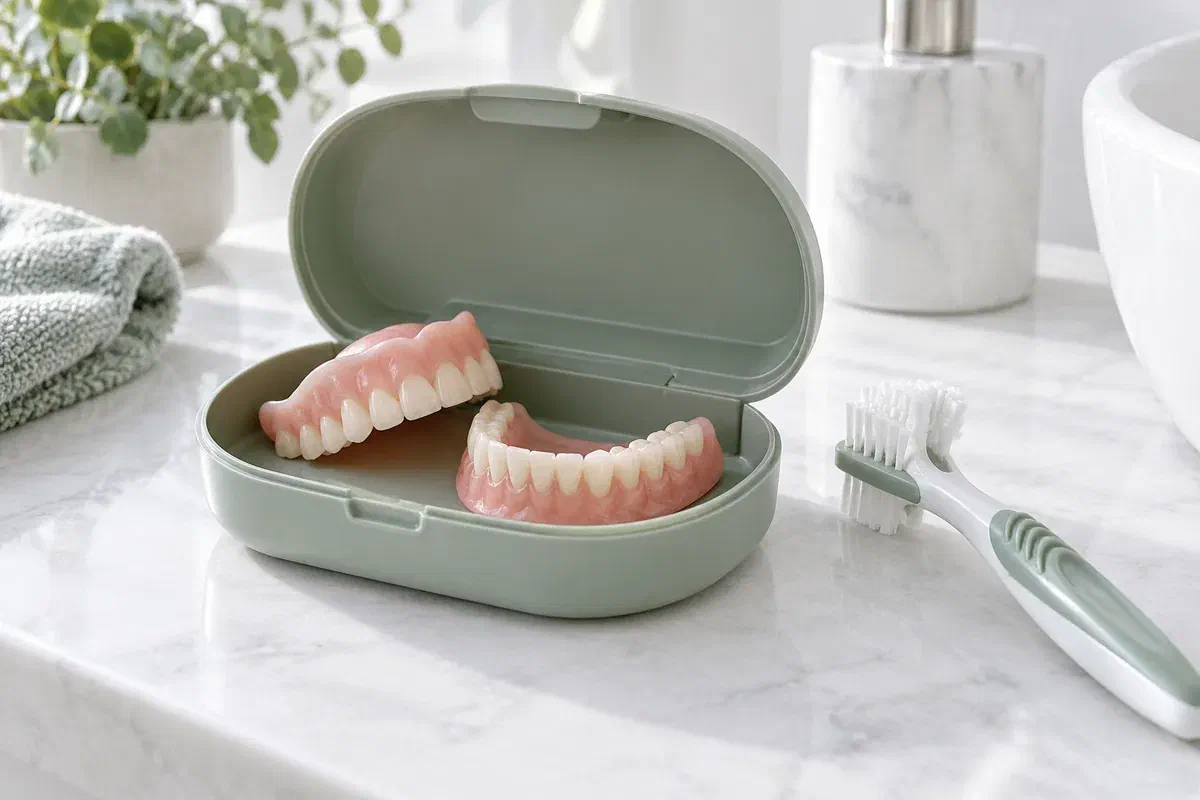
Complete denture appliances displayed as an educational example
Why dentures end up unworn

Pain, movement or a smile that never felt right

Each has a different cause, and each is worth describing as honestly as you can. A review looks at how your mouth functions and how the teeth look, not one without the other.

Teeth that might still be worth keeping

If you still have some natural teeth and a full denture has been suggested, ask which ones could reasonably stay and why removal is proposed for the rest. Every tooth deserves its own assessment before a complete denture is chosen.

Soreness or movement that never settled

A denture that hurt from the beginning, or became loose later, needs to be examined in the mouth. Bring it, even if it has been out for months, so the fit and condition can be compared with your gums today.

Teeth that never looked like yours

Some people stop wearing a denture because they dislike how it looks or sounds. Describe what bothered you. A photograph or a clear description helps shape tooth display and speech in any new design.

A sore that has not healed, a lump or any change you cannot explain should be examined, whether or not you are wearing a denture at the moment.

What a better-fitting denture may offer

A second attempt, planned more carefully

A well-suited complete denture gives you a full row of teeth for chewing and speaking and supports the lips and cheeks. When it is designed around your current mouth and your experience with the last one, the result has a better chance of being something you actually wear.

Even so, no removable denture behaves exactly like natural teeth. It may move, it will probably need adjusting, and learning to use it takes practice. Agreeing on those limits openly helps you compare approaches and recognize when a problem should be seen rather than tolerated.

Learning from the previous denture

The dentist considers tooth position, the bite and the shape of the base together, and uses what went wrong last time to guide the new plan. Attention goes to the whole arch rather than individual teeth.

Removable for cleaning and rest

You can take the denture out to clean it and look after the gums beneath. Ask for a demonstration, and say if grip, vision or fiddly handling makes the routine difficult.

Follow-up that does not leave you alone

Fitting day starts the settling-in period. Agreeing how to reach the team and what to report early can stop a small sore spot from turning into another denture left in a drawer.

Acton · starting again

Reassess, record, preview, fit, review

The order depends on healing, any planned extractions and the condition of the denture you already have. Ask how many appointments to expect and when you will be able to judge the look and bite.

  1. Examine the mouth and the old denture

    The dentist checks your gums, ridges and any natural teeth, takes your medical history and listens to what went wrong before. Bring the denture you stopped wearing, along with your questions.

  2. New records

    Fresh impressions or scans and a record of how your jaws close show the current shape of your mouth. The dentist explains how the new teeth are designed to meet and how the appliance is produced.

  3. A trial before completion

    In a conventional plan, a wax try-in usually lets you see the teeth and test the bite before the denture is finished. Speak up if anything feels like the old problem. Ask what can be changed at this stage.

  4. Fitting and close follow-up

    The denture is fitted and checked, and you are shown how to insert, remove and clean it. Follow-up visits deal with pressure spots and other issues early, with later changes such as a reline discussed when appropriate.

Making it stick this time

Report problems early, before the drawer beckons.

Any new denture takes getting used to. Ask what adapting involves and how advice changes after extractions. If something hurts, call. Waiting for discomfort to fade on its own is how many dentures end up unworn.

A cleaning routine you will keep

Ask which cleaner and brush suit the denture material, and care for your gums and tongue every day as well. Overnight storage and the first days after any extraction may come with their own instructions, so check those too.

Rebuild confidence with food and speech

Start with easy foods and follow your healing advice. Reading aloud can reveal sounds that need practice. Keep a written list of problems to raise at your review rather than adjusting the denture at home.

Don’t skip the reviews

Tell the team where it presses and when it moves. Your mouth keeps changing over time, so periodic checks help keep the denture comfortable and wearable, not only in the first weeks.

Patient information: ADA MouthHealthy — dentures

Options for a fresh start

Adjust, reline or replace, then choose the support.

Approaches vary in appointments, costs, maintenance and suitability. Ask which are realistic, including whether your current denture can be improved, and what each would mean in daily life.

Conventional

A new denture for healed gums

A conventional complete denture is made for a mouth that has healed. If further extractions are needed, ask about the healing time and how you would manage eating and appearance meanwhile.

Immediate

A denture placed with extractions

If remaining teeth need to come out, an immediate denture can be ready on the same day. Gums change as they heal, so expect adjustments, relining or eventual replacement. Ask how those steps are planned.

If added support is appropriate

Extra hold from implants

For some people, implants can help retain a removable denture or support a fixed arch. Your health, surgery, healing, cleaning access and long-term maintenance all need assessment; implants are not suitable for everyone.

Questions about trying again

What people ask when a denture didn’t work out

A successful denture depends on more than one appointment. Bring questions about the transition, daily care and how quickly help is available when something feels wrong.

(905) 876-4488
I stopped wearing my denture months ago. Can it still be used?
Possibly, but your gums may have changed in the meantime. The dentist will examine the denture and your mouth and explain whether an adjustment, reline or new denture would be more suitable.
Why did a denture that was comfortable for years start to hurt?
The gums and bone beneath a denture change over time, and the denture itself wears. A sore area can also have other causes, so it is worth having the mouth examined rather than guessing.
Can a soft liner make a full denture more comfortable?
Soft liners are sometimes used for people with tender gums. They have their own care requirements and are not suitable for everyone. Ask the dentist whether one makes sense for you.
Does a denture need to stay moist when it is out of my mouth?
Many denture materials should be kept moist to help prevent warping, but advice differs by material. Follow the storage instructions your dentist gives for your specific appliance.
Can I manage a full denture if I have arthritis in my hands?
Tell the dentist before treatment. Practising insertion, removal and cleaning during visits helps, and the team can suggest ways to make the routine easier or involve a helper.
Is it worth the trip from Acton for a quick adjustment?
Call first and describe the problem. The team can tell you whether it sounds like something to check in person soon, and help you book a time that keeps the trip worthwhile.
Complete dentures for Acton

Bring the drawer denture. We’ll take a fresh look.

Come with the denture you stopped wearing, a list of medications and your questions. Dr. Anjum will examine your mouth, explain what may have gone wrong and outline a plan that covers comfort, appearance, handling and follow-up.

If the denture is cracked or you have a sore area right now, mention it while booking so the visit can include it.

Visit Milton Dental Clinic
Unit 1, 342 Bronte St. S, Milton, ON L9T 5B7
Get directions Clinic hours
Monday–Thursday
11am–7pm
Friday–Sunday
By appointment only

Areas we serve

  • Milton
  • Oakville
  • Mississauga
  • Georgetown
  • Halton Hills
  • Acton
  • Campbellville
  • Brampton
  • Burlington
  • Puslinch
  • Rockwood
  • Erin
  • Caledon
  • Etobicoke
  • Old Milton
  • Bronte Meadows
  • Timberlea
  • Dorset Park
  • Dempsey
  • Clarke
  • Beaty
  • Coates
  • Harrison
  • Scott
  • Willmott
  • Ford
  • Bowes
  • Cobden
  • Walker
  • Mountain View
  • Milton Heights
  • Hawthorne Village
  • Valley View
  • Fallingbrook
  • Nassagaweya
  • Trafalgar
  • Esquesing
  • Nelson
  • Brookville
  • Moffat
  • Glen Williams
  • Norval
  • Limehouse
  • Stewarttown
  • Ashgrove
  • Hornby
  • Silver Creek
  • Speyside
  • Scotch Block
  • North Oakville
  • River Oaks
  • Glen Abbey
  • West Oak Trails
  • Palermo
  • Bronte Creek
  • College Park
  • Joshua Creek
  • Uptown Core
  • Preserve
  • Iroquois Ridge
  • Lisgar
  • Meadowvale
  • Meadowvale Village
  • Churchill Meadows
  • Erin Mills
  • Central Erin Mills
  • Streetsville
  • East Credit
  • Creditview
  • Heartland
  • Sheridan
  • Mount Pleasant
  • Credit Valley
  • Huttonville
  • Churchville
  • Springbrook
  • Northwest Brampton
  • Bram West
  • Fletcher's Meadow
  • Fletcher's Creek South
  • Alton Village
  • Orchard
  • Millcroft
  • Headon Forest
  • Tansley
  • Brant Hills
  • Tyandaga
  • Kilbride
  • Lowville
  • Aberfoyle
  • Morriston
  • Arkell
  • Hillsburgh
  • Freelton
  • Carlisle
  • Waterdown
  • Flamborough
  • Mountsberg

How can we help?

Milton Dental Clinic

Have a question about your smile? Choose the option that works best for you.

For urgent dental concerns, please call.
Messages are reviewed during clinic hours.