

Illustrative conversation between a patient and dentist about complete dentures
Restorative Dentistry

Complete Dentures in Burlington

Helping a parent or partner through a full denture, or planning one for yourself? Families from Burlington can come in together to talk through comfort, handling, cleaning and each appointment, so everyone understands the plan.

Dentures as a family decision

Two sets of ears are better than one

Often the person who books the first call is not the person who will wear the denture. An adult child notices that Mum is cutting her food smaller, or a spouse hears that chewing has become a chore. Coming to the consultation together can make the details easier to remember.

What is being planned is a removable plate carrying every replacement tooth for the upper or lower jaw. It sits on the gums and has to fit around the jaw, lips and cheeks. Getting it right means considering fit, bite and handling as carefully as tooth colour.

For households in Burlington, the visit to our Bronte Street practice starts with an examination and a conversation with the person who will wear the denture, and with you if they would like. The dentist reviews the mouth, any remaining teeth and the likely sequence, and explains appointments and follow-up before anyone decides.

Talk to us about full dentures
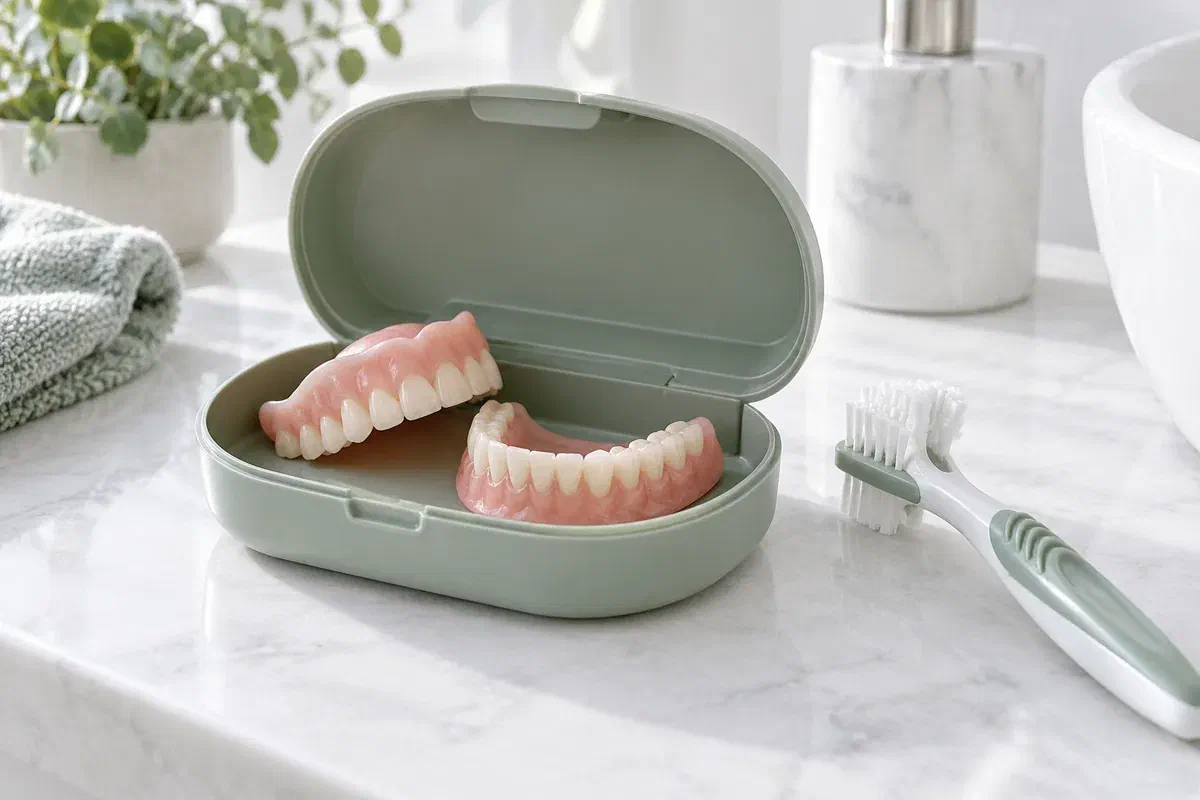
Complete denture appliances displayed as an educational example
Changes you may have noticed

Small signs at the dinner table can say a lot.

Share what you have observed as well as what the wearer feels, even if it is hard to describe. The consultation looks at how the mouth works day to day, not only at appearance.

Teeth that are failing one after another

When remaining teeth keep breaking or loosening, ask which can sensibly be saved and why others are being considered for extraction. Moving to a full denture should follow a proper assessment of each tooth, not an automatic decision.

A denture that seems to be causing trouble

Slipping while talking, sore patches, or avoiding meals can all point to a denture that needs review. Bring it along; its wear, cracks and the way it sits on the gums are easier to judge in person.

Hesitation about smiling or speaking

Someone who covers their mouth when laughing, or whose speech has changed, may have concerns they find hard to voice. A family photo can help show what felt natural, and should be discussed early in planning.

A sore that lingers, a lump or any unexplained change in the mouth needs an examination. Not every tender area is a normal effect of wearing a denture.

What a suitable denture offers

Usable, natural to the wearer, and manageable at home

When it suits the mouth, a full denture gives a whole row of teeth to chew and speak with across that arch. The way it is shaped supports the lips and influences how the face looks. The aim is a sensible, practical appliance designed around one particular person.

It is worth being frank as a family: removable dentures behave differently from natural teeth. They can move, often need adjusting, and using them takes practice. Agreeing on these limits early helps everyone compare options and recognize when something needs a professional look.

Designed as a complete arch

The dentist considers tooth position, how the jaws close and the shape of the base together. Looking at the full arch, rather than individual teeth, gives a more workable result.

Cleanable by the wearer or a helper

Removing the denture allows thorough cleaning of the appliance and the gums below. Ask for a demonstration, and say if weak grip, poor eyesight or trouble with small objects means a helper may be involved.

A plan for the settling-in weeks

Fitting day is the start of a period of adjustment. Agreeing who will phone the clinic, and what kind of soreness or looseness is worth reporting, can make the early weeks less stressful for the wearer and the family.

Burlington · the visits involved

Here is how the appointments usually run.

The order depends on healing, any planned extractions and whether an existing denture is being replaced. Ask which visits to expect, which ones a family member should attend, and when appearance and fit are reviewed.

  1. A thorough first assessment

    The dentist examines the gums and any teeth that remain, reviews medical history and medications, and listens to the wearer’s experience. Bring all current dentures, a medication list and any questions the family has gathered.

  2. Records for the new denture

    Moulds and measurements of the gums and jaw position give the lab what it needs. This is a good moment for the family to ask how the top and bottom teeth are meant to close together and what happens between visits.

  3. Checking the arrangement before completion

    In many conventional plans, the wearer can see a wax trial of the teeth and test the bite while changes are still simple. An immediate denture usually skips much of this preview, so ask what can realistically be judged in advance.

  4. Delivery, instructions and reviews

    The finished denture is fitted, and both wearer and helper can be shown how to insert, remove and clean it. Follow-up visits look at sore spots or other concerns, with further changes discussed as needed.

Supporting the first weeks

Go slowly, write things down, and call about pain.

A new denture often feels odd at first. The team should explain what adapting involves and how advice changes after extractions. Discomfort that does not ease should be checked rather than tolerated.

A routine someone can follow every day

Ask which brush and cleanser suit this particular denture, and remember the gums and tongue need care too. Ask how to store it when out, when it should be removed, and any special steps in the days after extractions. Writing the routine down can help.

Soft foods and a little practice

Start with easy foods and follow the advice for the appliance and healing stage. Reading aloud can show which words need work. Keep a list of problems for the next visit instead of trying to fix the denture at home.

Keep the review appointments

Report where the denture presses and when it moves, for example while eating. The mouth keeps changing over time, so regular reviews matter even when no natural teeth remain in that arch.

Patient information: ADA MouthHealthy — dentures

Comparing approaches

Which route suits this mouth, and this household?

Full-arch options differ in appointments, cost, upkeep and suitability. Ask which are realistic, and how each would affect daily life and the people helping during the transition.

Conventional approach

A denture made after healing

A conventional denture is made once the mouth has healed. If teeth must be removed first, discuss how long healing may take and how eating and appearance will be managed until the final denture is ready.

Immediate approach

A denture fitted when teeth are removed

An immediate denture is made ahead of extractions and placed on the same day. Gums shrink and reshape while they heal, so expect adjustment, a reline or eventually a new denture. Ask how those later steps are accounted for.

If extra support is appropriate

Implant-supported options

For some people, implants can anchor a removable or fixed arch. That brings its own questions about general health, surgery, healing, how easily it can be cleaned and long-term upkeep, so it is not a default choice for everyone.

Questions families ask

What caregivers and wearers want to know

A denture decision continues long after the fitting. Use the consultation to ask about the transition, daily care at home and the support available when the appliance needs attention.

(905) 876-4488
Can I come to my parent’s denture appointments?
With their agreement, yes. Many people find it helpful to have someone there to hear instructions and ask questions. Mention it when you book so the explanation can include you.
Is anyone too old for a new complete denture?
Age alone does not decide it. The dentist considers general health, the condition of the mouth, the ability to adapt and how the denture will be handled and cleaned. These are discussed openly at the assessment.
Can medications affect how comfortable a denture feels?
Some medications can cause a dry mouth, which may make a denture feel less comfortable. Bring a current medication list so the dentist can take it into account and suggest what to discuss with the prescriber if needed.
How can we avoid losing or damaging a denture at home?
Keep a dedicated case, store the denture as advised when it is out, and clean it over a folded towel or a basin of water in case it slips. Keep it away from pets, and never wrap it in a tissue.
What if the wearer struggles to put the denture in or take it out?
Tell the team before treatment and at the fitting. Ask for time to practise, and whether a helper should learn the steps too. How easily the denture can be handled is part of deciding what suits.
Which costs should we ask about before treatment begins?
Request a written outline of the appliance and appointments. Ask whether extractions, temporary dentures, adjustments, relines and future replacement are listed separately, and what information can be provided for an insurer if benefits apply.
Complete dentures for Burlington families

Come together, and leave with a clear plan.

Pack the current denture, a medication list and the family’s questions. During the visit to our Bronte Street practice, Dr. Anjum can examine the mouth and set out a plan in which comfort, appearance, everyday handling and aftercare all get proper attention.

A cracked denture or a painful rubbing spot is worth mentioning on the phone, so time can be set aside for it.

Visit Milton Dental Clinic
Unit 1, 342 Bronte St. S, Milton, ON L9T 5B7
Get directions Clinic hours
Monday–Thursday
11am–7pm
Friday–Sunday
By appointment only

Areas we serve

  • Milton
  • Oakville
  • Mississauga
  • Georgetown
  • Halton Hills
  • Acton
  • Campbellville
  • Brampton
  • Burlington
  • Puslinch
  • Rockwood
  • Erin
  • Caledon
  • Etobicoke
  • Old Milton
  • Bronte Meadows
  • Timberlea
  • Dorset Park
  • Dempsey
  • Clarke
  • Beaty
  • Coates
  • Harrison
  • Scott
  • Willmott
  • Ford
  • Bowes
  • Cobden
  • Walker
  • Mountain View
  • Milton Heights
  • Hawthorne Village
  • Valley View
  • Fallingbrook
  • Nassagaweya
  • Trafalgar
  • Esquesing
  • Nelson
  • Brookville
  • Moffat
  • Glen Williams
  • Norval
  • Limehouse
  • Stewarttown
  • Ashgrove
  • Hornby
  • Silver Creek
  • Speyside
  • Scotch Block
  • North Oakville
  • River Oaks
  • Glen Abbey
  • West Oak Trails
  • Palermo
  • Bronte Creek
  • College Park
  • Joshua Creek
  • Uptown Core
  • Preserve
  • Iroquois Ridge
  • Lisgar
  • Meadowvale
  • Meadowvale Village
  • Churchill Meadows
  • Erin Mills
  • Central Erin Mills
  • Streetsville
  • East Credit
  • Creditview
  • Heartland
  • Sheridan
  • Mount Pleasant
  • Credit Valley
  • Huttonville
  • Churchville
  • Springbrook
  • Northwest Brampton
  • Bram West
  • Fletcher's Meadow
  • Fletcher's Creek South
  • Alton Village
  • Orchard
  • Millcroft
  • Headon Forest
  • Tansley
  • Brant Hills
  • Tyandaga
  • Kilbride
  • Lowville
  • Aberfoyle
  • Morriston
  • Arkell
  • Hillsburgh
  • Freelton
  • Carlisle
  • Waterdown
  • Flamborough
  • Mountsberg

How can we help?

Milton Dental Clinic

Have a question about your smile? Choose the option that works best for you.

For urgent dental concerns, please call.
Messages are reviewed during clinic hours.