

Illustrative conversation between a patient and dentist about complete dentures
Restorative Dentistry

Complete Dentures in Campbellville

Need a full denture in one jaw but still have natural teeth in the other? From Campbellville, you can talk through how a single complete denture is planned against your remaining teeth, and what fittings and follow-up involve.

Campbellville · one arch at a time

A full denture on top, your own teeth below?

Plenty of people need a complete denture in only one jaw. Often it is the upper arch, while the lower teeth are still serviceable. That combination is common, but it has its own planning questions, because the denture must work against teeth that do not move or wear the same way.

In plain terms, the appliance replaces every tooth in a single arch. It comes out for cleaning, sits on the gums and ridge, and is shaped around your tongue, lips and cheeks. How it meets the opposite jaw affects its stability, comfort and appearance more than many people expect.

Your first visit from Campbellville to our Bronte Street practice is an examination of both jaws and a conversation about your goals. The dentist looks at the gums and any teeth that remain in each arch, considers your health history and explains the likely appointments and follow-up before you decide anything.

Ask about a single-arch denture
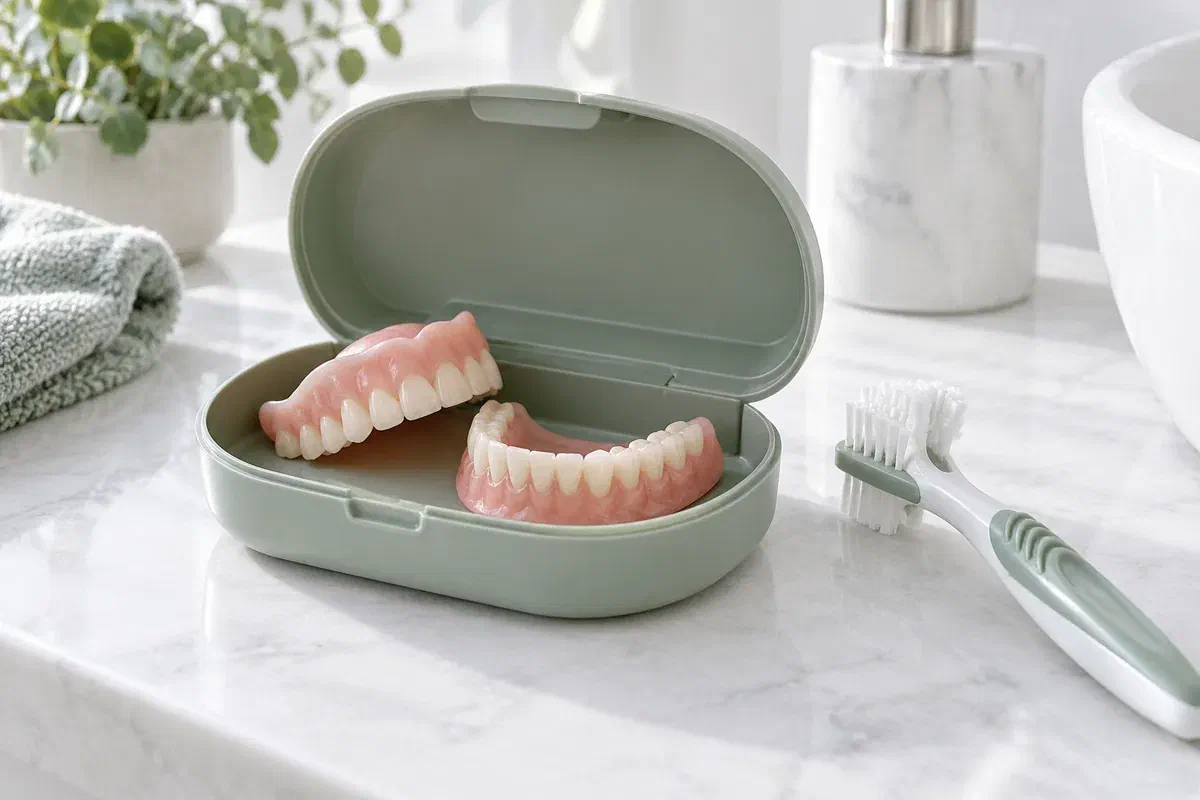
Complete denture appliances displayed as an educational example
Starting points

Usually something has changed in one jaw.

Tell us what you notice in each arch, even details that seem minor. The assessment considers how both jaws work together as well as how the replacement teeth would look.

One arch of teeth that is no longer holding up

If the teeth in one jaw are failing, ask which might still be kept and the reasons for removing others. A complete denture for that arch should follow a careful review of each tooth, rather than an assumption that all must go.

An existing plate that bites against natural teeth

If your current denture loosens when you bite, wears quickly or leaves sore spots, bring it in. Its condition, together with the opposite natural teeth and the gums beneath, helps explain what is happening.

A smile that looks uneven between the jaws

Matching replacement teeth to natural ones can raise questions about colour and shape. Raise them early, with a photograph if you have one, while the design can still reflect your preferences.

A sore that persists, a lump or any unexplained change in the mouth should be examined. Not every tender spot is just from the denture.

What a single complete denture can offer

Balance between the arches

A suitable complete denture restores a full row of teeth in the affected jaw so you can chew and speak more evenly. It also supports the lip on that side of the mouth, which affects your appearance. The design should suit the teeth it bites against as well as the arch it replaces.

It is still a removable appliance, and that brings limits. It can shift, may need adjustment and takes practice to use well. Natural teeth in the opposite jaw can add to the forces it meets, so realistic expectations help you weigh options and spot problems early.

Designed around the opposite teeth

Tooth position, the bite against your natural teeth and the shape of the base are worked out together, so the whole mouth functions as a unit rather than each arch separately.

Removable for cleaning

Taking the denture out lets you clean it and the gums underneath, while you keep caring for your natural teeth too. Ask for a demonstration, and mention any difficulty with grip or eyesight.

A plan for the early weeks

After fitting, small adjustments are common. Knowing how to request one and what to report helps those first weeks go smoothly, particularly if you have never worn a full denture before.

The appointments ahead

First the exam, then the records, a try-in and the fitting

Healing, planned extractions and whether you already wear a denture all affect the order. Ask how many visits are likely and when you will be able to check the bite against your own teeth.

  1. Both arches examined

    Gums, ridges and remaining natural teeth in each jaw are checked, and the dentist goes over your health history and what you have noticed. Bring any denture you wear and a short list of questions.

  2. Impressions and bite registration

    Records of both jaws and how they close together guide the design. You will hear how the replacement teeth are planned to meet your natural ones and how the denture is made.

  3. Try-in, where possible

    A conventional plan often includes a wax trial so you can see the teeth and test the bite against your own. Immediate dentures allow less preview. Ask what can be adjusted at this stage.

  4. Fitting and review

    The finished denture is placed and checked, and you learn how to insert, remove and clean it. Follow-up visits address pressure spots or other concerns, with longer-term changes discussed when needed.

Caring for denture and teeth together

Two routines now, and help when it hurts

Expect the denture to feel unusual for a while, especially where it meets your own teeth. The team should describe a typical adjustment period and any extra precautions in the days after teeth come out. If discomfort continues, it should be reviewed rather than ignored.

Clean the denture and your natural teeth

Use the cleaning products recommended for your denture, and keep brushing and flossing your remaining teeth as advised. Ask how to store the appliance when out, and what applies right after extractions.

Learn to chew evenly

Start with softer foods and follow any healing advice. Spreading food on both sides can help stability. Note anything that bothers you rather than changing the denture yourself.

Regular reviews of both jaws

Point out any rubbing and describe the moments it lifts, perhaps on a crusty roll or a long conversation. Ongoing visits check the denture, the gums under it and the natural teeth it bites against, since all of them can change over time.

Patient information: ADA MouthHealthy — dentures

Possible approaches

Timing and support, chosen for one arch

Each approach brings different appointments, costs, upkeep and suitability. Ask which are realistic, and how each would affect eating and appearance while treatment is under way.

Conventional

A denture once the arch has healed

This denture is made after healing is complete, which usually allows a fuller preview of the teeth. If extractions come first, ask how long you may wait and how you would cope with meals and appearance before the final denture is ready.

Immediate

A denture on extraction day

An immediate denture is made ahead of time and placed when teeth are removed. As the gums heal and reshape, it may need adjustment, relining or replacement. Ask how those stages are planned.

If more stability suits

Implant support for one jaw

Implants can sometimes retain a removable denture or support a fixed arch in one jaw. Surgery, healing, cleaning access and maintenance each need assessment; an implant option is not right for every patient.

Single-arch questions

What people wonder about one full denture

A denture involves more than the day it arrives. Bring questions about the changeover, daily care for both jaws and what to do if something needs attention.

(905) 876-4488
Can I have a full upper denture while keeping my lower teeth?
Yes, this is a common arrangement. The dentist will assess both arches and explain how the denture would be designed to work with the teeth it bites against.
Do my natural teeth affect how a full denture behaves?
They can. Natural teeth in the opposite jaw influence the bite and the forces the denture meets. That is one reason the bite is planned carefully and reviewed after fitting.
Do I still need regular checkups for my remaining teeth?
Yes. Natural teeth and gums still need daily brushing, flossing and regular professional examination. Keeping them healthy also matters for how well the denture works, because a change in the opposite teeth can alter the bite the denture was designed around.
Is one full denture easier to get used to than two?
There is no universal answer; experiences vary from person to person. Some find a single denture simpler to manage, while others notice the contrast with their natural teeth more. The dentist can talk about what to expect in your situation and how adjustment visits help along the way.
Should I carry a denture case during the day?
A case is useful if you ever need to remove the denture away from home. Wrapping it in a napkin or tissue risks it being thrown away or damaged.
Coming from Campbellville, can my trial and fitting dates be set early?
Ask at the first visit. The team can usually give an outline, though lab work and healing may affect exact dates. Planning ahead helps you organize the trips.
Complete dentures for Campbellville

Planning one arch with the whole mouth in view

Bring any denture you wear, your questions and notes about how your bite feels. During your visit to our Bronte Street practice, the dentist will examine both jaws and explain a plan covering comfort, appearance, handling and follow-up.

If a denture has broken or a sore spot is bothering you, let us know when you book so we can plan for it.

Visit Milton Dental Clinic
Unit 1, 342 Bronte St. S, Milton, ON L9T 5B7
Get directions Clinic hours
Monday–Thursday
11am–7pm
Friday–Sunday
By appointment only

Areas we serve

  • Milton
  • Oakville
  • Mississauga
  • Georgetown
  • Halton Hills
  • Acton
  • Campbellville
  • Brampton
  • Burlington
  • Puslinch
  • Rockwood
  • Erin
  • Caledon
  • Etobicoke
  • Old Milton
  • Bronte Meadows
  • Timberlea
  • Dorset Park
  • Dempsey
  • Clarke
  • Beaty
  • Coates
  • Harrison
  • Scott
  • Willmott
  • Ford
  • Bowes
  • Cobden
  • Walker
  • Mountain View
  • Milton Heights
  • Hawthorne Village
  • Valley View
  • Fallingbrook
  • Nassagaweya
  • Trafalgar
  • Esquesing
  • Nelson
  • Brookville
  • Moffat
  • Glen Williams
  • Norval
  • Limehouse
  • Stewarttown
  • Ashgrove
  • Hornby
  • Silver Creek
  • Speyside
  • Scotch Block
  • North Oakville
  • River Oaks
  • Glen Abbey
  • West Oak Trails
  • Palermo
  • Bronte Creek
  • College Park
  • Joshua Creek
  • Uptown Core
  • Preserve
  • Iroquois Ridge
  • Lisgar
  • Meadowvale
  • Meadowvale Village
  • Churchill Meadows
  • Erin Mills
  • Central Erin Mills
  • Streetsville
  • East Credit
  • Creditview
  • Heartland
  • Sheridan
  • Mount Pleasant
  • Credit Valley
  • Huttonville
  • Churchville
  • Springbrook
  • Northwest Brampton
  • Bram West
  • Fletcher's Meadow
  • Fletcher's Creek South
  • Alton Village
  • Orchard
  • Millcroft
  • Headon Forest
  • Tansley
  • Brant Hills
  • Tyandaga
  • Kilbride
  • Lowville
  • Aberfoyle
  • Morriston
  • Arkell
  • Hillsburgh
  • Freelton
  • Carlisle
  • Waterdown
  • Flamborough
  • Mountsberg

How can we help?

Milton Dental Clinic

Have a question about your smile? Choose the option that works best for you.

For urgent dental concerns, please call.
Messages are reviewed during clinic hours.