

Illustrative conversation between a patient and dentist about complete dentures
Restorative Dentistry

Complete Dentures in Etobicoke

A full denture usually means several visits, so planning matters when you are travelling from Etobicoke. We can examine your mouth, explain each stage, group appointments where sensible and agree what to do if a problem arises between trips.

Etobicoke · a well-organized plan

Fewer surprises, better-planned trips

Making a full denture is rarely a one-visit job. There is an assessment, records, often a trial stage, the fitting and then reviews. When the drive is a long one, knowing that sequence in advance lets you plan time off, arrange a ride and avoid unnecessary trips.

The appliance itself replaces every tooth across one jaw, upper or lower, and comes out for cleaning. It sits on the gums and needs to suit the shape of your ridges, lips and cheeks so you can eat, talk and smile with reasonable confidence. Appearance is one consideration among several.

Your first appointment at our Bronte Street practice combines an examination with a discussion of what you hope for and how often you can realistically travel. The dentist reviews your gums, any remaining teeth and the likely treatment order, and sets out the visits and follow-up before you commit.

Plan your denture visits
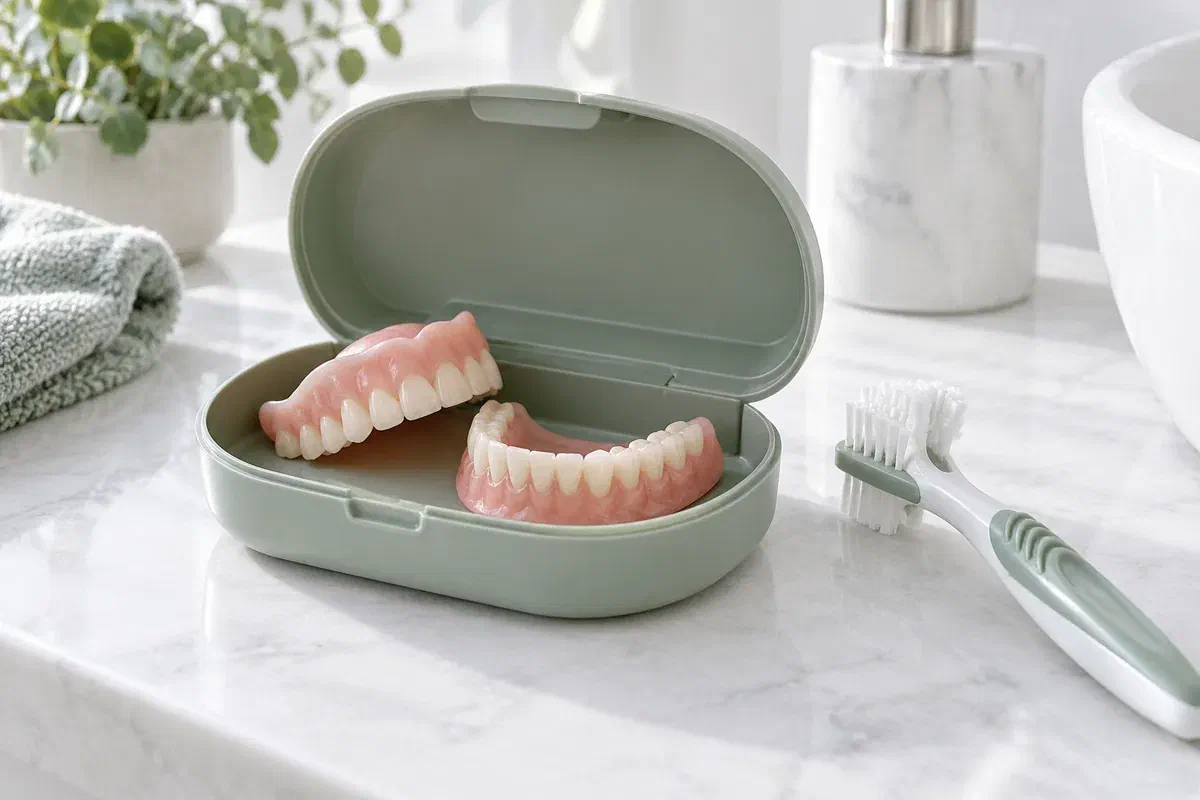
Complete denture appliances displayed as an educational example
Common reasons to start

A sore gum. A loose plate. A tooth that keeps failing.

Tell us about each concern, including the hard-to-describe ones. The assessment looks at how your mouth functions as well as how replacement teeth might look.

Last natural teeth on borrowed time

Before deciding on extractions, ask which teeth could still reasonably be kept and why removal is proposed for others. A complete denture should result from reviewing each tooth individually, not from assuming they all have to go.

Rocking, rubbing or a changed bite

These are all reasons to have a denture looked at. Bring yours on the day; its wear pattern and fit are most informative when examined together with the gums underneath.

Not looking or sounding quite like yourself

Describe what you liked about your smile in the past, or bring a photo. Raising concerns about shape, how much tooth shows and speech early leaves time to consider them in the design.

Have a persistent ulcer, a lump or any unexplained change in the mouth checked promptly, either here or by a provider nearer home. A sore area is not always caused by the denture.

The goals of a full denture

Worth the trips if it fits your life

A suitable complete denture gives you a full row of teeth across the arch for chewing and speaking. It also supports your lips and cheeks, which affects your appearance. The plan should be designed around your mouth and your habits rather than a one-size approach.

Removable dentures have limits that are worth knowing up front. They can move, usually need adjusting and take practice to use comfortably. Understanding that early makes it easier to compare options and to judge which changes need a visit and which are normal adaptation.

The full arch, planned in one go

Tooth position, the way your jaws close and the shape of the base are decided together, so the focus is on how the whole arch works rather than on how each tooth looks alone.

Cleaning you can manage at home

Because it comes out, you can clean the denture and your gums thoroughly. Ask to practise the routine during a visit, and mention any trouble with grip, eyesight or small movements.

Adjustments with travel in mind

The fitting starts a settling-in period. Agree in advance how adjustments will be booked and which symptoms to report by phone first, so a long trip is made only when it is genuinely needed.

Stage by stage

What each trip is for

The order varies with healing, any extractions and whether you already wear a denture. Ask for a written list of the expected visits and which ones involve decisions about appearance and fit, so you can plan travel from Etobicoke.

  1. Visit one: examination and planning

    The dentist looks at your gums, ridges and any remaining teeth, reviews your health history and listens to your experience. Bring current dentures, a list of medications and your questions, so the most is made of the trip.

  2. Records of shape and bite

    Impressions or scans and bite records show how your mouth is shaped and how your jaws relate. Ask how the upper and lower teeth are planned to meet and how long the lab stage may take before your next appointment.

  3. Trying the teeth, if possible

    With a conventional plan, a wax try-in often lets you see the arrangement and check the bite before completion. Immediate dentures offer less of this preview. Ask what can still be changed at this point.

  4. Fitting and reviews

    The finished denture is placed, checked and explained, including how to clean it. Review visits address pressure spots or other concerns. Ask which follow-ups are essential in person and which questions can start with a call.

Between visits

Know what to watch for, and when to call.

A new denture will feel odd for a while. Ask what adapting usually involves and how advice changes after extractions. If discomfort persists, get it reviewed rather than waiting it out.

A simple daily routine

Use the cleaner and brush the team recommends for your denture, and care for your gums and tongue as well. Ask how to store the denture when out and whether different steps apply in the first days after extractions.

Eating and talking, step by step

Begin with soft foods in small pieces and follow your healing advice. Read aloud to find awkward words. Keep notes on what bothers you to bring to your review, instead of altering the denture at home.

Reviews worth the drive

Report where it presses and when it moves, such as while chewing. Gums and bone continue to change, so occasional reviews keep their value even when no natural teeth remain in that arch.

Patient information: ADA MouthHealthy — dentures

Comparing the routes

Each option asks for a different number of visits.

Approaches differ in appointments, cost, upkeep and suitability. Ask which are realistic for your mouth and what the transition would involve, including how often you would need to travel.

Conventional route

Made for healed gums

This denture is designed once healing is complete. If teeth need removing first, ask how long that may take and how you would manage eating and appearance until the final denture is made.

Immediate route

Ready when the teeth come out

Prepared in advance, an immediate denture is placed on extraction day. Healing changes the gums, so further adjustment, relining or a replacement may follow. Ask how many extra visits those stages usually add.

Where more support is suitable

Held by implants

Implants can retain some removable or fixed full-arch designs. Surgery, healing, cleaning access and maintenance all need separate assessment, along with extra appointments; implant support is not right for every patient.

Planning questions

Questions to ask before the first long drive

A denture plan involves more than the delivery appointment. Use the consultation to ask about the transition, daily care and how support works between visits.

(905) 876-4488
Can my denture visits be grouped to cut down on trips from Etobicoke?
Sometimes appointments can be arranged efficiently, but each stage needs time for lab work or healing. Ask the team at your first visit how the schedule could be organized for you.
Which denture problems should not wait for my next scheduled visit?
Severe pain, swelling, bleeding that will not stop after extractions or signs of infection need prompt attention. Call us, and if you cannot reach care quickly, seek urgent care closer to home.
How long does the whole process usually take?
It varies with healing, extractions and the approach chosen. The dentist can give you an estimated timeline after the assessment, though it may change depending on how your mouth responds.
Can a reline be done in a single visit?
Some relines can be done at the chair, while others involve sending the denture to a lab. Ask which type applies to you and whether you would be without the denture for a time.
Do upper and lower dentures have to be made together?
Not necessarily. Each jaw is assessed separately, though the dentist considers how both will bite together. One arch may need a full denture while the other suits a different approach.
What should I keep track of between adjustment visits?
Note where you feel pressure, which foods are difficult and any words that are hard to say. Clear notes help the dentist make the most of each appointment.
Complete dentures, Etobicoke to Milton

Make the first trip count.

Bring your current denture, a list of medications and every question you have. At our Bronte Street practice, Dr. Anjum can examine your mouth, explain realistic options and lay out a visit plan covering comfort, appearance, handling and follow-up.

If your denture is broken or causing pain, mention it when you call so we can plan the visit around it.

Visit Milton Dental Clinic
Unit 1, 342 Bronte St. S, Milton, ON L9T 5B7
Get directions Clinic hours
Monday–Thursday
11am–7pm
Friday–Sunday
By appointment only

Areas we serve

  • Milton
  • Oakville
  • Mississauga
  • Georgetown
  • Halton Hills
  • Acton
  • Campbellville
  • Brampton
  • Burlington
  • Puslinch
  • Rockwood
  • Erin
  • Caledon
  • Etobicoke
  • Old Milton
  • Bronte Meadows
  • Timberlea
  • Dorset Park
  • Dempsey
  • Clarke
  • Beaty
  • Coates
  • Harrison
  • Scott
  • Willmott
  • Ford
  • Bowes
  • Cobden
  • Walker
  • Mountain View
  • Milton Heights
  • Hawthorne Village
  • Valley View
  • Fallingbrook
  • Nassagaweya
  • Trafalgar
  • Esquesing
  • Nelson
  • Brookville
  • Moffat
  • Glen Williams
  • Norval
  • Limehouse
  • Stewarttown
  • Ashgrove
  • Hornby
  • Silver Creek
  • Speyside
  • Scotch Block
  • North Oakville
  • River Oaks
  • Glen Abbey
  • West Oak Trails
  • Palermo
  • Bronte Creek
  • College Park
  • Joshua Creek
  • Uptown Core
  • Preserve
  • Iroquois Ridge
  • Lisgar
  • Meadowvale
  • Meadowvale Village
  • Churchill Meadows
  • Erin Mills
  • Central Erin Mills
  • Streetsville
  • East Credit
  • Creditview
  • Heartland
  • Sheridan
  • Mount Pleasant
  • Credit Valley
  • Huttonville
  • Churchville
  • Springbrook
  • Northwest Brampton
  • Bram West
  • Fletcher's Meadow
  • Fletcher's Creek South
  • Alton Village
  • Orchard
  • Millcroft
  • Headon Forest
  • Tansley
  • Brant Hills
  • Tyandaga
  • Kilbride
  • Lowville
  • Aberfoyle
  • Morriston
  • Arkell
  • Hillsburgh
  • Freelton
  • Carlisle
  • Waterdown
  • Flamborough
  • Mountsberg

How can we help?

Milton Dental Clinic

Have a question about your smile? Choose the option that works best for you.

For urgent dental concerns, please call.
Messages are reviewed during clinic hours.