

Illustrative conversation between a patient and dentist about complete dentures
Restorative Dentistry

Complete Dentures in Milton

Thinking about a full upper or lower denture? Start with a conversation close to home in Milton about how you eat, speak and smile today, and learn what each stage of replacing a whole arch of teeth would involve.

Full dentures, close to home

Start with the meal you have been avoiding.

Many people first think seriously about a full denture at the dinner table, when a favourite food has quietly dropped off the menu. A complete denture is a removable appliance that replaces every tooth in one arch, resting on the gums and shaped around the jaw, lips and cheeks.

Choosing a shade for the new teeth is only a small part of the work. The fit against your tissues, the way the upper and lower arches meet, and how easily you can handle the appliance all shape whether it suits your daily life. Tell us what chewing, talking and smiling are like for you right now.

Your first visit in Milton is an examination and an honest talk about priorities. The dentist looks at the health of your mouth, any teeth that remain, and the order in which treatment might sensibly happen. You should leave knowing the likely appointments and follow-up before you decide anything.

Ask about a full denture
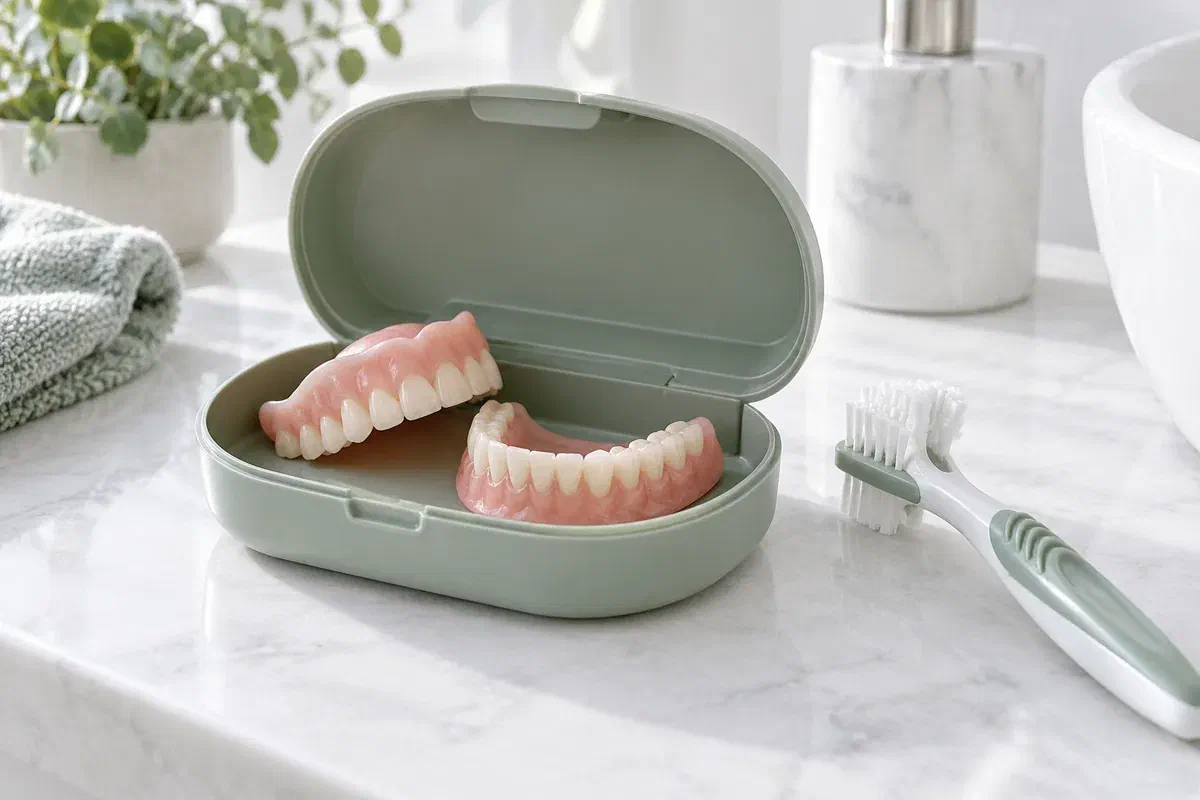
Complete denture appliances displayed as an educational example
What brings people in

Three situations we hear about often

Some worries are hard to put into words, and that is fine. Bring them to your Milton appointment anyway. A good denture consultation weighs how your mouth works every day, not only how the finished teeth might look.

Remaining teeth with a doubtful future

When several teeth are failing, ask which could reasonably be kept and why removal is being suggested for the others. A full denture should come after a careful look at each remaining tooth, not from a starting assumption that extraction is the only path.

A current denture that has started to misbehave

Rocking, sore spots that keep returning, or a bite that feels different are all reasons for a review. Bring the denture you wear now so the dentist can check its condition and fit together with the gums underneath.

Questions about how you will look and sound

A photo from a few years ago, or simply describing what feels like you, can help. Raise concerns about how much tooth shows, tooth shape and speech early in planning, while there is still room to reflect them in the design.

An ulcer that does not heal, a lump, or any change in the mouth you cannot explain should be examined. Not every sore area is just part of wearing a denture.

What a well-planned denture can offer

Function, looks and ease of handling, balanced together

A suitable complete denture gives you replacement teeth for chewing and speaking across a whole arch. Its shape also supports the lips and affects how your smile reads to other people. The goal is a practical appliance designed for your particular mouth rather than a generic set.

It helps to be clear from the start that removable dentures are not the same as natural teeth. They can shift, they often need adjustment, and using them well takes practice. Knowing that early makes it easier to compare approaches and to spot when something needs a professional look.

The whole arch planned as one

Tooth position, the bite and the shape of the base are worked out together. That way the conversation covers how the entire arch functions, rather than judging each replacement tooth by appearance alone.

Easy access for cleaning

Because the denture comes out, you can clean both the appliance and the gums beneath it. Ask to be shown the routine, and say so if grip, eyesight or handling small objects is difficult for you.

Support after the fitting day

Receiving the denture is one step, not the finish line. Knowing how to book an adjustment and which changes to report can make the first weeks smoother, particularly if you have never worn a denture before.

How the appointments unfold

Four stages, paced to your healing

The order of visits depends on healing time, whether extractions are planned and whether an older denture is being replaced. Ask which appointments to expect and at what point appearance and fit will be checked.

  1. An examination and a conversation

    The dentist checks the gums, ridges and any remaining teeth, goes over your health history and listens to your experience so far. Bring any dentures you have, along with your concerns and a written list of questions.

  2. Records of your mouth and bite

    Impressions, measurements or other suitable records capture the shape of your mouth and how your jaws relate. The team explains the plan, including how the upper and lower teeth are meant to meet and how the appliance is made.

  3. A look at the teeth before completion

    Where the sequence allows, a trial stage lets you discuss tooth position, appearance and bite before the denture is finished. Ask what can be judged at this point and how the process differs for an immediate denture.

  4. Fitting day and early reviews

    The finished denture is checked in your mouth and you are shown how to wear and clean it. Follow-up visits look at pressure spots or other issues, with further adjustment or longer-term changes discussed when needed.

The first weeks with a new denture

Learning takes time. Pain deserves a call.

A new appliance will feel strange at first. The team should describe what adapting usually involves and how that advice changes after recent extractions. Discomfort that lingers should be checked, not simply tolerated.

Set up a daily cleaning habit

Clean the denture using the method recommended for its material, and keep your mouth clean too. Ask how to store the appliance when it is out, when to take it out, and whether different instructions apply right after extractions.

Build up chewing and speech slowly

Start with easier foods and follow the guidance for your appliance and stage of healing. Reading aloud at home can reveal speech problems worth raising. Note down difficulties instead of trying to fix them by changing the denture yourself.

Return for the reviews you are offered

Let the team know where pressure builds and when the denture moves, such as while eating or talking. Gums and bone keep changing over time, so periodic reviews stay worthwhile even with no natural teeth left in that arch.

Patient information: ADA MouthHealthy — dentures

Comparing full-arch options

When the denture is made, and what holds it, both count.

Each full-arch approach comes with its own appointments, costs, upkeep and suitability requirements. Ask which ones are realistic in your case and what each would mean for you while treatment is under way.

Conventional complete denture

Made once the gums have healed

A conventional denture is made for a mouth that has finished healing. If teeth must come out first, talk through the healing period and how you will manage appearance and eating while the final denture is planned.

Immediate denture

Ready on the day teeth are removed

An immediate denture is prepared before the remaining teeth are taken out. Because the gums and bone change as they heal, it may later need adjusting, relining or replacing. Ask how those stages fit into the plan you are offered.

Where extra support suits

Anchored with dental implants

Implants can support some removable or fixed full-arch designs. Suitability, surgery, healing, access for cleaning and long-term maintenance all need separate assessment; implants are not automatically the right choice for everyone.

Complete denture FAQs

The practical questions people ask us

A denture decision stretches well past the day it is fitted. Use your consultation to ask about the changeover, daily care and the help available if the appliance needs attention later.

(905) 876-4488
How long does it usually take to get used to a full denture?
It varies from person to person, and there is no fixed timeline to promise. Chewing, speaking and handling the appliance tend to improve with practice and adjustment. Tell the team if progress stalls or if sore areas keep returning.
Should I wear my complete denture while I sleep?
Ask the dentist for advice specific to your mouth. Many people are told to take the denture out for part of each day or overnight to let the gums rest, but instructions can differ, especially straight after extractions.
Can I keep a few healthy teeth instead of having them all removed?
Possibly. Each remaining tooth should be assessed on its own merits, and a partial denture or another approach may be worth discussing. Ask why any tooth is recommended for removal and what keeping it would involve.
Will my speech sound different with a new full denture?
Some words may feel or sound unusual at first while your tongue and lips adapt. Practising by reading aloud can help. If a particular sound stays difficult, mention it at a review so the design and fit can be checked.
Is it normal for an older denture to feel looser over the years?
The gums and bone under a denture can change shape over time, which may affect fit. Rather than relying on more adhesive, ask for a review so the dentist can look at the appliance, the tissues and the bite together.
What should a written estimate for a complete denture include?
Ask for the proposed appliance and the appointments in writing. Check whether extractions, temporary dentures, adjustment visits, relines and eventual replacement are listed separately. If you have benefits coverage, ask what documents can be prepared for your insurer before you go ahead.
Your next step in Milton

Bring your questions, and your current denture.

Come in with the denture you wear now, any worries about what comes next, and the questions on your list. At our Bronte Street practice, the dentist can assess your mouth and talk through a plan that weighs comfort, appearance, handling and follow-up.

If your current denture is broken or rubbing a sore spot, let us know when you book so it can be looked at during the visit.

Visit Milton Dental Clinic
Unit 1, 342 Bronte St. S, Milton, ON L9T 5B7
Get directions Clinic hours
Monday–Thursday
11am–7pm
Friday–Sunday
By appointment only

Areas we serve

  • Milton
  • Oakville
  • Mississauga
  • Georgetown
  • Halton Hills
  • Acton
  • Campbellville
  • Brampton
  • Burlington
  • Puslinch
  • Rockwood
  • Erin
  • Caledon
  • Etobicoke
  • Old Milton
  • Bronte Meadows
  • Timberlea
  • Dorset Park
  • Dempsey
  • Clarke
  • Beaty
  • Coates
  • Harrison
  • Scott
  • Willmott
  • Ford
  • Bowes
  • Cobden
  • Walker
  • Mountain View
  • Milton Heights
  • Hawthorne Village
  • Valley View
  • Fallingbrook
  • Nassagaweya
  • Trafalgar
  • Esquesing
  • Nelson
  • Brookville
  • Moffat
  • Glen Williams
  • Norval
  • Limehouse
  • Stewarttown
  • Ashgrove
  • Hornby
  • Silver Creek
  • Speyside
  • Scotch Block
  • North Oakville
  • River Oaks
  • Glen Abbey
  • West Oak Trails
  • Palermo
  • Bronte Creek
  • College Park
  • Joshua Creek
  • Uptown Core
  • Preserve
  • Iroquois Ridge
  • Lisgar
  • Meadowvale
  • Meadowvale Village
  • Churchill Meadows
  • Erin Mills
  • Central Erin Mills
  • Streetsville
  • East Credit
  • Creditview
  • Heartland
  • Sheridan
  • Mount Pleasant
  • Credit Valley
  • Huttonville
  • Churchville
  • Springbrook
  • Northwest Brampton
  • Bram West
  • Fletcher's Meadow
  • Fletcher's Creek South
  • Alton Village
  • Orchard
  • Millcroft
  • Headon Forest
  • Tansley
  • Brant Hills
  • Tyandaga
  • Kilbride
  • Lowville
  • Aberfoyle
  • Morriston
  • Arkell
  • Hillsburgh
  • Freelton
  • Carlisle
  • Waterdown
  • Flamborough
  • Mountsberg

How can we help?

Milton Dental Clinic

Have a question about your smile? Choose the option that works best for you.

For urgent dental concerns, please call.
Messages are reviewed during clinic hours.