

Illustrative conversation between a patient and dentist about complete dentures
Restorative Dentistry

Complete Dentures in Mississauga

Weighing a removable full denture against implant support, or holding a plan you would like explained again? Bring it from Mississauga and we can examine your mouth, compare realistic options and set out what each would involve.

Mississauga · comparing your choices

Options first. Decisions later.

Some people reach us already holding a treatment estimate and a lot of unanswered questions. Others have only just been told that the rest of their teeth in one jaw may not last. Either way, it helps to understand the choices properly before signing anything.

At its simplest, a complete denture is a removable replacement for every tooth in an upper or lower arch. It is supported by the gums and ridge beneath, and its shape must suit your jaw, lips and cheeks. Some full-arch designs add implants for extra hold; others rely on the fit alone.

Your consultation at our Bronte Street practice starts with an examination and a plain conversation about what you want from treatment. The dentist reviews your gums, any remaining teeth and the order in which steps could happen. You should see the expected appointments and follow-up laid out clearly before deciding.

Compare full denture options
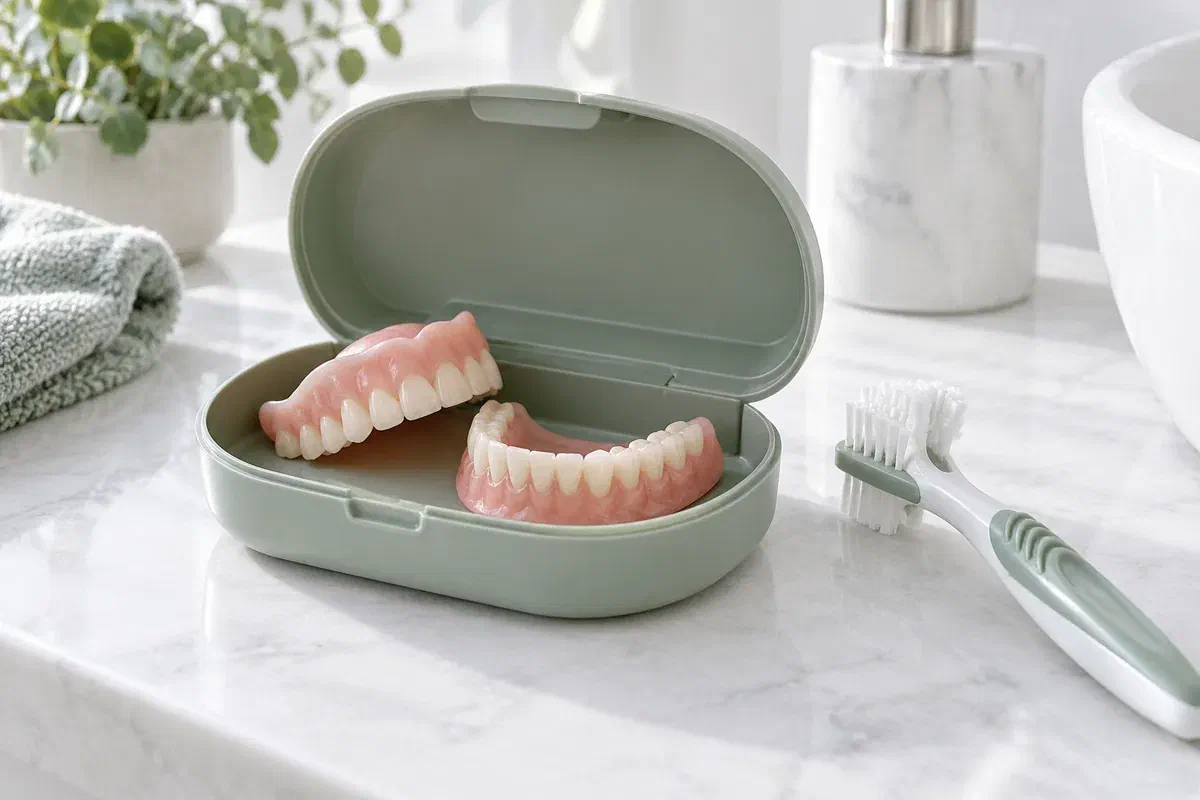
Complete denture appliances displayed as an educational example
Reasons people ask

Is a full denture really the next step?

That question deserves a careful answer. Share what is bothering you, including details you are unsure how to phrase, so the conversation covers how your mouth works as well as how the result might look.

Remaining teeth with an uncertain outlook

Ask the dentist to explain, tooth by tooth, which could reasonably stay and why removal is suggested for others. Choosing a complete denture should come from that kind of review, not from assuming every tooth must go.

An existing denture that has drifted out of fit

Movement, repeated sore spots and a bite that no longer lines up are signs worth reviewing. Bring the denture with you; it gives useful information about wear and pressure that can be compared with the state of your gums.

Questions about appearance and speech

If you have specific wishes about tooth shape, colour or how much shows when you talk, raise them at the start. A photograph from earlier years can guide the conversation while design choices are still open.

Have any ulcer that persists, any lump and any unexplained change in your mouth examined. A sore area should not automatically be blamed on a denture.

What any full-arch option should deliver

A design you can chew with, smile with and look after

Whatever approach you choose, the purpose is to give you teeth across the whole arch for eating and talking, with enough support for your lips that your face looks like yours. A good plan treats your mouth as an individual case rather than a standard template.

There are trade-offs. A removable complete denture can move, generally needs some adjustment and takes practice to master. Implant support may add stability for some people but involves surgery and extra maintenance. Seeing those limits clearly is what makes comparison useful.

Bite and appearance planned together

Where the teeth sit, how they meet the opposite arch and the contour of the base are considered side by side. That keeps the focus on how the finished arch works, not just on the look of each tooth.

Access for daily cleaning

A removable design can be taken out so both the appliance and your gums can be cleaned well. Ask what cleaning looks like for each option you are weighing, and say if grip, eyesight or dexterity is a concern.

A defined follow-up period

Delivery is only one appointment in a longer process. Ask how adjustments are arranged and what to watch for, so the weeks after fitting feel manageable, especially if this is your first denture.

How treatment usually unfolds

A four-part sequence, adjusted to your healing

Healing time, any extractions and whether you are replacing an older denture all change the order. Ask how many visits each option involves, which suits your schedule from Mississauga, and when appearance and fit are decided.

  1. Examination and goals

    The dentist checks your gums, ridges and any remaining teeth, reviews your health history and asks about your priorities. Bring existing dentures, any written estimate you have received and the questions you want answered.

  2. Detailed records

    Impressions or scans and bite measurements record the shape of your mouth and how your jaws line up. You will hear how the replacement teeth are planned to meet and how the appliance is produced for your option.

  3. Trial of the tooth setup

    With conventional treatment, you can often see the teeth set in wax and check the bite before completion. Immediate dentures allow less preview, so ask which choices can be made in advance and which wait for healing.

  4. Fitting, instructions and reviews

    The finished denture is placed and checked, and you learn how to insert, remove and clean it. Return visits handle pressure spots or other issues, and relines or other changes are planned when appropriate.

After the fitting

Learning curve ahead; discomfort is a signal

Expect a period of getting used to the new teeth. Ask the team what that typically involves, and how advice changes after recent extractions. Ongoing soreness is something to report, not wait out.

Daily care for denture and gums

Your dentist can recommend a cleaner and brush that will not scratch the denture material. Keep brushing or wiping your gums and tongue too, and ask how to store the denture overnight and in the days after extractions.

Gradual return to normal eating and talking

Begin with softer foods cut into small pieces and follow your healing instructions. Practise tricky words aloud. Jot down any problems for your next visit rather than altering the denture yourself.

Ongoing reviews

Tell the team where it rubs and when it moves, such as when biting or speaking. The ridges under a denture slowly change, so reviews keep their value long after all your natural teeth in that arch are gone.

Patient information: ADA MouthHealthy — dentures

Side by side

Three paths to a full arch of teeth

Each approach brings different visits, costs, maintenance and suitability requirements. Ask which are realistic for you and how daily life would look during the transition with each.

Conventional denture

After the gums have settled

This denture is designed for healed tissue. If extractions are needed first, ask how long you may wait and how you would eat and look in public during that interval.

Immediate denture

On the same day as extractions

Made before the last teeth are removed, an immediate denture goes in straight away. Because healing reshapes the gums, it often needs adjustment or relining, and sometimes replacement. Ask how that is handled in your plan.

If added support is suitable

With implants for retention

Certain removable and fixed designs can be held by dental implants. Each requires assessment of your health, bone, the surgery and healing involved, and how you would clean and maintain it. Implants are not the right fit for every mouth.

Comparing options: common questions

Questions to settle before you choose

A full-arch decision reaches well past the delivery appointment. Use your consultation to ask about the transition, upkeep and what support is available if something needs attention.

(905) 876-4488
Can I start with a conventional denture and consider implants later?
Sometimes, yes. Some people begin with a removable denture and revisit implant support in the future. Whether that is realistic depends on your health and the condition of your jaw, so ask the dentist to assess it.
Why do some people consider implant support for a lower denture?
A lower denture often has less area to rest on and has to work around the tongue, so some wearers find it less stable. Implants may add retention for suitable people. An assessment is needed to know if it applies to you.
Can you look over a denture plan I received from another office?
Yes. Bring the written plan and any X-rays or records you have. The dentist will need to examine your mouth before commenting, and can then explain how their recommendation compares.
Is cleaning more involved with an implant-supported design?
It can be. Implants and the parts connecting them need careful cleaning and regular professional checks. Ask to see what the routine involves for the specific design being proposed.
How is a complete denture different from a partial denture?
A complete denture replaces every tooth in an arch. A partial denture replaces some teeth and is held by the natural teeth that remain. Which is suitable depends on how many teeth can reasonably be kept.
Does a full upper denture cover the roof of my mouth?
A conventional upper denture usually covers much of the palate, which helps it stay in place. Some people notice this at first and adjust over time. Ask whether any alternative design is suitable for your situation.
From Mississauga to our Bronte Street practice

Bring your questions. Leave with a clearer comparison.

Come with any denture you wear now, any estimate you have been given and the questions still on your mind. Dr. Anjum can examine your mouth and walk you through which options fit, and how comfort, appearance, handling and follow-up differ.

If your denture is cracked or causing a painful area, please mention it while scheduling so we can plan time for it.

Visit Milton Dental Clinic
Unit 1, 342 Bronte St. S, Milton, ON L9T 5B7
Get directions Clinic hours
Monday–Thursday
11am–7pm
Friday–Sunday
By appointment only

Areas we serve

  • Milton
  • Oakville
  • Mississauga
  • Georgetown
  • Halton Hills
  • Acton
  • Campbellville
  • Brampton
  • Burlington
  • Puslinch
  • Rockwood
  • Erin
  • Caledon
  • Etobicoke
  • Old Milton
  • Bronte Meadows
  • Timberlea
  • Dorset Park
  • Dempsey
  • Clarke
  • Beaty
  • Coates
  • Harrison
  • Scott
  • Willmott
  • Ford
  • Bowes
  • Cobden
  • Walker
  • Mountain View
  • Milton Heights
  • Hawthorne Village
  • Valley View
  • Fallingbrook
  • Nassagaweya
  • Trafalgar
  • Esquesing
  • Nelson
  • Brookville
  • Moffat
  • Glen Williams
  • Norval
  • Limehouse
  • Stewarttown
  • Ashgrove
  • Hornby
  • Silver Creek
  • Speyside
  • Scotch Block
  • North Oakville
  • River Oaks
  • Glen Abbey
  • West Oak Trails
  • Palermo
  • Bronte Creek
  • College Park
  • Joshua Creek
  • Uptown Core
  • Preserve
  • Iroquois Ridge
  • Lisgar
  • Meadowvale
  • Meadowvale Village
  • Churchill Meadows
  • Erin Mills
  • Central Erin Mills
  • Streetsville
  • East Credit
  • Creditview
  • Heartland
  • Sheridan
  • Mount Pleasant
  • Credit Valley
  • Huttonville
  • Churchville
  • Springbrook
  • Northwest Brampton
  • Bram West
  • Fletcher's Meadow
  • Fletcher's Creek South
  • Alton Village
  • Orchard
  • Millcroft
  • Headon Forest
  • Tansley
  • Brant Hills
  • Tyandaga
  • Kilbride
  • Lowville
  • Aberfoyle
  • Morriston
  • Arkell
  • Hillsburgh
  • Freelton
  • Carlisle
  • Waterdown
  • Flamborough
  • Mountsberg

How can we help?

Milton Dental Clinic

Have a question about your smile? Choose the option that works best for you.

For urgent dental concerns, please call.
Messages are reviewed during clinic hours.