

Illustrative conversation between a patient and dentist about complete dentures
Restorative Dentistry

Complete Dentures in Oakville

Worried about the weeks between losing your last teeth and wearing a finished denture? From Oakville, you can plan that transition with us, compare immediate and conventional approaches, and map out the visits ahead.

Planning the changeover

What happens to my smile while I heal?

That is often the first thing people ask when the remaining teeth in an arch can no longer be saved. It is a fair question, and the answer depends on the approach you choose, how your gums heal and the order in which treatment is planned.

A complete denture is a removable set of teeth for one full arch. It rests on the gums and ridge, and it has to work with your lips, cheeks and tongue to let you chew, speak and smile. Getting there can follow different routes, each with its own timing and trade-offs.

If you are coming from Oakville, the first step is an examination at our Bronte Street practice and a frank discussion of what matters most to you, whether that is appearance at work, comfortable eating or fewer appointments. You should understand the full sequence, including follow-up, before you commit to anything.

Plan your denture transition
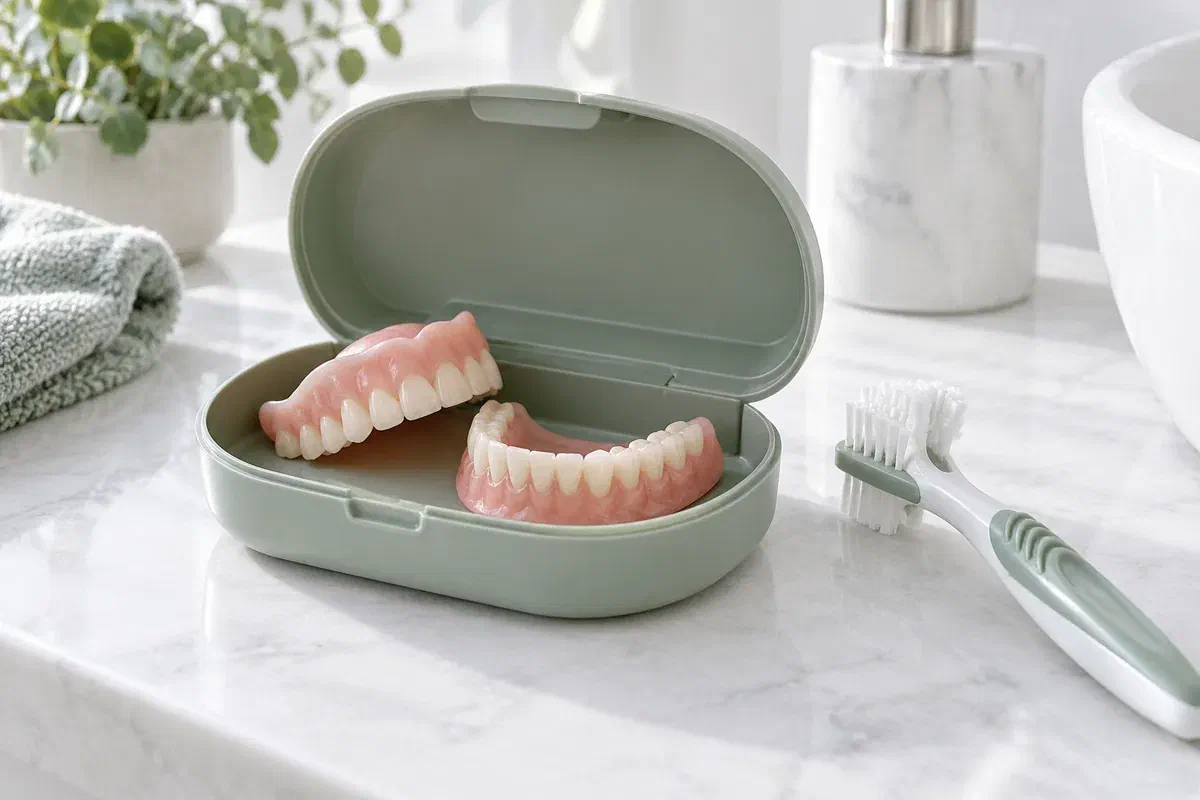
Complete denture appliances displayed as an educational example
Where the decision usually starts

Three common starting points

People arrive at this conversation from different places. Tell us which describes you, and add any concern that feels awkward to raise. Function and appearance both belong in the plan.

Being told the remaining teeth may need to go

Before agreeing to extractions, ask which teeth could still be kept and what the reasoning is for each one that cannot. A full denture should be the result of looking at every remaining tooth, not a shortcut taken because it seems simpler.

An appliance that has stopped cooperating

If your denture slides, rubs or has changed how your teeth come together, have it reviewed. Bring it along so the dentist can judge its condition and fit at the same time as the gums underneath.

Concern about looking or sounding different

Many people worry that a denture will change their face or voice. Raise that early. Photographs, or a description of how your teeth used to look, help guide decisions about shape, colour and how much tooth shows.

A mouth sore that will not heal, a lump or any unexplained change needs to be examined. Do not assume it is simply irritation from a denture.

Oakville · what to expect from a full denture

A full arch that works, looks natural to you and is manageable

A well-suited complete denture replaces an entire row of teeth so you have something to chew and speak with. Its contours also support your lips and cheeks, which influences how your face and smile appear. The design should reflect your mouth rather than a standard shape.

Even so, a removable denture is not a natural tooth. It can move, it usually needs a few adjustments, and wearing it well is a skill you build. Accepting that early makes it easier to choose between options and to recognize when a symptom calls for a visit.

One coherent design

Where each tooth sits, how the arches bite together and the form of the denture base are decided as a group. That keeps attention on how the whole arch functions instead of on single teeth.

Removable for hygiene

You can take the denture out to clean it and the gums it covers. Ask to practise the routine at the appointment, and mention it if grip, vision or fine hand movements are a challenge.

Adjustment built into the plan

The fitting is a milestone rather than the end. Knowing how to arrange an adjustment and what to report helps the first weeks go more smoothly, particularly for a first-time wearer.

Your appointments, in order

Exam, records, try-in, fitting: the usual path

The exact order changes with healing time, planned extractions and whether an older denture is being replaced. When travelling from Oakville, ask how many visits to expect and which ones involve decisions about appearance and fit.

  1. Assessment and history

    The dentist examines your gums and any teeth that remain, reviews your medical history and asks about your experience so far. Bring any current dentures, your concerns and questions written down so nothing is missed.

  2. Impressions and bite records

    Impressions, measurements or other records show the shape of your mouth and how your jaws relate. The team explains how the upper and lower teeth are meant to meet and how your denture will be made.

  3. A trial arrangement, when possible

    For a conventional denture, a try-in often lets you review tooth position, appearance and bite before the final version. An immediate denture offers less opportunity for this, so ask what can and cannot be previewed.

  4. Fitting and follow-up visits

    The completed denture is placed, checked and explained, including how to clean it. Follow-up appointments address pressure spots or other problems, and future relines or changes are discussed when the time comes.

Adapting at home

Patience helps. Persistent soreness needs a review.

Expect the denture to feel bulky and new at first. The team should tell you what adapting typically involves, and whether the advice differs after recent extractions. Ongoing discomfort is a reason to come back.

Keep both the denture and mouth clean

Clean the appliance with the method suited to its material, and continue caring for your gums and tongue. Ask how to store the denture when it is out, when to remove it and what to do differently in the first days after extractions.

Ease into eating and talking

Begin with soft, manageable foods and follow the healing advice you were given. Practise speaking by reading aloud. Make a note of problems to discuss, rather than adjusting the denture on your own.

Attend the reviews

Point out where it presses and when it moves, such as while chewing or laughing. After extractions especially, the gums reshape over time, and even a long-settled denture benefits from occasional checks.

Patient information: ADA MouthHealthy — dentures

Three ways to replace a full arch

Timing and support shape the whole experience

The approaches differ in appointments, cost, upkeep and who they suit. Ask which are realistic for your mouth, and what the in-between period would look like with each.

Conventional

Wait for healing, then make the denture

A conventional denture is made once the gums have healed. If teeth need removing first, talk through how long healing might take and how you would manage eating and appearance during that time.

Immediate

Teeth on the day of extractions

An immediate denture is prepared in advance and placed when the remaining teeth are removed. Healing changes the gums, so it may need adjustment, relining or replacement later. Ask how those steps are covered in your plan.

Where more support is suitable

Implant-retained designs

Implants can support some removable or fixed full-arch designs. Suitability, surgery, healing, cleaning access and long-term care each need assessment; an implant option is not automatically right for everyone.

Questions about the transition

Before you decide, ask these

A denture plan involves much more than one fitting day. Use the consultation to ask about the changeover, daily routines and where to turn if something needs attention.

(905) 876-4488
Will I have to go without teeth while my gums heal?
Not always. An immediate denture can be placed when teeth are removed, so you are not without teeth during healing. It usually needs adjustment or relining as the gums change. Ask whether this approach suits your situation.
How many appointments should I plan for if I am coming from Oakville?
It depends on the approach, any extractions and how healing goes. Ask for an outline of the expected visits at your first appointment, so you can plan time off work or arrange transport ahead.
Can an immediate denture be relined instead of replaced?
Often a reline is one way to improve fit once the gums have settled, but every case differs. The dentist will check the appliance and your tissues and explain whether a reline, adjustment or new denture makes most sense.
What can I eat on the day an immediate denture goes in?
Follow the specific instructions you are given after extractions. Soft, cool foods are often suggested at first. Avoid anything hard or sticky until the dentist advises otherwise, and call if bleeding or pain concerns you.
Does choosing an implant-supported option mean extra surgery?
Yes, implants require a surgical procedure and healing time. Suitability depends on your health, bone and other factors. Ask about the full process, maintenance and alternatives before deciding.
Will other people be able to tell I am wearing a denture?
That varies, and no one can promise an invisible result. Discussing tooth shape, colour and display during planning helps, and a try-in stage, where available, lets you see the arrangement before completion.
Oakville to Bronte Street

Map out your transition with us.

Bring any denture you wear, your questions and your thoughts about timing. At our Bronte Street practice, the dentist will assess your mouth and talk through a plan covering comfort, appearance, handling and follow-up, so you know what each stage involves.

If a denture has broken or a sore spot is bothering you, say so when booking so it can be addressed at your visit.

Visit Milton Dental Clinic
Unit 1, 342 Bronte St. S, Milton, ON L9T 5B7
Get directions Clinic hours
Monday–Thursday
11am–7pm
Friday–Sunday
By appointment only

Areas we serve

  • Milton
  • Oakville
  • Mississauga
  • Georgetown
  • Halton Hills
  • Acton
  • Campbellville
  • Brampton
  • Burlington
  • Puslinch
  • Rockwood
  • Erin
  • Caledon
  • Etobicoke
  • Old Milton
  • Bronte Meadows
  • Timberlea
  • Dorset Park
  • Dempsey
  • Clarke
  • Beaty
  • Coates
  • Harrison
  • Scott
  • Willmott
  • Ford
  • Bowes
  • Cobden
  • Walker
  • Mountain View
  • Milton Heights
  • Hawthorne Village
  • Valley View
  • Fallingbrook
  • Nassagaweya
  • Trafalgar
  • Esquesing
  • Nelson
  • Brookville
  • Moffat
  • Glen Williams
  • Norval
  • Limehouse
  • Stewarttown
  • Ashgrove
  • Hornby
  • Silver Creek
  • Speyside
  • Scotch Block
  • North Oakville
  • River Oaks
  • Glen Abbey
  • West Oak Trails
  • Palermo
  • Bronte Creek
  • College Park
  • Joshua Creek
  • Uptown Core
  • Preserve
  • Iroquois Ridge
  • Lisgar
  • Meadowvale
  • Meadowvale Village
  • Churchill Meadows
  • Erin Mills
  • Central Erin Mills
  • Streetsville
  • East Credit
  • Creditview
  • Heartland
  • Sheridan
  • Mount Pleasant
  • Credit Valley
  • Huttonville
  • Churchville
  • Springbrook
  • Northwest Brampton
  • Bram West
  • Fletcher's Meadow
  • Fletcher's Creek South
  • Alton Village
  • Orchard
  • Millcroft
  • Headon Forest
  • Tansley
  • Brant Hills
  • Tyandaga
  • Kilbride
  • Lowville
  • Aberfoyle
  • Morriston
  • Arkell
  • Hillsburgh
  • Freelton
  • Carlisle
  • Waterdown
  • Flamborough
  • Mountsberg

How can we help?

Milton Dental Clinic

Have a question about your smile? Choose the option that works best for you.

For urgent dental concerns, please call.
Messages are reviewed during clinic hours.