

Illustrative conversation between a patient and dentist about complete dentures
Restorative Dentistry

Complete Dentures in Rockwood

Does a loose or unfamiliar denture make you hold back in conversation? Travelling from Rockwood, you can discuss how a complete denture is shaped for speech as well as chewing, and what practising with a new one is really like.

Rockwood · speaking with confidence

Reading a bedtime story without a second thought

For some people the moment arrives while reading aloud to a grandchild, when certain words start to whistle or the upper plate drops slightly. For others it is a phone call where they repeat themselves. Talking is something we do all day, so speech deserves real attention in denture planning.

The appliance in question replaces every tooth across an upper or lower arch. It can be removed, rests on your gums and ridge, and shares a small space with your tongue, lips and cheeks. The thickness of the base and where the front teeth sit both affect how words form.

Arriving from Rockwood, your first appointment at our Bronte Street practice begins with an examination and a conversation about how you speak, eat and smile today. The dentist assesses the gums and any natural teeth still present, outlines a sensible sequence and explains the visits and follow-up before you choose a path.

Discuss speech and full dentures
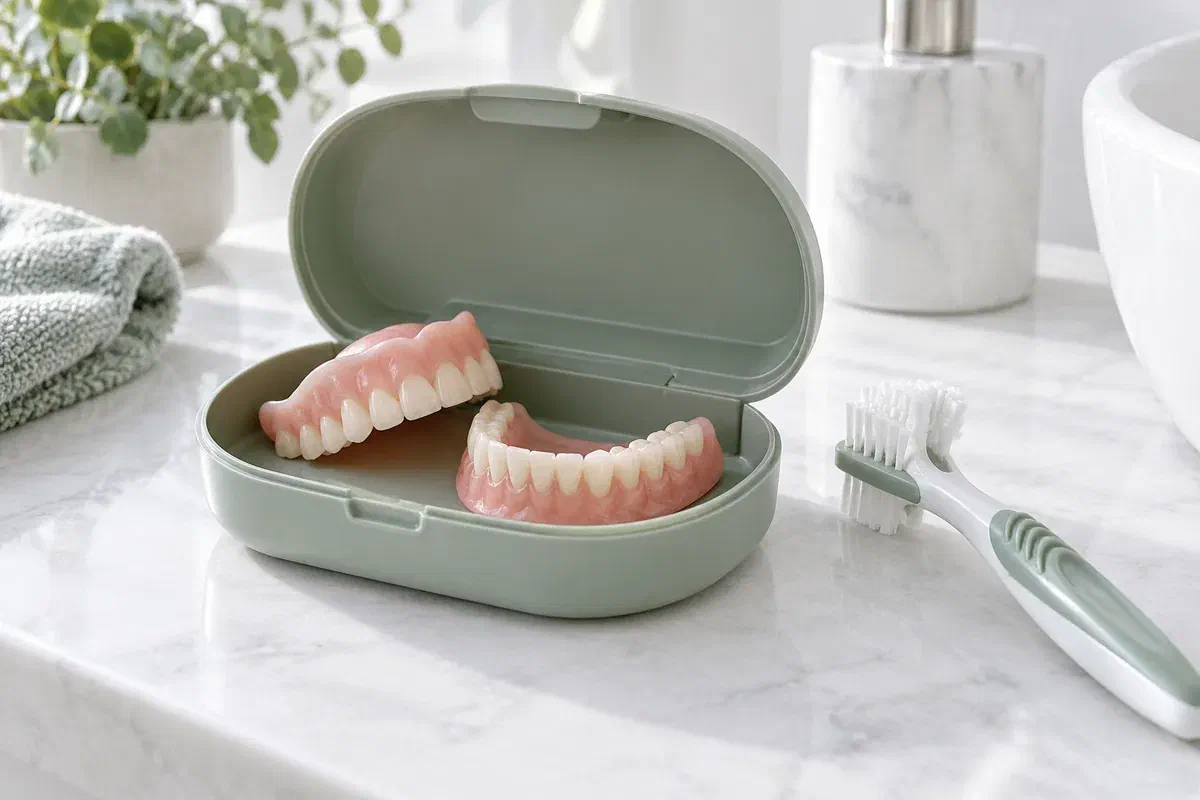
Complete denture appliances displayed as an educational example
What you may be noticing

Whistles, clicks and the words you avoid

List the sounds or situations that bother you, even if they seem trivial. Those details help a consultation address how your mouth functions as well as how the finished teeth will look.

Natural teeth on their way out

When the remaining teeth in an arch are breaking down, ask which ones might sensibly be kept and why removal is suggested for others. Moving to a complete denture should come after each tooth has been individually considered.

An older plate that clicks or drops

Clicking during speech, a denture that falls when you laugh, or tender spots that keep returning are reasons to have it looked at. Bring the appliance itself; comparing it with your gums shows how well it still fits.

Worry that a new set will change your voice

Tell the dentist early if you sing, speak publicly or simply care about sounding like yourself. A photograph or description of your earlier smile also helps the discussion about tooth display and shape.

Have any ulcer that lingers, any lump or any change you cannot explain examined. A sore in the mouth is not always caused by the denture.

What careful planning can offer

Clear speech, steady chewing, a smile that looks like you

A well-suited full denture gives you a complete row of teeth for biting and talking, and it supports the lips so your face looks familiar. Designing it around your particular mouth, including how your tongue moves when you speak, is what separates a usable appliance from a generic one.

Speech usually needs some retraining, though. A removable denture can shift, is likely to need adjusting and takes practice before words come out naturally. Knowing that in advance helps you compare approaches fairly and tell normal adaptation from a fit problem worth reporting.

Front teeth placed with speech in mind

Where the teeth sit, how the jaws close and the thickness and outline of the base are decided together. That keeps attention on how the whole arch works when you talk and eat.

Removable, so it can be cleaned well

Being able to take the denture out means both it and your gums can be properly cleaned. Ask to be shown the steps, and mention if grip, eyesight or fine movements are difficult.

Adjustments while you relearn

The fitting is the beginning of a practice period. Knowing how to book an adjustment, and that a persistent whistle or lisp is worth mentioning, can make the first weeks less frustrating.

Rockwood to Bronte Street

Four appointments, each with a purpose

How the visits unfold depends on healing, any planned extractions and whether you are moving on from an older appliance. Ask what each appointment involves and when you will hear and see the new teeth before they are finalized.

  1. Listening and looking

    The dentist examines your gums, ridges and remaining teeth, goes over your medical background and asks you to describe the sounds or foods that give you trouble. Bring any denture you wear and your questions.

  2. Capturing your mouth and bite

    Moulds or scans, along with a record of how your jaws come together, guide the shape of the new denture. Ask how the top and bottom teeth are planned to close and how the lab makes the appliance.

  3. Speaking with a trial set

    In a conventional plan, a wax try-in often lets you read a few sentences and test the bite before the denture is finished. Immediate dentures allow less of this, so ask what can be judged beforehand.

  4. Delivery and fine-tuning

    The finished denture is fitted, and you are shown how to insert, remove and clean it. Review appointments handle pressure spots, speech concerns and other issues, with later relines or changes discussed when appropriate.

Practising at home

Talk to yourself. Then tell us what you hear.

Your new denture will feel full and unfamiliar at the start. Ask the team how a typical settling period goes, and how instructions differ if teeth were just extracted. Lasting discomfort deserves a review.

A gentle, consistent cleaning routine

Your dentist can suggest a cleaner and soft brush suitable for the denture material. Keep up gentle care for your gums and tongue as well, and check what to do with the denture overnight and in the days after an extraction.

Read aloud a little every day

Short sessions reading a book or the news aloud can help your tongue adapt. Pair this with soft, manageable foods and any healing instructions. Note troublesome words to discuss rather than changing the denture yourself.

Return for your reviews

Describe where the denture rubs and whether it lifts on particular words or foods. Gums and bone continue to change after teeth are lost, so periodic reviews remain worthwhile well beyond the first month.

Patient information: ADA MouthHealthy — dentures

Three possible routes

Each option changes the timeline, and the feel

Full-arch approaches vary in appointments, cost, maintenance and suitability. Ask which ones genuinely apply to you and how each would affect eating, talking and appearance in the months of transition.

Conventional denture

Healing first

This denture is made after the gums have healed, which usually allows a try-in. If extractions are needed beforehand, ask about the waiting period and how speech and appearance would be managed in the meantime.

Immediate denture

Teeth from the first day

Prepared ahead of extractions, an immediate denture goes in as the remaining teeth come out. Healing reshapes the gums, so adjustment, relining or later replacement should be expected. Ask how your plan accounts for that.

Where extra support suits

Added retention from implants

In suitable cases, implants can steady a removable denture or carry a fixed arch, which some people find helpful for speech. Surgery, healing, cleaning and long-term upkeep all need assessment first; this route does not suit everyone.

Speech and denture questions

What people ask about talking with new teeth

There is much more to a full denture than delivery day. Bring questions about the changeover period, daily care and how to get help if the appliance starts causing trouble.

(905) 876-4488
Why do some sounds feel tricky with a new full denture?
Sounds such as “s”, “f” and “th” depend on precise tongue and lip positions, and a new denture changes the space slightly. Practice often helps. If a sound stays difficult, the dentist can review the fit and tooth position.
Can I sing or play a wind instrument with a complete denture?
Many people do, though it may take practice. Tell the dentist about these activities during planning so they can be considered, and mention any difficulty at your reviews.
Is it normal for a denture to click when I talk?
Clicking can happen when the teeth touch during speech or when a denture is loose. It is worth mentioning at a review so the dentist can check the fit and bite.
How much should I practise reading aloud?
There is no set amount. Short, regular sessions are often easier than long ones. Stop if your mouth becomes sore and mention any persistent tenderness to the team.
Should I use adhesive while I learn to speak with a new denture?
Ask the dentist whether adhesive suits your denture and how to use it. It should not replace a fit check; if you need more and more of it, have the denture and gums reviewed.
Can my first visit from Rockwood include time for all my questions?
Mention that you have several questions when you book, so the appointment can be planned with enough time. Writing them down beforehand helps you cover everything in one trip.
Complete dentures for Rockwood

Come and talk. We’re listening for more than words.

Bring the denture you use now, a note of any sounds or foods that trouble you and your questions. At our Bronte Street practice, Dr. Anjum can examine your mouth and explain a plan that gives speech, comfort, appearance, handling and follow-up their proper place.

If your denture has broken or is rubbing a sore area, please say so when booking so we can make time for it.

Visit Milton Dental Clinic
Unit 1, 342 Bronte St. S, Milton, ON L9T 5B7
Get directions Clinic hours
Monday–Thursday
11am–7pm
Friday–Sunday
By appointment only

Areas we serve

  • Milton
  • Oakville
  • Mississauga
  • Georgetown
  • Halton Hills
  • Acton
  • Campbellville
  • Brampton
  • Burlington
  • Puslinch
  • Rockwood
  • Erin
  • Caledon
  • Etobicoke
  • Old Milton
  • Bronte Meadows
  • Timberlea
  • Dorset Park
  • Dempsey
  • Clarke
  • Beaty
  • Coates
  • Harrison
  • Scott
  • Willmott
  • Ford
  • Bowes
  • Cobden
  • Walker
  • Mountain View
  • Milton Heights
  • Hawthorne Village
  • Valley View
  • Fallingbrook
  • Nassagaweya
  • Trafalgar
  • Esquesing
  • Nelson
  • Brookville
  • Moffat
  • Glen Williams
  • Norval
  • Limehouse
  • Stewarttown
  • Ashgrove
  • Hornby
  • Silver Creek
  • Speyside
  • Scotch Block
  • North Oakville
  • River Oaks
  • Glen Abbey
  • West Oak Trails
  • Palermo
  • Bronte Creek
  • College Park
  • Joshua Creek
  • Uptown Core
  • Preserve
  • Iroquois Ridge
  • Lisgar
  • Meadowvale
  • Meadowvale Village
  • Churchill Meadows
  • Erin Mills
  • Central Erin Mills
  • Streetsville
  • East Credit
  • Creditview
  • Heartland
  • Sheridan
  • Mount Pleasant
  • Credit Valley
  • Huttonville
  • Churchville
  • Springbrook
  • Northwest Brampton
  • Bram West
  • Fletcher's Meadow
  • Fletcher's Creek South
  • Alton Village
  • Orchard
  • Millcroft
  • Headon Forest
  • Tansley
  • Brant Hills
  • Tyandaga
  • Kilbride
  • Lowville
  • Aberfoyle
  • Morriston
  • Arkell
  • Hillsburgh
  • Freelton
  • Carlisle
  • Waterdown
  • Flamborough
  • Mountsberg

How can we help?

Milton Dental Clinic

Have a question about your smile? Choose the option that works best for you.

For urgent dental concerns, please call.
Messages are reviewed during clinic hours.